Thinking, Sensing & Behaving
Aging
Brain Development
Childhood & Adolescence
Diet & Lifestyle
Emotions, Stress & Anxiety
Hearing
Language
Learning & Memory
Movement
Pain
Sleep
Smell
Taste
Thinking & Awareness
Touch
Vision
See All
Diseases & Disorders
Addiction
Alzheimer's & Dementia
Cancer
Childhood Disorders
Epilepsy
Immune System Disorders
Injury
Mental Health
Neurodegenerative Disorders
Infectious Disease
COVID-19
Neurological Disorders A-Z
Therapies
See All
Brain Anatomy & Function
Anatomy
Body Systems
Cells & Circuits
Evolution
Genes & Molecules
See All
Neuroscience in Society
The Arts & the Brain
Law, Economics & Ethics
Neuroscience in the News
Supporting Research
Tech & the Brain
See All
In the Lab
Animals in Research
BRAIN Initiative
Meet the Researcher
Neuro-technologies
Tools & Techniques
See All
Explore
3D Brain
Core Concepts
For Educators
Ask a Neuroscientist
Glossary
The Brain Facts Book
About Us
MyAccount
For Educators
Log in
Thinking, Sensing & Behaving
Aging
Brain Development
Childhood & Adolescence
Diet & Lifestyle
Emotions, Stress & Anxiety
Hearing
Language
Learning & Memory
Movement
Pain
Sleep
Smell
Taste
Thinking & Awareness
Touch
Vision
See All
Diseases & Disorders
Addiction
Alzheimer's & Dementia
Cancer
Childhood Disorders
Epilepsy
Immune System Disorders
Injury
Mental Health
Neurodegenerative Disorders
Infectious Disease
COVID-19
Neurological Disorders A-Z
Therapies
See All
Brain Anatomy & Function
Anatomy
Body Systems
Cells & Circuits
Evolution
Genes & Molecules
See All
Neuroscience in Society
The Arts & the Brain
Law, Economics & Ethics
Neuroscience in the News
Supporting Research
Tech & the Brain
See All
In the Lab
Animals in Research
BRAIN Initiative
Meet the Researcher
Neuro-technologies
Tools & Techniques
See All
Evolution
Related Topics
Animals in Research
Anatomy
Thinking and Awareness
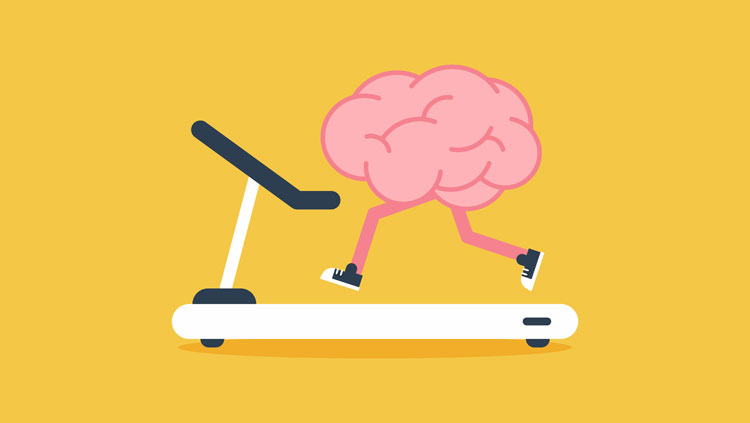
Why Moving Your Body Changes Your Brain
When you exercise, your muscles and liver release proteins into your blood that exert powerful influence on your brain.
BrainFacts/SfN
3D Brain
An interactive brain map that you can rotate in a three-dimensional space.
Interact with the Brain