Can You Repair Brain Cells After They’re Severely Damaged?
- Published28 Jul 2026
- Author Xander Vitolic-Bernstein
- Source BrainFacts/SfN

Over 200,000 Americans land in the hospital each year with brain or spine-related trauma. And unfortunately, even the best doctors can do remarkably little to heal these injuries.
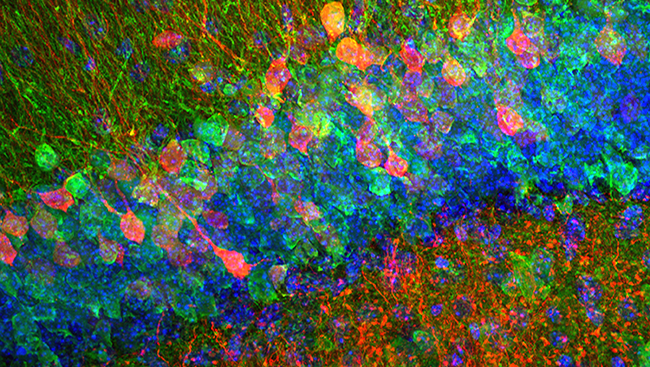
The reason: In human adults, neurons in the brain and spinal cord, or central nervous system (CNS), don’t regenerate. Wounds heal. Bones mend. But when brain cells die or their connections get severed, that’s it. The circuits they belonged to are left to adapt as best they can — usually by re-routing around the injury, if possible.
There are a few exceptions: Some neurons in brain regions related to smell, learning, and memory can be replaced to a very limited extent. But now, using cutting-edge therapies involving stem cells, drugs, and electrical stimulation, scientists may soon be able to repair what was lost across the CNS.

BrainFacts spoke with Roman Giger, a professor of cell and developmental biology at the University of Michigan Medical School, about what a CNS injury looks like up close and how far we are from a cure. Giger has spent the last quarter of a century studying the molecules that guide how neurons grow during development, and how they might be harnessed to treat people with debilitating neural diseases.
What happens after a severe brain or spinal cord injury?
Let's say, you get a spinal cord injury in a car accident this week. And it’s a severe injury. Many neurons in the brain have long cable-like connections called axons, and the most vulnerable part of the CNS are these connections. So, the cells above the injury and the cells below the injury which receive the signal — they might survive. But the connection is gone.
This injury is immediately followed by all sorts of secondary events like bleeding. It will then result in hypoxia — that means there's not enough blood supply. If cells are damaged, they might release certain chemicals which are toxic. These toxins act on both neurons and glial cells — like oligodendrocytes, astrocytes, and microglia — causing further damage.
Plus, a lot of damage immediately after the injury is actually due to an excessive or prolonged immune response. Immune cells usually remove dead cells and damaged tissue, helping to clean up the injury site and prepare it for healing. When immune cells go out of control, they release harmful molecules that damage DNA, proteins, and cell membranes. They also produce inflammatory signals that promote the death of neurons or limit their ability to regrow. And they release enzymes that break down tissue surrounding the injury, further weakening the protective barrier between the blood and the spinal cord.
Why don’t we regrow those connections?
The nervous system, actually the basic scaffold, develops in embryos. And so even before you’re born, a lot of this wiring — at least the basic scaffold — is in place. There are huge gene families of molecules that tell specific neurons to go here, but not go there.
Once you have the basics, the last step of shaping the network is experience dependent. For example, it takes your eye actually looking at the world to really see properly. There’s a critical period of wiring, and after that it’s pretty much fixed.
The developing brain is like a city under construction — there are plenty of signs that tell nerve fibers where to go. Once the brain is fully built, most of those cues disappear, and after an injury, the environment actually puts up roadblocks that make regrowth very difficult.
How are scientists trying to solve this problem?
There are 3 main approaches.
First, there's an engineering side: In a spinal cord injury, if you can record the electrical signals generated by the neurons in the brain, those signals can be transmitted wirelessly across the injury site to stimulating electrodes placed below the injury in the spinal cord, restoring the lost communication between the brain and the body. It’s a little bit clumsy, but it’s getting better and has delivered some impressive results.
Then there’s stem cells. Instead of regrowing what you have, you basically engineer cells and inject them near the wound to connect the receiver and the sender cells. And if you can get that approximately right, there's probably a good chance you can get some function back. This has been successful, but there's also a lot of questions about safety because these cells might have tumor-like properties.
And then there’s the third camp, which is to basically regrow and heal the damaged tissue. The goal is to repair the injured brain or spinal cord by reactivating natural growth processes active during early development — but largely switched off in adults. These processes allow nerve cells to grow long connections, form new communication points with other nerve cells, and rebuild neural circuits. They also help support cells called oligodendrocytes to produce myelin, the insulating layer that allows electrical signals to travel rapidly along nerve fibers. Scientists hope to reactivate these growth processes using gene editing or drugs that turn specific biological pathways on or off.

But it has to be a holistic approach. Even if you are successful in improving outcomes following CNS injuries, it's probably going to be a tedious, complex combination of therapies, including rehab. Rehab is important because you’ll need to learn and train the network that you rebuild.
However, at the molecular level, many of the mechanisms that help you regenerate one system will be applicable to other injuries or diseases. And I think that's very exciting.
About the Author
Xander Vitolic-Bernstein lives at the intersection of science, education, and entertainment. He is a multi-disciplinary writer, philosopher, and former neuroscientist.
References
Centers for Disease Control and Prevention. (2026, April 27). Traumatic Brain Injury and Concussion. TBI Data. https://www.cdc.gov/traumatic-brain-injury/data-research/index.html
Collateral Sprouting: Nerve Repair and Recovery. (2025, August 2). Biology Insights. https://biologyinsights.com/collateral-sprouting-nerve-repair-and-recovery/
Costa, G., Ribeiro, F. F., Sebastião, A. M., Muir, E. M., & Vaz, S. H. (2022). Bridging the gap of axonal regeneration in the central nervous system: A state of the art review on central axonal regeneration. Frontiers in Neuroscience, Volume 16-2022. https://www.frontiersin.org/journals/neuroscience/articles/10.3389/fnins.2022.1003145
Costanzo, R. M. (2005). Regeneration and Rewiring the Olfactory Bulb. Chemical Senses, 30(suppl_1), i133–i134. https://doi.org/10.1093/chemse/bjh150
Giger, R. J., Hollis, E. R., & Tuszynski, M. H. (2010). Guidance Molecules in Axon Regeneration. Cold Spring Harbor Perspectives in Biology, 2(7), a001867. https://doi.org/10.1101/cshperspect.a001867
How Thick Is a Human Skull? And Why It Varies. (2025, August 13). Biology Insights. https://biologyinsights.com/how-thick-is-a-human-skull-and-why-it-varies/
Otero, J. J. (2018). Neural Regeneration a Century after Ramón y Cajal’s Decree. The American Journal of Pathology, 188(1), 4–5. https://doi.org/10.1016/j.ajpath.2017.09.003
Spinal Cord Team. (2023, May 31). 2023 United States Spinal Cord Injury Statistics. Spinal Cord. http://spinalcord.com/blog/2023-united-states-spinal-cord-injury-statistics
Zheng, B., & Tuszynski, M. H. (2023). Regulation of axonal regeneration after mammalian spinal cord injury. Nature Reviews Molecular Cell Biology, 24(6), 396–413. https://doi.org/10.1038/s41580-022-00562-y
BrainFacts.org welcomes all your brain-related questions.
Every month, we choose one reader question and get an answer from a top neuroscientist. Always been curious about something?
Please submit your question by filling out this form.