Mouse “Midwives” Help Other Mothers During Birth
- Published3 Dec 2025
- Author Bella Isaacs-Thomas
- Source BrainFacts/SfN
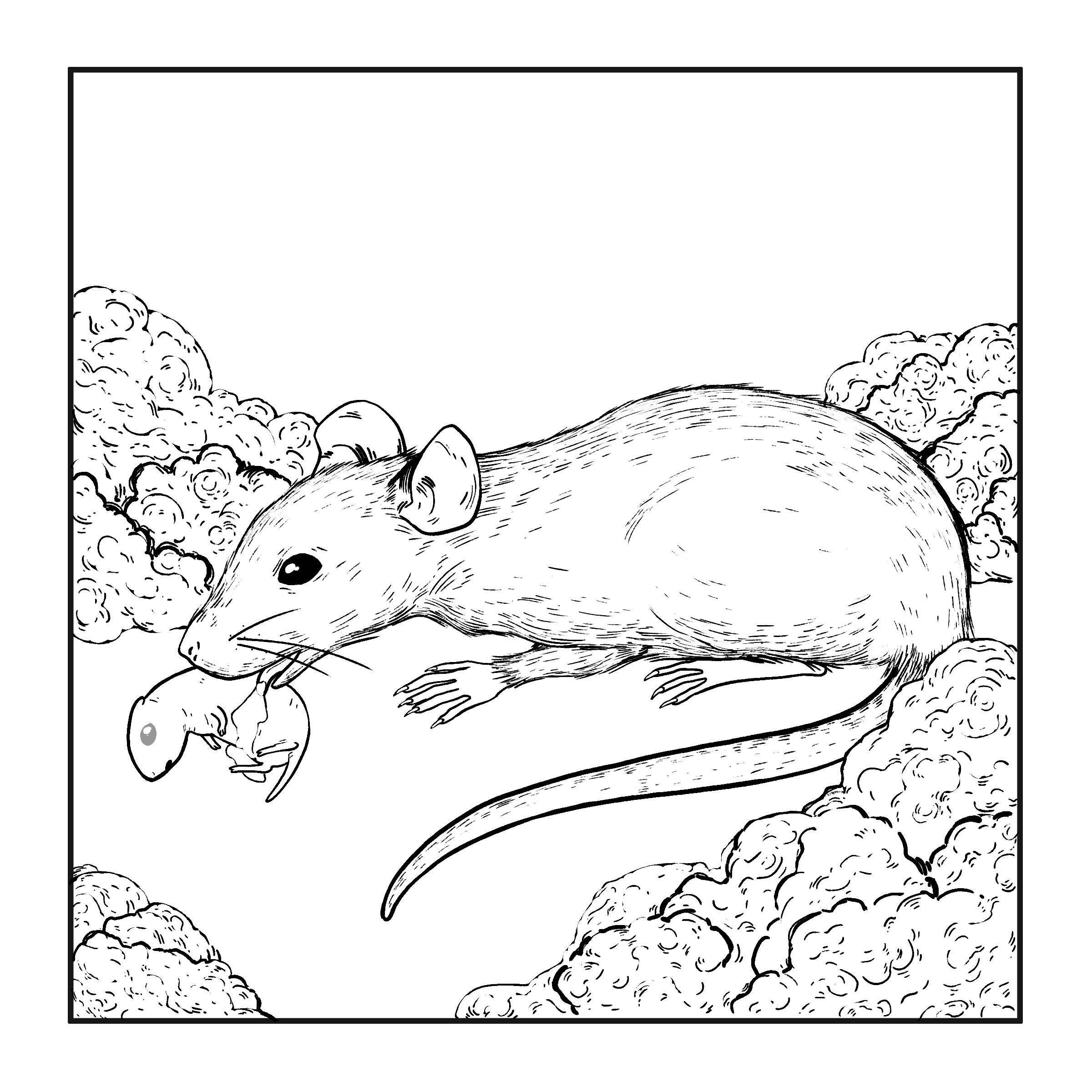
A female mouse cleans a newborn pup.
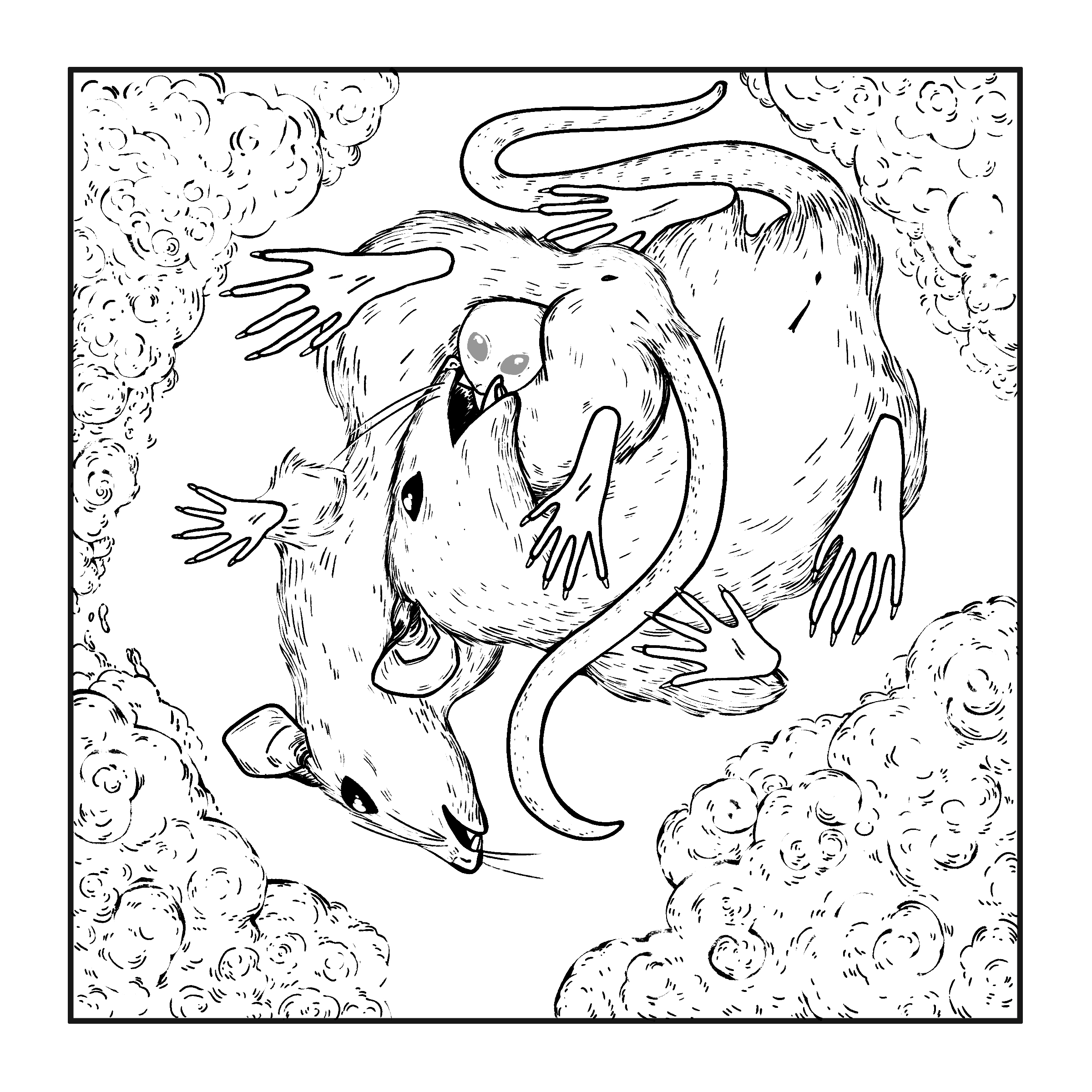
A female mouse assists another mouse during birth.
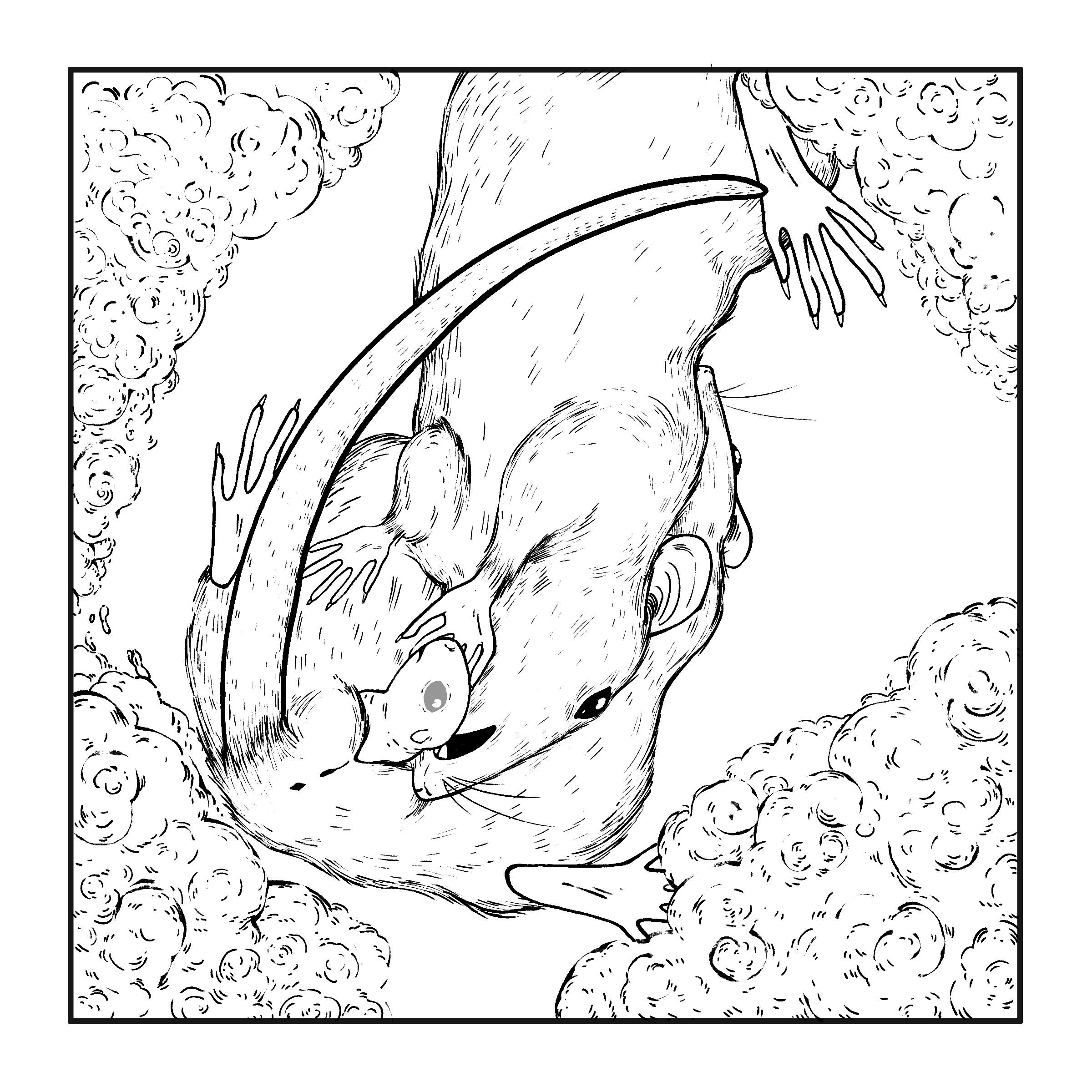
A female mouse uses her mouth and paws to aid a pup through the birth canal of another female.
Mice can behave like midwives, helping other mice give birth and increasing the likelihood that both mothers and their pups survive. These illustrations are a depiction of video recordings taken from the lab of Robert Froemke at New York University. Froemke presented these preliminary findings November in San Diego at Neuroscience 2025, the Society for Neuroscience’s annual meeting. He credited PhD student Violet Ivan with the discovery.
The hormone oxytocin plays a key role during mammalian birth. When Froemke and his colleagues bred mice engineered to lack oxytocin receptors, they found those the females underwent arduous labor they rarely survived, and which their pups never survived. But he said when they placed a female mouse that had previously successfully given birth to and cared for pups, that mouse behaved like a “midwife,” aiding the mouse giving birth.
Froemke played a video during which the midwife mouse used her mouth and paws to pull a breached pup out of its mother, saving both of their lives. Midwife mice also cleaned newborn pups and ate their placentas, according to an abstract summarizing this research, which has not been peer reviewed. Froemke observed when his team placed females who had never given birth or males alongside the females without oxytocin receptors, those mice sometimes assisted the birthing mouse, but did not help keep the pups alive.
This research sheds light on how animals can exhibit behaviors aimed at helping to save others’ lives. Among humans, maternal and infant mortality rates today are low compared to those predating modern medical advancements, but Froemke noted, “we still need to do more work to be able to make sure that all moms and babies make it.”
About the Author
.jpg)
Bella is the Staff Writer and Editor for BrainFacts. She previously worked as a digital science reporter at PBS NewsHour, where she was named a fellow in the 2022-2023 class of the National Science-Health-Environment Reporting Fellowships (SHERF) and earned a 2021 D.C. Science Writers Association Newsbrief Award for writing. She graduated from the University of Michigan with a bachelor's degree in 2018.
CONTENT PROVIDED BY
BrainFacts/SfN