
How Tick and Mosquito Bites Can Harm the Brain
- Published4 Dec 2025
- Author Bella Isaacs-Thomas
- Source BrainFacts/SfN
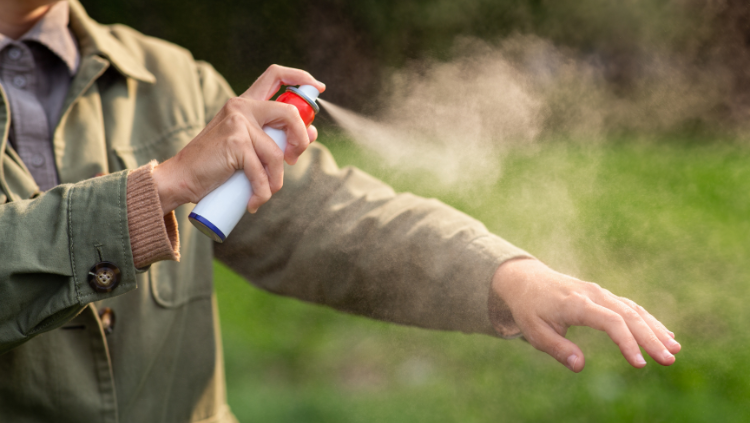
When warm weather hits, bugs thrive. Although most of these tiny creatures don’t cause any harm to people, bites from mosquitoes and ticks are notable exceptions.
Not every bug bite guarantees infection. Still, these particular pests can in some cases act as “vectors” which carry infectious viruses, bacteria, or parasites from one organism to another — causing vector-borne illnesses.
Most people who contract a vector-borne illness (or vector-borne disease) in the United States make a full recovery. Some develop long-term symptoms, though, and an even smaller number of cases can be fatal. Several diseases caused by mosquitoes and ticks can wreak havoc on the central nervous system, including the brain. A combination of human-driven factors, including climate change and land development, provides mosquitoes and ticks ample opportunities to find new hosts.
Despite this growing risk, experts warn the American health care system lacks the tools and broader awareness to ensure patients are successfully diagnosed and treated. People seeking medical care for symptoms may not have noticed being bitten in the first place, and vector-borne illnesses are often not on physicians’ radars, particularly in communities where cases aren’t common.
“It's really difficult, I think even for an excellent doctor, when you don't have a history of the patient having been out in the woods on a walk and then fell sick two weeks later,” said Nicole Baumgarth, who directs the Johns Hopkins Lyme and Tickborne Diseases Research and Education Institute. She and other researchers say there’s a clear, urgent need to improve clinical and public awareness so patients can successfully access the care they need.
How Tick-Borne Illnesses Can Affect the Brain
Several tick species are distributed regionally across North America, but only a fraction of them carry pathogens that can infect humans. Warmer temperatures and shorter winters, spurred by climate change, have allowed some species to expand their territories and stay active for a larger swath of the year.
Lyme disease is the most common tick-borne infection in the U.S., with an estimated 476,000 cases diagnosed and treated annually. It’s transmitted through the bite of a blacklegged tick, which can carry Lyme-causing Borrelia bacteria.
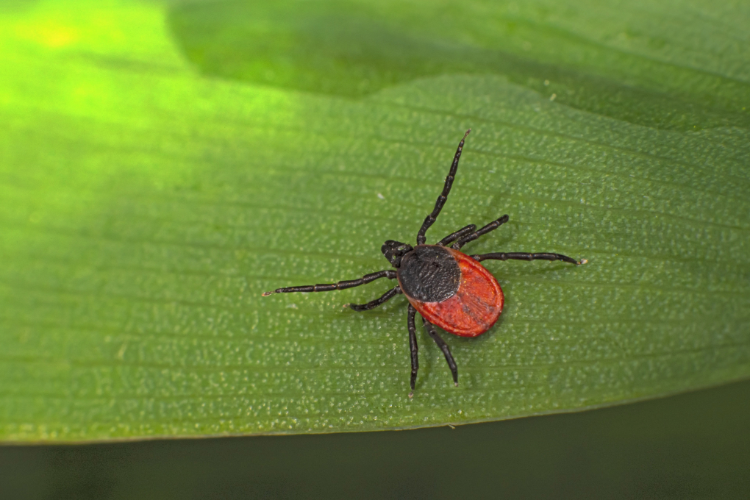
People with Lyme disease experience a wide range of symptoms. When their infections go untreated, patients may develop meningitis, or inflammation in important membranes protecting the brain and spinal cord, alongside related symptoms like a fever, headache, and stiff neck, Tulane University immunologist Geetha Parthasarathy told BrainFacts via email. Those who receive a diagnosis and treatment may also experience a fever or headache, in addition to joint and muscle pain; however, their acute symptoms typically improve following antibiotic treatment.
For people who develop long-term symptoms due to a Lyme disease infection, the experience can be devastating. Shannon Delaney, a New York City-based neuropsychiatrist who specializes in tickborne illnesses, said she often sees a “triad” of symptoms in her patients including fatigue, joint pain, and a range of neuropsychiatric conditions, including anxiety, depression, and even psychosis. After their visit, she submits a comprehensive workup of labs to look for signs of active infection or for antibodies, which are indicators of past infection.
Delaney described her most common case profile as patients with psychosis who eventually test positive for both Lyme disease and Bartonella infection, the latter of which refers to an infection from different types of bacteria transmitted to humans by multiple vectors, including fleas, ticks, cat scratches, and others. In some cases, starting antibiotics resolves both their underlying infection and their psychosis. “It’s not a rare, random thing,” she said. “I see it every single week.”
Parthasarathy, who studies neurological complications associated with Lyme disease, suspects that the disease-causing bacteria these ticks transmit may cause persistent inflammation in the brain or spinal cord, spurring chronic health complications even among those who were treated for Lyme disease. Although researchers have many theories, they don't definitively know what causes this inflammatory response, or how best to respond to it yet.
Many of Delaney’s patients never had acute symptoms related to their infections. It can take weeks, months, or even years for their neuropsychiatric symptoms to emerge, and those are often triggered by secondary infections like COVID or the flu, she said. This extended timeline, in addition to the fact that testing — and doctors who know what to look for — can be hard to come by, is part of why patients often have a difficult time getting diagnosed.
“It can become very difficult for the average patient because then they’re going to the doctor who’s not accepting insurance. If you get the right labs done, some of them are out of pocket, and they’re not covered by insurance,” Delaney said. “So the whole process can be stressful for so many reasons.”
From Bite to (Rare) Brain Swelling
Mosquitoes are virtually impossible to avoid. Of the more than 200 species across all U.S. states and territories, only a small fraction carry pathogens.
West Nile is the most common disease transmitted by mosquitoes in the country, with an average of 2,000 cases reported per year. This number is likely a major undercount because most people who contract West Nile don’t develop symptoms, and many with symptoms never get tested for it, according to the Centers for Disease Control and Prevention (CDC).
Eastern equine encephalitis, St. Louis encephalitis, and La Crosse are comparatively rarer mosquito-borne illnesses that circulate on a nearly annual basis in the U.S., said Dawn Wesson, a medical entomologist at Tulane University. These illnesses are usually transmitted from mosquitoes to people within the country. In contrast, other pathogens can be transmitted across country lines when people infected elsewhere are bitten by a local mosquito capable of harboring and spreading disease.

Each of these diseases can cause feverishness — think flu-like illness without the respiratory symptoms, Wesson said. But in rare cases, they can cause nervous system complications and even death. Older people, children, and those who are immunocompromised face a heightened risk of severe illness. Patients who become seriously ill may experience conditions like encephalitis (inflammation of the brain) or meningitis (inflammation around the brain and spinal cord), which can potentially be lethal.
Climate change stretches out mosquito season, said Luis Fernando Chaves, an associate professor at the Indiana University School of Public Health. When warmer weather lingers throughout a broader swath of the year, these bugs stay active for longer. Back in the 1970s, he noted, researchers in Indiana ballparked mosquito season starting as early as June and lasting through early October.
“Nowadays, we’re finding mosquitoes as early as mid-May and up to Halloween — late October to early November,” Chaves said.
Some diseases not often found in the U.S., like dengue or chikungunya, may become more common over time due to warmer temperatures, too. That’s because the mosquito species that transmit these infections could expand their range from the southwest and Florida northward, Chaves added, and thrive for a larger portion of the year.
Protection and Prevention
No one wants to be bitten by a tick or a mosquito, but you don’t have to limit your time outside. Chaves recommends suiting up with socks, boots or other shoes with high ankles, long pants and shirts, and using bug repellent designed to ward off both creatures, like ones containing the chemical DEET. Baumgarth echoed this advice, adding that taking a shower after spending time in wooded areas is another key practice to remove potential ticks.
“I wish there was a sort of a magic button we could press to get people to realize that this is a really a significant risk that we can avoid with just a few simple [actions,]” she said.
While people can take steps to reduce their risk of exposure to vectors, Chaves also pointed out broader, intersecting factors beyond the average person’s control — including climate change and weaknesses in the country’s public health infrastructure — exacerbate this risk, particularly among those in vulnerable circumstances. When disasters like hurricanes strike, he noted, people who lose access to shelter may find themselves sleeping outside, where they lack protection from vectors. Some of the growing number of people experiencing homelessness in the U.S., too, face this risk.
When it comes to improving outcomes for people who do get infected with a vector-borne illness, experts say more government money and resources should be allocated to developing better treatments, diagnostics, and surveillance. The U.S. has federal guidelines for sampling mosquito and tick populations for pathogens on the local level, but not every county has the resources to implement them, Wesson noted. Even when testing is done locally, she added, not every state has a tracking system in place.
Confirmed cases of mosquito-borne illnesses in people are typically reported to the CDC, but given the patchwork nature of local vector testing efforts, Wesson said large swathes of the U.S. likely having ongoing unreported transmission.
Investing in more robust tracking systems and supporting research efforts focused on vectors and the diseases they cause are key steps toward bolstering our ability to respond to these threats. But for now, those interventions have yet to meet the moment.
“We’re really in the infancy stages of this,” Delaney said.
About the Author
.jpg)
Bella is the Staff Writer and Editor for BrainFacts. She previously worked as a digital science reporter at PBS NewsHour, where she was named a fellow in the 2022-2023 class of the National Science-Health-Environment Reporting Fellowships (SHERF) and earned a 2021 D.C. Science Writers Association Newsbrief Award for writing. She graduated from the University of Michigan with a bachelor's degree in 2018.
CONTENT PROVIDED BY
BrainFacts/SfN
References
Centers for Disease Control and Prevention. (2025) How to Prevent Mosquito and Tick Bites. https://www.cdc.gov/vector-borne-diseases/prevention/index.html
Centers for Disease Control and Prevention. (2025) West Nile Virus Symptoms, Diagnosis & Treatment. https://www.cdc.gov/west-nile-virus/symptoms-diagnosis-treatment/index.html
Centers for Disease Control and Prevention. (2024) About Mosquitoes in the United States. https://www.cdc.gov/mosquitoes/about/about-mosquitoes-in-the-united-states.html
Centers for Disease Control and Prevention. (2024) About Vector-Borne Diseases. https://www.cdc.gov/vector-borne-diseases/about/index.html
Centers for Disease Control and Prevention. (2024) Signs and Symptoms of Untreated Lyme Disease. https://www.cdc.gov/lyme/signs-symptoms/index.html>
Delaney, S., Robveille, C., Maggi, R. G., Lashnits, E., Kingston, E., Liedig, C., Murray, L., Fallon, B. A., & Breitschwerdt, E. B. (2024). Bartonella species bacteremia in association with adult psychosis. Frontiers in Psychiatry, 15, 1388442. https://doi.org/10.3389/fpsyt.2024.1388442
Delaney, S. L., Murray, L. A., & Fallon, B. A. (2023). Neuropsychiatric Symptoms and Tick-Borne Diseases. Current Topics in Behavioral Neurosciences, 61, 279–302. https://doi.org/10.1007/7854_2022_406
Delaney, S. L., Murray, L. A., Aasen, C. E., Bennett, C. E., Brown, E., & Fallon, B. A. (2020). Borrelia miyamotoi Serology in a Clinical Population With Persistent Symptoms and Suspected Tick-Borne Illness. Frontiers in Medicine, 7, 567350. https://doi.org/10.3389/fmed.2020.567350
John Hopkins Medicine. West Nile Virus. https://www.hopkinsmedicine.org/health/conditions-and-diseases/west-nile-virus
Memari, M., Domney, A., Tee, C. J., Stathopoulos, A. G., & Chakraborti, C. (2023). Barriers to Timely Diagnosis and Treatment of Vector-Borne Diseases in a Changing Climate: A Case Report. Public Health Reports, 138(3), 406–409. https://doi.org/10.1177/00333549221090263
Parthasarathy, G., & Gadila, S. K. G. (2022). Neuropathogenicity of non-viable Borrelia burgdorferi ex vivo. Scientific Reports, 12(1), 688. https://doi.org/10.1038/s41598-021-03837-0
Simons, A. P., Lenfestey, A., & Chaves, L. F. (2025). Density-dependence and different dimensions of changing weather shape adult abundance patterns of common mosquito species (Diptera: Culicidae) in Bloomington, Indiana, USA. Current Research in Parasitology & Vector-Borne Diseases, 7, 100242. https://doi.org/10.1016/j.crpvbd.2025.100242
United States Department of Health and Human Services. Vector & Pathogen Ecology. https://www.hhs.gov/climate-change-health-equity-environmental-justice/climate-change-health-equity/climate-health-outlook/vector-pathogen-ecology/index.html