Immune and Nervous Systems Shut Down Socializing When Sick
- Published4 Feb 2026
- Author RJ Mackenzie
- Source BrainFacts/SfN

When you’re sick with the flu, nothing feels better than a night curled up in bed. We aren’t the only species to seek isolation when we’re ill — it’s a common behavior across the animal kingdom. There’s a huge evolutionary advantage to not spreading illness among your social group.
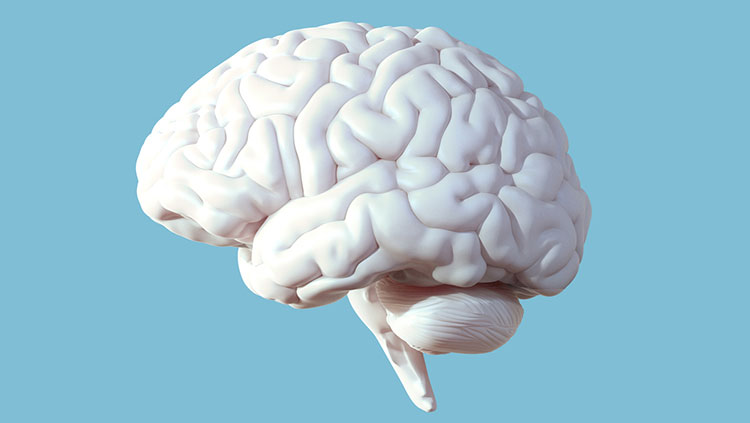
Turns out, an interaction between the immune system and the brain appears to control how and whether sick mice socialize. The finding, published in the January 2026 issue of the journal Cell, shows that an immune chemical signal targets a brain area called the dorsal raphe nucleus to send sick mice scurrying away from their fellow animals.
Cytokines Help the Immune System Stay in Sync
Gloria Choi, a neuroscientist at the Picower Institute for Learning and Memory at MIT and lead author on the Cell paper, studies social behavior and how the immune system influences the brain. The latest work from her lab is at the crossroads between those two interests.
Decades ago, researchers identified an immune molecule, IL-1β, that reduced sociability. A cytokine, IL-1β is a chemical messenger released by immune cells to coordinate responses. IL-1β is a “first responder,” Choi explained, used by the immune system to deal with new and unidentified threats. It can jumpstart inflammation, among other responses. But it wasn’t clear if or how the same molecule could encourage isolation behavior to lower the chance of infection spreading through a population.
The most likely target would be behavioral control systems in the brain. But our nervous system was once thought to be relatively isolated from immune signals. Choi said SARS-CoV-2, the COVID-19-causing virus that can cause profound behavioral effects like brain fog, demonstrated this separation wasn’t so simple. “What we are finding out is that the border between the brain and the body is not an immovable wall. Rather, there are doors,” she said.
To determine where IL-1β might be acting, Choi searched the brain for regions enriched for IL-1β receptors. The team found the dorsal raphe nucleus, which affects social behavior, was densely packed with these receptors. Choi’s team explored how the mice would behave if brain cells in this area were activated or turned off.
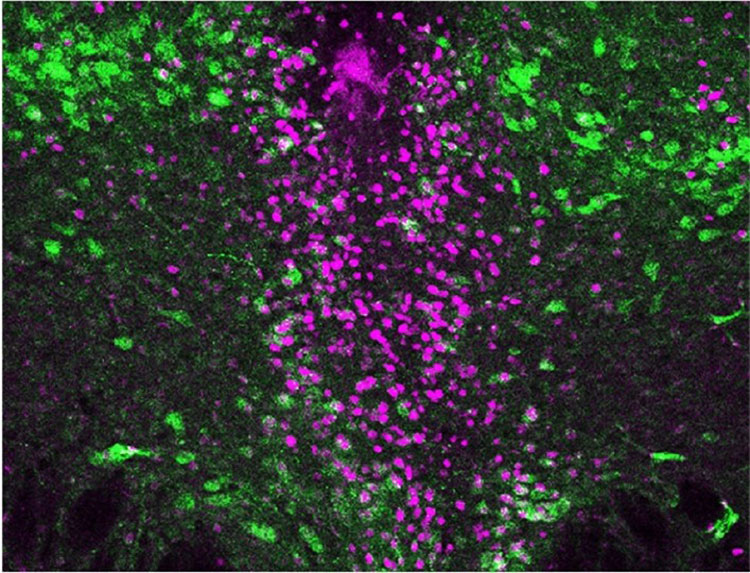
When Choi’s team stimulated the IL-1β-responsive neurons in the dorsal raphe nucleus, previously social mice moved away from the other mice in their cage, even when they weren’t sick. In contrast, when they silenced the neurons, sick mice no longer socially withdrew. These mice remained lethargic, suggesting that distinct brain regions control tiredness and asociality in response to sickness.
Why Sickness Behavior is Seen in Many Species
Sick mice act like sick humans, said Robert Dantzer, a neuroimmunologist at the University of Texas’s MD Anderson Cancer Center, who pioneered some of the first research into IL-1β. “You are more likely to encounter a microbial agent that is infectious than a predator,” said Dantzer. The high chance of infection means that sickness behavior is the expression of a “primary motivation” seen across species, Dantzer added.
These findings could have important implications for human health. Chronic conditions like myalgic encephalomyelitis/chronic fatigue syndrome (ME-CFS) — which causes long-lasting fatigue, pain, and brain fog — are often preceded by an illness, but feature neurological symptoms lasting far longer. While no cure exists for this condition, Choi plans to further explore how interactions between cytokines and the brain might drive these symptoms — including some cytokines, like IL-17, that instead increase socialization in animals.
The bigger question, she added, is “Can you actually do something to the immune system to alleviate symptoms of the brain?” Such approaches could treat the brain while avoiding the challenges of getting drugs past the blood-brain barrier. Choi’s future work will determine whether listening to this intra-body communication between the immune and nervous systems will pave the way to better brain therapies.
About the Author

RJ Mackenzie is a freelance science writer based in Glasgow, Scotland. Armed with neuroscience degrees from the University of Edinburgh and the University of Cambridge, RJ writes about all aspects of the brain and body.
CONTENT PROVIDED BY
BrainFacts/SfN
References
Hanson, M. R. (2023). The viral origin of myalgic encephalomyelitis/chronic fatigue syndrome. PLOS Pathogens, 19(8), e1011523. https://doi.org/10.1371/journal.ppat.1011523
Hoogenraad CC, Riol-Blanco L. Interleukin-17: A Social Cytokine. Cell. 2020;181(3):517-519. doi:10.1016/j.cell.2020.03.060
Kent, S., Bluthé, R.-M., Kelley, K. W., & Dantzer, R. (1992). Sickness behavior as a new target for drug development. Trends in Pharmacological Sciences, 13, 24–28. https://doi.org/10.1016/0165-6147(92)90012-U
Yang, L., Andina, M. L., Witkowski, M., King, H., Wickersham, I., Huh, J. R., & Choi, G. B. (2026). IL-1R1-positive dorsal raphe neurons drive self-imposed social withdrawal in sickness. Cell, 189(1), 272-286.e19. https://doi.org/10.1016/j.cell.2025.10.040