Interpreting the Brain Wave Patterns of People Taking DMT
- Published7 Oct 2026
- Author Bella Isaacs-Thomas
- Source BrainFacts/SfN

People who drink the psychedelic brew ayahuasca sometimes describe a profound sensation: the boundary between themselves and the rest of the world seems to dissolve. For a time, even the familiar feeling of being a distinct “self” can begin to slip away.
We normally experience the self as something stable and obvious, but DMT — or dimethyltryptamine, the psychoactive compound in ayahuasca — can temporarily disrupt it.
Scientists call the experience ego dissolution. In a study published in the Journal of Neuroscience, researchers used DMT to investigate what happens in the brain as people’s sense of self breaks down. By comparing participants’ experiences with changes in their brain activity, the researchers identified patterns that may offer clues to a larger question: How does the brain maintain the feeling of being “you?”
“In a way, by perturbing a system, you’re able to have a greater understanding of said system,” study leader Christopher Timmermann, co-director of the UCL Centre for Consciousness Research at University College London, said. “In this case, we’re perturbing the sense of self and looking into potential mechanisms which underpin the construction of the self.”
On the edge of order and chaos
Think of the brain like an orchestra. The musicians can play a well-known tune over and over again, or they can play random, disjointed notes, creating a cacophony. For the audience, the most engaging listening experience sits at the intersection of these two options — a mix of familiarity and novelty. Timmermann and his team think at its baseline state, the brain similarly operates on a kind of edge of order and chaos. At this theoretical sweet spot — called criticality — brain activity is organized enough to maintain ongoing thoughts and a coherent sense of self while remaining flexible enough to adapt, learn, and respond to new situations.
Timmermann and his colleagues explored the effect DMT had on alpha, beta, and theta brain waves. These oscillations come from the various frequencies generated by neurons firing in sync at different speeds. They were particularly interested in alpha waves because these waves may be key to regulating information as it flows through the brain, and Timmermann suspects they could also play a role in constructing our continuous understanding of self over time. Alpha waves are also known for their role in attention and sensory — specifically visual — processing. Previous research suggests the visual information people experience on DMT is processed similarly to the way typical external stimuli are while sober.
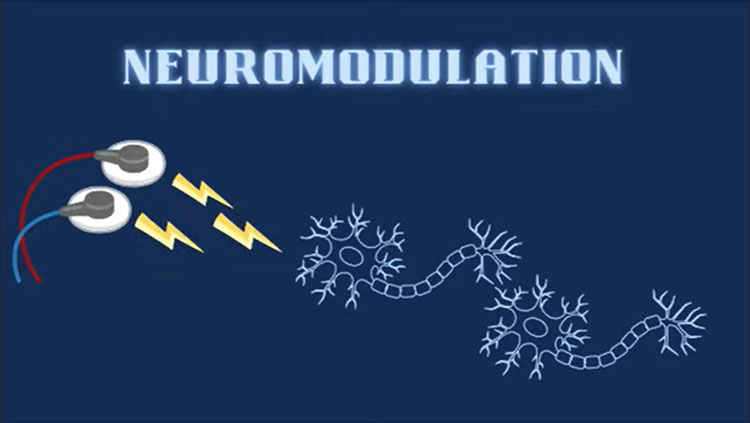
To investigate their hypothesis, the team administered DMT to study participants and placed electrodes on their scalps, using EEG (electroencephalography) to monitor how their brain waves changed. After they returned to their usual state of mind, participants completed a questionnaire asking them to report whether they experienced a disintegration of themselves or their egos.
All three wave types deviated from their baseline oscillation patterns under DMT’s influence. Alpha and beta waves became more ordered, veering toward subcriticality. Although theta waves, too, shifted away from criticality, researchers were unable to determine whether these waves leaned toward subcriticality or its inverse: the more unstable supercriticality. Timmermann’s team concluded participants’ reported experience of self-dissolution correlated with both alpha and theta waves’ deviation from criticality.
The group was limited in terms of which brain wave types they could assess using EEG. They did not assess potential changes to gamma wave activity because people who’ve taken DMT may clench their jaws, Timmermann explained, and those muscle movements impede researchers’ ability to record these waves.
Whereas Timmermann believes alpha waves seem to provide the brain with a steady background rhythm that helps maintain a continuous sense of self, he thinks gamma waves support faster mental processes such as attention, thinking, and decision-making. He noted reductions in alpha waves often correlate with an increase in gamma, contributing to the team’s belief that gamma waves would become more chaotic as they trend toward supercriticality under the influence of DMT.
“The idea would be that the alpha pattern is associated with this habitual sense of self, which is dysregulated [due to DMT],” Timmermann said. “It’s a slower rhythm that gives some form of order and continuity, whereas faster processing would be more related, potentially, to that experience of fragmentation of the self.” So far, however, their theory remains unconfirmed.
Michael Silver, a neuroscientist who directs the University of California, Berkeley’s Center for the Science of Psychedelics, said this research is an important contribution to our basic understanding of what DMT does to brain activity.
Silver noted some of the experimental metrics the team used to draw their conclusions — including criticality — aren’t widely used to analyze data in neuroscience today. But he believes the field could benefit from being open-minded about the potential value of novel metrics that could identify meaningful structures and patterns in the wealth of data researchers derive from brain activity.
In his view, the key takeaway is what these findings suggest about the link between the subjective experience of ego dissolution and the objective measure of brain wave recordings.
“People vary in how much disintegration of self they experience in the study after having taken DMT, and this didn’t need to correlate with any of the psychological measures,” Silver said. “But sure enough, it does.”
About the Author

Bella is the Staff Writer and Editor for BrainFacts. She previously worked as a digital science reporter at PBS NewsHour, where she was named a fellow in the 2022-2023 class of the National Science-Health-Environment Reporting Fellowships (SHERF) and earned a 2021 D.C. Science Writers Association Newsbrief Award for writing. She graduated from the University of Michigan with a bachelor's degree in 2018.
CONTENT PROVIDED BY
BrainFacts/SfN