Brain Maps Explain Mixed Responses to ADHD Meds
- Published17 Dec 2025
- Author Ailie McWhinnie
- Source BrainFacts/SfN

Brain maps are drafted from the average of many, but by trying to represent everyone, these maps fail to represent anyone very well. By looking at individuals instead, scientists hope to better treat complex disorders like ADHD.
ADHD is a 'network' disorder, meaning it’s defined by disrupted neural activity and connections. And it’s infamously difficult to treat.
With a disease like cancer, physicians analyze and classify a tumor biopsy, then assign an appropriate treatment path. But they diagnose network disorders like ADHD based on patients’ self-reported symptoms, not the underlying brain dysfunction, so treatment requires a trial-and-error approach.
New precision imaging approaches, which focus on individuals' brains rather than the average, may help scientists spot the specific network disruptions underpinning symptoms. At Neuroscience 2025, the Society for Neuroscience’s annual meeting in San Diego, scientists reported precision imaging has revealed differences in responses to the ADHD treatment Ritalin, which may explain why it’s not a catch-all solution.
A Deeper Dive Into Individual Brain Scans
By looking at brain activity patterns during different tasks, like reading or talking, scientists spot regions in the brain that “act together, [and] that work together, to perform different functions,” explained Evan Gordon, assistant professor at Washington University School of Medicine in St. Louis. As Gordon noted at a Nov. 18 press conference, these regions are called networks.
To understand these networks, scientists typically scan lots of brains and collect a little data from each one. Then, they pool the data together to produce an average map of the brain.
For example, if participants are tasked with reading during their scans, many parts of their brains will be active at one time. But depending on what else is going on in a person’s mind while they are reading in the scan, non-reading parts of the brain will light up, too. Commonalities across everyone, though, likely represent a true “reading” network.
Instead of averaging together many brain scans, a new approach called precision brain imaging collects a lot of data from just a few people, revealing a more complex reality.
Whereas traditional brain imaging classifies large, generalized areas of the brain as representative of different tasks, precision imaging shows how the exact areas of network activity vary between individuals.
It may be a cliché to say every brain is unique, but according to Gordon, these precision images really do reveal “fundamental individual differences.”
Precise Maps Reveal How ADHD Meds May Work for Some, but Not Others
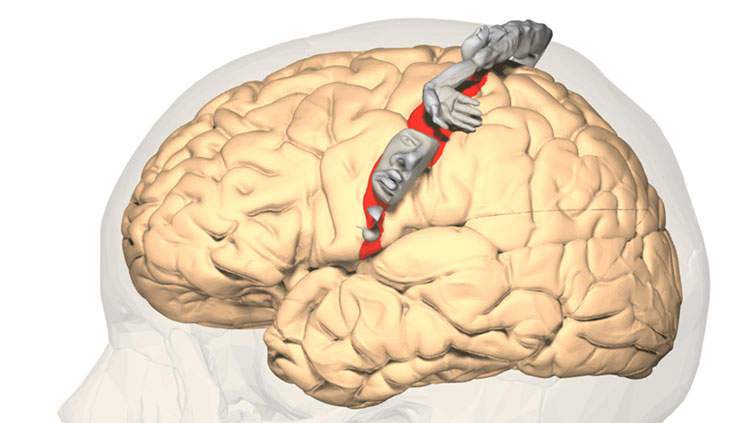
Two and a half years ago, scientists used fMRI and precision brain imaging techniques to identify a network in the motor cortex (the part of the brain controlling movement) which hadn’t been seen before.
Each body part was long thought to have its own corresponding area of the motor cortex. But this new network seemed to be important for all movements.
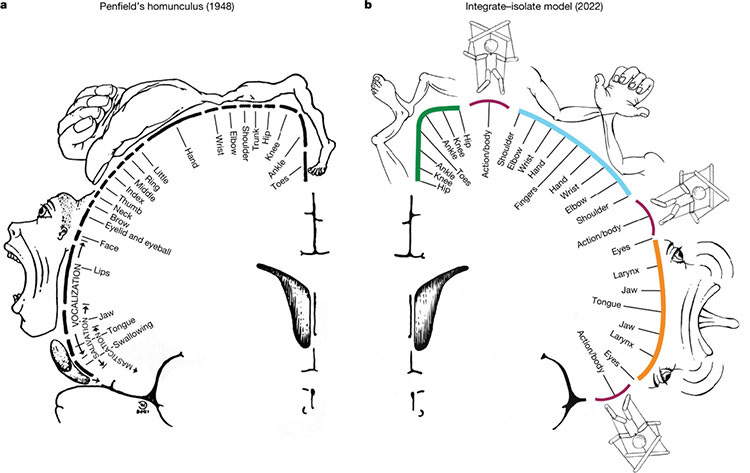
The network, coined the somato-cognitive action network, or SCAN, was not just required to make movements, but to plan and coordinate them. “I like to think of it as the brain’s body orchestra conductor,” said Gracie Grimsrud, a researcher at Stanford University, at the press conference. “It's ensuring that both preparation for action and the action itself are all carried out in harmony.”
When Grimsrud noticed some overlaps in the functions of the SCAN and behaviors disrupted in ADHD, she began to wonder if this network was involved. Stimulant drugs like Ritalin, which are used to treat ADHD, target dopaminergic pathways — pathways that, according to Grimsrud, seem to be used by SCAN.
Looking at motor cortex activity across many individuals with ADHD, the Stanford team saw something change when they took Ritalin, but they couldn’t determine what exactly was happening. When they moved to a precision imaging approach to look at individual responses to the drug, a pattern began to emerge.
Some participants showed improvements in their impulsivity, a key symptom of ADHD, after taking Ritalin. The strongest effects of Ritalin on their brain activity were in SCAN areas, supporting the idea that SCAN was dysfunctional — and modulating its activity by targeting dopamine pathways rebalanced it.
This finding suggests that SCAN may be a “key player” in ADHD for some, and Ritalin can be an effective treatment by “improving communication” in the network, Grimsrud said. Others, however, had no change to their impulsivity when taking Ritalin. Similarly, the drug had no effect on their SCAN activity.
During the press conference, Alik Widge, psychiatrist and biomedical engineer at the University of Minnesota, emphasized this doesn’t mean those individuals didn’t have ADHD. It just means they don’t have the kind that responds to that specific stimulant. Instead, they are likely to have disruption in another network and may be more sensitive to another treatment.
Countless networks across the brain are involved in ADHD, and the precise pathways or networks that are disrupted vary between individuals. But because these disruptions have similar effects on thinking, processing, and acting, they are all labelled as ADHD.
Precision imaging could be a powerful new tool to identify the specific disruption responsible for symptoms in individuals and choose a more appropriate treatment accordingly.
About the Author

Ailie is a PhD student in neuroscience at the University of Cambridge and a science writer with a particular interest in the intersection of life sciences with history, philosophy and society. Ailie was previously the Public Communications Intern at BrainFacts (Summer/Fall 2024) and editor-in-chief of EUSci and Women in Neuroscience UK.
CONTENT PROVIDED BY
BrainFacts/SfN
References
Gordon, E. M., Chauvin, R. J., Van, A. N., Rajesh, A., Nielsen, A., Newbold, D. J., Lynch, C. J., Seider, N. A., Krimmel, S. R., Scheidter, K. M., Monk, J., Miller, R. L., Metoki, A., Montez, D. F., Zheng, A., Elbau, I., Madison, T., Nishino, T., Myers, M. J., … Dosenbach, N. U. F. (2023). A somato-cognitive action network alternates with effector regions in motor cortex. Nature, 617(7960), 351–359. https://doi.org/10.1038/s41586-023-05964-2
Wenthur, C. J. (2016). Classics in Chemical Neuroscience: Methylphenidate. ACS Chemical Neuroscience, 7(8), 1030–1040. https://doi.org/10.1021/ACSCHEMNEURO.6B00199