Understanding the Genetics of Autism
- Published28 Apr 2026
- Author Kevin Mitchell
- Source BrainFacts/SfN
The question of what causes autism has grown in urgency in recent years, as rates of diagnoses have increased, in the United States and some European countries, in particular. This has led some people — like U.S. Secretary of Health and Human Services Robert F. Kennedy Jr., for example — to incorrectly declare an “autism epidemic” and to infer that there must be some environmental cause to blame for it, because genetic causes could not change so rapidly. The list of supposed culprits is long and varied: vaccines, air pollution, heavy metals, herbicides, food additives, the gut microbiome, maternal obesity, baby formula, sugar, gluten, iPads, Wi-Fi, 5G, acetaminophen use in pregnancy, and many others. This list frames autism as caused by something modern, something external, and something preventable. In reality, the supposed epidemic is well explained by changes in awareness and diagnostic practices, and there is no evidence for any of these external factors causally contributing to autism.
All of this speculation about environmental contributors obscures and distracts from what we know about the real causes of autism — that it is a genetic condition affecting neural development. This message is challenging to communicate. The genetics underpinning autism is extremely complex. But the evidence for primarily genetic causation is overwhelming and scientists are identifying more of the specific causes all the time.
Twin studies assess the role of genetics by comparing the incidence of an autism diagnosis across pairs of genetically identical (monozygotic) twins against those who share only half their genes in common (dizygotic or fraternal twins). The studies consistently find if one monozygotic twin has a diagnosis of autism, the chance the other one also does is around 85%. Whereas, for fraternal twins, the chance is only around 20%. Together with data from broader family studies, these observations have allowed geneticists to estimate that the heritability of autism is 80–90%. That means that 80–90% of the variation in risk of the condition across the population is due to genetic variation.
These findings provide consistent evidence that risk of autism is very strongly genetic. It is, however, not very specific. Risk of autism increases if a first-degree relative has autism, especially for less severe cases. But risk of autism also increases, though not as much, if a relative has ADHD, intellectual disability, schizophrenia, bipolar disorder, depression, OCD, or numerous other psychiatric diagnoses. This implies an overlapping genetic risk for this whole range of conditions.
“Mutations in many different genes are individually associated with high risk of autism.”
First, mutations in many different genes are individually associated with high risk of autism. Some of these have been known for a long time, including mutations causing Fragile X syndrome or Rett syndrome, for example. Over a hundred additional risk genes have been identified in recent years through DNA sequencing technologies of many thousands of autistic individuals, as well as their parents and siblings. In addition, a large number of chromosomal deletions or duplications, which can affect many genes at once, have also been discovered to confer high risk of the condition.
Currently, around 25–35% of cases of severe autism, and 5–6% of less severe cases, can be assigned a genetic diagnosis — i.e., a presumably causal mutation can be identified. These numbers are increasing all the time, however, as more high-risk mutations of different types are being recognized. The condition is thus extremely genetically heterogeneous — different mutations are likely to blame across different individuals or families.
Second, mutations conferring high risk are very often new ones that are not actually carried by either parent. Instead, they have arisen in the generation of the sperm or egg that gave rise to the affected individual. This kind of de novo mutation has been implicated in around 60% of severe cases and 35% of cases overall. This explains why so many severe cases are actually sporadic — that is, they occur with no family history and no other relatives affected.
Third, none of the high-risk mutations identified so far are really specific for autism. Instead, they increase risk across a range of psychiatric conditions and can be found in patients with intellectual disability, schizophrenia, epilepsy, or other diagnoses.
Fourth, the effects of high-risk mutations can be strongly influenced by the genetic background of individual carriers. Carrying such a mutation does not mean that a person will definitely develop autism — just that their risk is increased. Whether they actually develop the condition can be affected by the presence of other genetic variants that they carry, by their sex, and also by random variation in how neural development proceeds.
In some individuals, the condition may be caused by two rare mutations, each conferring moderate risk alone. In such cases, one or both of the mutations is likely to be inherited from an unaffected parent. In general, each of us carries hundreds of rare mutations, so there is high potential for this kind of interaction.
We all also carry millions of much more common genetic variants at polymorphic sites across the genome. These are positions in the genomic sequence where two different versions are both quite common in the population. Using genome-wide association studies across very large samples, researchers have found hundreds of such polymorphic sites where one version is at higher frequency in autism cases than controls. The statistical risk associated with carrying any one of these common variants is individually tiny — almost negligible, in fact. But because there are so many of them, their collective impact can be considerable (explaining about 10% of the population variance in risk). The overall burden due to these common variants differs among individuals and can be captured by a polygenic risk score, which tracks a small component of a person’s overall risk of the condition (notably, not enough to be useful for clinical prediction).
This kind of study has also been done for other psychiatric conditions, with one consistent message: The polygenic risk for all these conditions is highly overlapping. Polygenic risk for autism correlates especially strongly with that for ADHD but also overlaps with risk of schizophrenia and many other conditions. So, the familial epidemiology, the analyses of rare, high-risk mutations, and the characterisation of polygenic risk all support the picture of overlapping genetic risk of autism and a wide range of other psychiatric conditions.
An important finding is that risk from rare mutations and from the polygenic burden of common risk variants can combine to push a person over a threshold of total burden. Autistic individuals who carry a very high-risk mutation tend not to have a particularly high polygenic burden, because their risk is already very high. By contrast, those with mutations carrying lower statistical risk by themselves do tend to also have a high polygenic burden. The inference is that if they did not then they would not have developed autism. One way to think about this, biologically, is an increasing polygenic burden generally decreases the collective robustness of neural development processes, making it more difficult to buffer the effects of rare mutations.
“...The actual genes identified also strongly support a neurodevelopmental origin of the condition.”
Finally, the actual genes identified also strongly support a neurodevelopmental origin of the condition. The human genome contains about 20,000 genes, each of which encodes a different protein. Those proteins carry out different kinds of functions in the organism and are often differentially expressed (i.e., actually produced from the encoding DNA) in some tissues or developmental stages, but not others. If we look at the genes that are affected by both rare mutations and common genetic variants associated with autism we see, first, that they tend to be especially highly expressed during fetal development, particularly in neural tissues. And second, the encoded proteins are enriched for those that play roles in neural development, especially in the regulation of gene expression, and in the establishment and dynamic regulation of neuronal connectivity.
Collectively, these observations strongly reinforce the view that autism arises from genetic perturbations affecting the processes of neural development, especially at fetal stages. These perturbations may be effectively buffered in some individuals. But when the overall genetic burden is high enough, they may lead to trajectories of development that ultimately manifest as autism, or as one of a wide range of other possible clinical outcomes. Exactly which outcome results likely reflects some inherent randomness in the way that the processes of development actually play out in a given individual. This means that the residual variance in autism occurrence that is not explained by genetics is not necessarily due to something in the environment — it may instead reflect the inherent variability of the processes of brain development themselves.
The evidence that autism is a genetic condition affecting neural development is extremely strong and consistent. But the underlying genetics is highly complex. It is not just that autism can be caused by mutations in any one of hundreds of individual genes. It’s also that the effects of those mutations are dependent on the genetic background of the individual in hard-to-tease-apart ways. In many cases, especially at the less severely affected end of the spectrum, the genetics may be essentially multi-causal, to the point where no specific single cause can be identified. But at the more severe end, the number of individuals who can be given a genetic diagnosis is increasing all the time, providing families with a much sought after explanation, with growing implications for clinical management.
About the Author
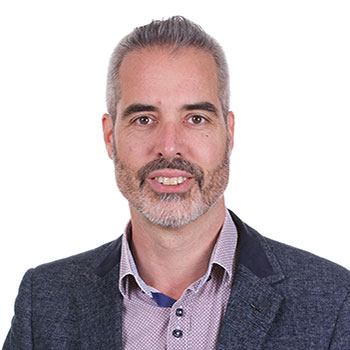
Kevin J. Mitchell is an associate professor of genetics and neuroscience at Trinity College Dublin. His research aims to understand the genetic program specifying the wiring of the brain and its relevance to variation in human faculties, especially to psychiatric and neurological diseases and to perceptual conditions like synesthesia. Mitchell also studies the biology of agency and free will and is the author of “Free Agents: How Evolution Gave Us Free Will,” published in 2023.
CONTENT PROVIDED BY
BrainFacts/SfN
References
Antaki, D., Guevara, J., Maihofer, A. X., Klein, M., Gujral, M., Grove, J., Carey, C. E., Hong, O., Arranz, M. J., Hervas, A., Corsello, C., Vaux, K. K., Muotri, A. R., Iakoucheva, L. M., Courchesne, E., Pierce, K., Gleeson, J. G., Robinson, E. B., Nievergelt, C. M., & Sebat, J. (2022). A phenotypic spectrum of autism is attributable to the combined effects of rare variants, polygenic risk and sex. Nature Genetics, 54(9), 1284–1292. https://doi.org/10.1038/s41588-022-01064-5
Arvidsson, O., Gillberg, C., Lichtenstein, P., & Lundström, S. (2018). Secular changes in the symptom level of clinically diagnosed autism. Journal of Child Psychology and Psychiatry, 59(7), 744-751. https://acamh.onlinelibrary.wiley.com/doi/abs/10.1111/jcpp.12864
Cardinal, D. N., Griffiths, A. J., Maupin, Z. D., & Fraumeni‐McBride, J. (2021). An investigation of increased rates of autism in US public schools. Psychology in the Schools, 58(1), 124-140. https://onlinelibrary.wiley.com/doi/abs/10.1002/pits.22425
Cirnigliaro, M., Chang, T. S., Arteaga, S. A., Pérez-Cano, L., Ruzzo, E. K., Gordon, A., Bicks, L. K., Jung, J. Y., Lowe, J. K., Wall, D. P., & Geschwind, D. H. (2023). The contributions of rare inherited and polygenic risk to ASD in multiplex families. Proceedings of the National Academy of Sciences of the United States of America, 120(31), e2215632120. https://doi.org/10.1073/pnas.2215632120
Cortese, S., Bellato, A., Gabellone, A., Marzulli, L., Matera, E., Parlatini, V., Petruzzelli, M.G., Persico, A.M., Delorme, R., Fusar-Poli, P. and Gosling, C.J., (2025). Latest clinical frontiers related to autism diagnostic strategies. Cell Reports Medicine, 6(2). https://www.cell.com/cell-reports-medicine/fulltext/S2666-3791(24)00687-6h
Furnier, S. M., Gangnon, R., & Durkin, M. S. (2026). Trends Over Time in the Prevalence of Autism by Adaptive and Intellectual Functioning Levels. Autism Research, 19(1), e70167. https://onlinelibrary.wiley.com/doi/abs/10.1002/aur.70167
Gernsbacher, M. A., Dawson, M., & Hill Goldsmith, H. (2005). Three reasons not to believe in an autism epidemic. Current Directions in Psychological Science, 14(2), 55-58. https://journals.sagepub.com/doi/abs/10.1111/j.0963-7214.2005.00334.x
Grotzinger, A. D., Werme, J., Peyrot, W. J., Frei, O., de Leeuw, C., Bicks, L. K., ... & Smoller, J. W. (2025). Mapping the genetic landscape across 14 psychiatric disorders. Nature, 1-15. https://www.nature.com/articles/s41586-025-09820-3
Grove, J., Ripke, S., Als, T. D., Mattheisen, M., Walters, R. K., Won, H., ... & Børglum, A. D. (2019). Identification of common genetic risk variants for autism spectrum disorder. Nature Genetics, 51(3), 431-444. https://www.nature.com/articles/s41588-019-0344-8
Havdahl, A., Niarchou, M., Starnawska, A., Uddin, M., Van Der Merwe, C., & Warrier, V. (2021). Genetic contributions to autism spectrum disorder. Psychological Medicine, 51(13), 2260-2273. https://www.cambridge.org/core/journals/psychological-medicine/article/genetic-contributions-to-autism-spectrum-disorder/89240047F6928249D9DE91A6A6CFBD52
Ledbetter, D. H., Finucane, B., Moreno-De-Luca, D., & Myers, S. M. (2025). Mainstreaming diagnostic genetic testing and precision medicine for autism spectrum disorder: the role of child and adolescent psychiatrists. Psychiatric Clinics, 48(2), 343-360. https://www.psych.theclinics.com/article/S0193-953X(25)00010-3/abstract
Lundström, S., Reichenberg, A., Anckarsäter, H., Lichtenstein, P., & Gillberg, C. (2015). Autism phenotype versus registered diagnosis in Swedish children: prevalence trends over 10 years in general population samples. BMJ, 350. https://www.bmj.com/content/350/bmj.h1961.abstract
Mitchell, K. J. (2018). Innate: How the wiring of our brains shapes who we are. Princeton University Press. https://press.princeton.edu/books/hardcover/9780691173887/innate
Mitchell, K. J. (Ed.). (2015). The genetics of neurodevelopmental disorders. Hoboken, NJ: Wiley Blackwell. https://onlinelibrary.wiley.com/doi/book/10.1002/9781118524947
Moreno-De-Luca, A., Myers, S. M., Challman, T. D., Moreno-De-Luca, D., Evans, D. W., & Ledbetter, D. H. (2013). Developmental brain dysfunction: revival and expansion of old concepts based on new genetic evidence. The Lancet Neurology, 12(4), 406-414. https://www.thelancet.com/journals/laneur/article/PIIS1474-4422(13)70011-5/abstract
Myers, S. M., Challman, T. D., Bernier, R., Bourgeron, T., Chung, W. K., Constantino, J. N., Eichler, E. E., Jacquemont, S., Miller, D. T., Mitchell, K. J., Zoghbi, H. Y., Martin, C. L., & Ledbetter, D. H. (2020). Insufficient Evidence for "Autism-Specific" Genes. American Journal of Human Genetics, 106(5), 587–595. https://doi.org/10.1016/j.ajhg.2020.04.004
Pruitt, A., Gupta, A. R., & Hoffman, E. J. (2025). Molecular and genetic mechanisms in autism spectrum disorder. Annals of Neurology, 98(6), 1163-1177. https://doi.org/10.1002/ana.70013
Rees, E., & Kirov, G. (2021). Copy number variation and neuropsychiatric illness. Current Opinion in Genetics & Development, 68, 57-63. https://www.sciencedirect.com/science/article/pii/S0959437X21000368
Romero, C., Werme, J., Jansen, P. R., Gelernter, J., Stein, M. B., Levey, D., ... & Van der Sluis, S. (2022). Exploring the genetic overlap between twelve psychiatric disorders. Nature Genetics, 54(12), 1795-1802.https://www.nature.com/articles/s41588-022-01245-2
Satterstrom, F. K., Kosmicki, J. A., Wang, J., Breen, M. S., De Rubeis, S., An, J. Y., ... & Demontis, D. (2020). Large-scale exome sequencing study implicates both developmental and functional changes in the neurobiology of autism. Cell, 180(3), 568-584. https://www.cell.com/cell/fulltext/S0092-8674(19)31398-4
Thapar, A., & Rutter, M. (2021). Genetic advances in autism. Journal of Autism and Developmental Disorders, 51(12), 4321-4332. https://link.springer.com/article/10.1007/s10803-020-04685-z
Tick, B., Bolton, P., Happé, F., Rutter, M., & Rijsdijk, F. (2016). Heritability of autism spectrum disorders: a meta‐analysis of twin studies. Journal of Child Psychology and Psychiatry, 57(5), 585-595. https://acamh.onlinelibrary.wiley.com/doi/full/10.1111/jcpp.12499
Wang, T., Zhao, P. A., & Eichler, E. E. (2022). Rare variants and the oligogenic architecture of autism. Trends in Genetics, 38(9), 895–903. https://doi.org/10.1016/j.tig.2022.03.009
Xie, S., Karlsson, H., Dalman, C., Widman, L., Rai, D., Gardner, R. M., ... & Lee, B. K. (2019). Family history of mental and neurological disorders and risk of autism. JAMA Network Open, 2(3), e190154-e190154. https://jamanetwork.com/journals/jamanetworkopen/fullarticle/2726710
Yoon, S., Munoz, A., Yamrom, B., Lee, Y. H., Andrews, P., Marks, S., Wang, Z., Reeves, C., Winterkorn, L., Krieger, A. M., Buja, A., Pradhan, K., Ronemus, M., Baldwin, K. K., Levy, D., Wigler, M., & Iossifov, I. (2021). Rates of contributory de novo mutation in high and low-risk autism families. Communications Biology, 4(1), 1026. https://doi.org/10.1038/s42003-021-02533-z
Zeidan, J., Fombonne, E., Scorah, J., Ibrahim, A., Durkin, M.S., Saxena, S., Yusuf, A., Shih, A. and Elsabbagh, M., 2022. Global prevalence of autism: A systematic review update. Autism Research, 15(5), pp.778-790. https://onlinelibrary.wiley.com/doi/abs/10.1002/aur.2696
Zhang, X., Grove, J., Gu, Y., Buus, C. K., Nielsen, L. K., Neufeld, S. A., ... & Warrier, V. (2025). Polygenic and developmental profiles of autism differ by age at diagnosis. Nature, 646(8087), 1146-1155. https://www.nature.com/articles/s41586-025-09542-6