Brain Aging Signs Don't Always Spell Cognitive Impairment
- Published18 Nov 2026
- Author Bella Isaacs-Thomas
- Source BrainFacts/SfN
The brains of cognitively healthy elders aged 85 and older look younger than their chronological age on MRI scans even though they have an elevated blood-based indicator of Alzheimer’s disease (AD). Karlon Johnson, a postdoctoral scholar at the University of Miami Miller School of Medicine, presented these new preliminary findings Nov. 17 in Washington, D.C., at Neuroscience 2026, the Society for Neuroscience’s annual meeting.
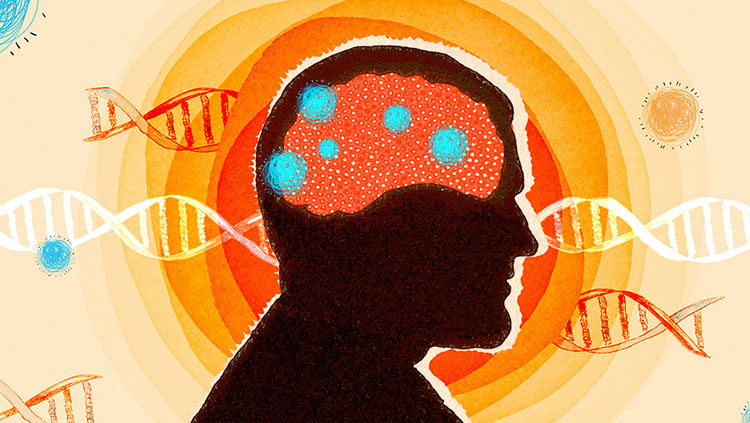
Understanding how brain health remains intact among this cohort despite the biomarker’s presence, a concept referred to as cognitive resilience, could help researchers pin down which factors protect cognition across a person’s lifetime.
Johnson and his colleagues investigated the relationship between biomarker blood test results and structural signs of brain aging measured via MRI in this group, which he referred to as the “oldest old.” Although people in this age bracket aren’t guaranteed to experience cognitive decline, there is a correlation between those changes and age, so it’s notable when people reach advanced elderhood without any issues regarding memory or thinking. Around half of the study participants had one elevated biomarker linked to AD, yet none of them demonstrated cognitive issues associated with the condition.
Biomarkers are measurable indicators of broader biological processes happening in the body, explained Carol Taylor-Burds, a program director in the National Institute of Neurological Disorders and Stroke (NINDS) Division of Translational Research for the NINDS Translational Biomarker Program. When your doctor orders basic bloodwork involving measures like cholesterol or iron, those results fall under this category. Johnson's team tested the older adults in their study for three biomarkers associated with AD, including p-tau217. The presence of this protein in the blood can suggest buildup of the abnormal protein amyloid-beta in the brain, which is linked to AD, is taking place.
Nearly half of the participant group had elevated p-tau217 levels. Using MRI scans, the researchers also estimated the participants' "brain age gap" by comparing their true age to the brain age assessed by a model trained to predict chronological age based on brain structure. Counterintuitively, elevated p-tau217 levels were linked to younger-appearing age. Additionally, on average, the participants’ brains appeared to be around eight years younger based on the model's analysis compared to their actual age. Johnson noted, however, these models have their limitations, and they can underestimate age among these older adults.
The findings emphasize the fact "no single measure tells us everything about how well a person's brain is aging,” Johnson explained. “Blood tests, MRI scans, and assessments of memory and thinking may each provide a different part of the picture."
In general, the test offers important insight for those who may be experiencing signs of AD, but it assesses just one defining characteristic of the disease, Taylor-Burds said. She emphasized a single blood test doesn’t capture the “fingerprint” of an individual’s physiology, so it can’t be exclusively relied upon to make decisions about their health or health care
“While these are really incredibly important advances, it's essential to keep in mind that we don't have a full set of diagnostic tools to complete that fingerprint,” Taylor-Burds said.
Johnson also emphasized the fact the group evaluated in this study were mostly white and highly educated, so further research is necessary to determine whether these results would hold in other populations. He said his team intends to compare these results with future studies involving a younger, more diverse group of participants to understand why people can remain cognitively healthy despite showing signs of biological changes related to AD.
About the Author

Bella is the Staff Writer and Editor for BrainFacts. She previously worked as a digital science reporter at PBS NewsHour, where she was named a fellow in the 2022-2023 class of the National Science-Health-Environment Reporting Fellowships (SHERF) and earned a 2021 D.C. Science Writers Association Newsbrief Award for writing. She graduated from the University of Michigan with a bachelor's degree in 2018.
CONTENT PROVIDED BY
BrainFacts/SfN
References
Johnson, K. H., Merritt, S., Rundek, T., Asken, B., Visscher, K. M., Gardener, H., Alexander, G., Cohen, R., Porges, E. C., Mcgregor, K., Del Bene, V. A., Britton, M. K., De Rivero Vaccari, J. P. (2026). Composite Plasma Biomarker Risk Phenotypes and Brain Age Gap Reveal Cognitive Resilience Among Cognitively Unimpaired Oldest-Old. [Poster Abstract]. University of Miami Miller School of Medicine, Miami, FL. Society for Neuroscience Annual Meeting, Washington, D.C., United States. https://www.abstractsonline.com/pp8/#!/21503/presentation/21105