How African Perspectives on Neuroethics Benefit People and the Globe
- Published21 Jul 2026
- Author Bella Isaacs-Thomas
- Source BrainFacts/SfN

Neuroscience’s most cutting-edge tools sound like they’ve been plucked from a sci-fi novel. Brain-computer interfaces offer new ways to connect users to their environment, while personalized medicine aims to closely tailor interventions to individual needs. But as these technologies evolve and proliferate at a dizzying speed, who is standing guard to protect people’s privacy, safety, and well-being?
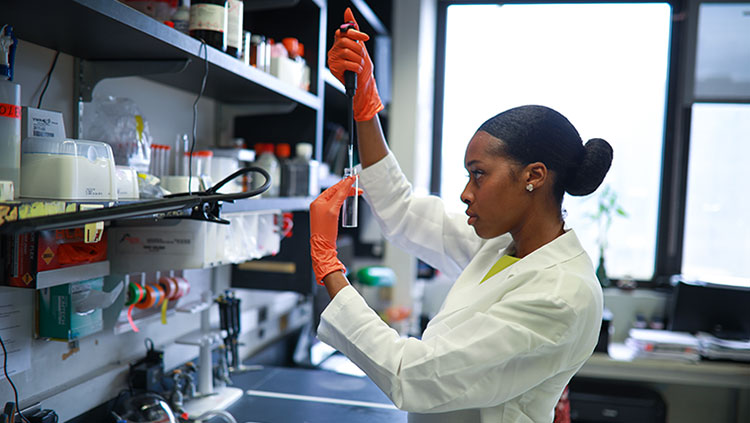
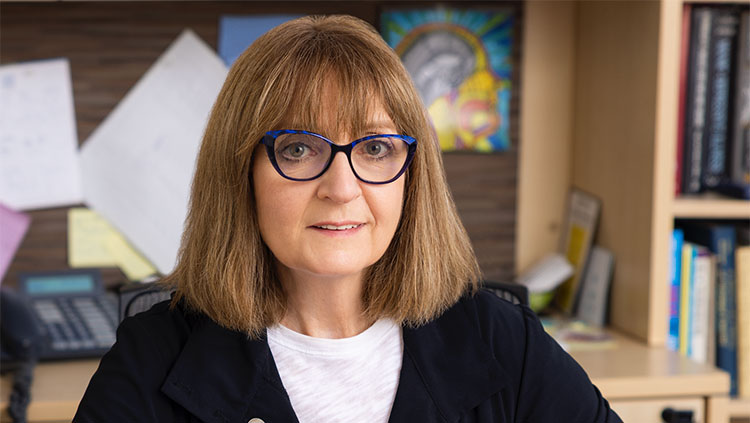
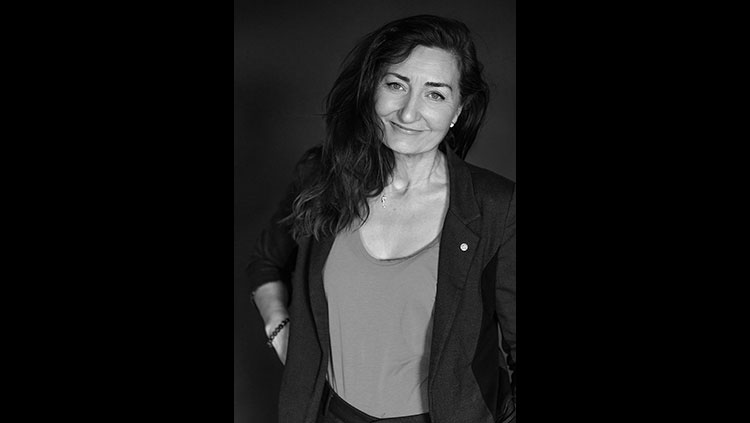
Olivia Matshabane is a neuroethics researcher in the Department of Psychiatry at Stellenbosch University in South Africa, where she also leads the Africa Neuroethics Research Group. She currently focuses on ensuring ethical safeguards are in place for neuropsychiatric genomics research investigating how an individual’s genetic makeup may influence the onset and presentation of a brain or mental health condition. She also works alongside colleagues to study African perspectives on the use of non-invasive neurotechnologies as treatments for these types of conditions, including transcranial magnetic stimulation (TMS) and virtual reality exposure therapy.
A unifying theme across Matshabane’s work is the effort to establish core principles and enforceable rules to ensure the holistic health and safety of individuals and communities. She also contributes to this effort on the international stage — recently, she collaborated with a group of global scholars to inform a UNESCO recommendation laying out ethical guidance for conceptualizing, developing, introducing, and using neurotechnology.
This recommendation, however, offers a universalist lens on the subject. Matshabane is dedicated to ensuring ethical guidelines are actively designed to suit the specific needs, values, and cultural contexts of people in South Africa and across the African continent more broadly. This approach avoids importing practices from companies or countries beyond the region that may fail to protect people from harm or exploitation by ignoring or overlooking their unique circumstances.
Matshabane’s work centers Indigenous knowledge as valuable information that can expand the boundaries of the medical field. A 2025 paper she co-authored details examples of how longstanding Indigenous practices and perspectives on matters of the brain, including memory improvement techniques and descriptions of neurodegeneration, also align with modern neuroscience. For her work in Africa, she said she stands with other researchers who emphasize the importance of identifying “African solutions” in the fields of brain health and mental health — a nod to a concept proposed decades ago by Ghanaian economist George Ayittey.
Matshabane spoke with BrainFacts about her career.
What are some of the major questions driving the field of neuroethics?
Neuroethics is interested in the ethical, legal, social, cultural, and philosophical implications of neuroscience and neurotechnologies. Some of the main discussions that are ongoing in the field are around brain data derived from these technologies. Who has access to that data? How is it being used or misused? How do we ensure that people are protected, informed consent is really based on their awareness of potential risks and benefits, and their privacy is protected if they are using a new technology that is collecting their data?

There's a lot of work around mental privacy and cognitive liberty. Nita Farahany, a globally recognized neuroethicist, defines cognitive liberty as a person’s right to self-determination over their own thoughts. Another global neuroethicist, Marcello Ienca, defines mental privacy as the right to control one’s own thoughts and brain data and to ensure no one can access or manipulate this information without consent.
There's also work around justice and equity in terms of access to effective neurotechnologies. But, of course, there are also questions around the safety of the technologies — have they been tested in specific regions? Have they been found to be effective for people in diverse regions of the world — and in our context, Africa? For neuroscience in Africa, a priority must be to identify cost-effective solutions for brain and mental health conditions. The drive toward reaching those solutions must be a Pan-African led effort, and it must be grounded by African culture, values, principles, lived experiences, and priorities.
How does toggling between a specific South African and African context versus an international one shape how you approach your work?
I think ensuring that when we are in those international spaces that we are, first of all, coming from diverse backgrounds. I constantly have to think about what is the reality in South Africa as well as other African nations, and then whether and how that is considered for the decisions being made at the tables of those international bodies. For those of us who are at the table where decisions are being made for the majority world, it is critical to take seriously priorities that are important for communities that are more communal in nature.
South-South knowledge exchange between collectivist societies [in the Global South] is a powerful strategy that can bolster our progress, especially where specific regions have already progressed in thinking about a specific concept or technology and how it affects their people.
For example, the Psychiatric Genomics Consortium Africa Working Group was established in 2022. This group was able to engage and draw some lessons from a similar group in Latin America that was founded earlier based on how they've approached thinking about the subject outside of the Euro-American lens that's dominating the scholarship at the moment.
I have also had knowledge exchanges with colleagues leading the Mexican Association of Neuroethics and Neuroethics Buenos Aires, as well as colleagues in Colombia and on the continent of Africa, to think about neuroethics outside of the Global North and what that looks like. It's important for us to learn from each other as we are also leading work that's moving us towards African and Africa-specific guidelines and approaches to deal with neurotechnologies in ethical and responsible ways.
How does incorporating knowledge and perspective from a range of cultures, including Indigenous ones, strengthen and expand neuroscience?
Cultural sensitivity and humility are concepts that we engage with and think about. Neuroethicists ask, how do we ensure that we're not bringing something to communities that they don't see as in alignment with their ways of being or doing, and how do we engage about it through public and community-engaged efforts that are considerate of our cultural belief systems?

There are certain ways in which brain and mental health conditions have been addressed by different communities. And Indigenous communities have had their own approaches for many generations. Thinking about and engaging with them around those approaches is really important so that science doesn't sideline or offend or create harm within communities by coming in as superior. The knowledge that Indigenous communities have is valuable and that needs to be taken seriously if scientists want to engage with them.
I also think it’s important to ensure that people within these contexts are really leading in terms of creating and sharing information about new interventions, being able to actively provide and contribute knowledge on areas where they think there needs to be adaptations or changes because of a misalignment with individuals or communities in which it's being introduced.
What’s one example of this concept in action?
One example is EEGs [electroencephalograms] being less effective on African hair, or Afro-textured hair. That obviously leads to a challenge when you're trying to understand whether a patient’s brain activity is normal. A lot of the work in that area has been done in the United States, but colleagues here in South Africa have also started looking at how to address that challenge.
Some simple recommendations have been documented that individuals who are not from that cultural group might not have been able to come up with. Simple things like plaiting hair, creating pathways in culturally normal ways that would allow the electrodes to stick onto the skull for longer so that it can take accurate readings. It’s an example of why it's important to have people from African and other underrepresented backgrounds on teams who are developing these neurotechnologies that are being used both for assessment purposes and also those that are being used for treatment purposes.
This interview has been edited for length and clarity.
About the Author
.jpg)
Bella is the Staff Writer and Editor for BrainFacts. She previously worked as a digital science reporter at PBS NewsHour, where she was named a fellow in the 2022-2023 class of the National Science-Health-Environment Reporting Fellowships (SHERF) and earned a 2021 D.C. Science Writers Association Newsbrief Award for writing. She graduated from the University of Michigan with a bachelor's degree in 2018.
CONTENT PROVIDED BY
BrainFacts/SfN
References
Illes, J., Perreault, M. L., Bassil, K., Bjaalie, J. G., Taylor-Bragge, R. L., Chneiweiss, H., Gregory, T. R., Kumar, B. N., Matshabane, O. P., Svalastog, A. L., & Velarde, M. R. (2025). Two-Eyed Seeing and other Indigenous perspectives for neuroscience. Nature, 638(8049), 58–68. https://doi.org/10.1038/s41586-024-08437-2
Matshabane, O. P., & Seedat, S. (2024). An Afrocentric Perspective on Neurodiversity: Neuroethical Considerations in Africa. AJOB Neuroscience, 15(4), 274–276. https://doi.org/10.1080/21507740.2024.2402237
Matshabane, O. P., Mgweba-Bewana, L., Atuire, C. A., de Vries, J., & Koehly, L. M. (2022). Cultural diversity is crucial for African neuroethics. Nature human behaviour, 6(9), 1185–1187. https://doi.org/10.1038/s41562-022-01436-1
Matshabane, O. P., & De Vries, J. (2022). Social and Epistemic Justice: Are We Really Including Africa in the Bioethics Discourse?. The American journal of bioethics : AJOB, 22(1), 30–32. https://doi.org/10.1080/15265161.2021.2001107
Matshabane, O. P. (2021). Promoting diversity and inclusion in neuroscience and neuroethics. EBioMedicine, 67.