The Importance of Knowing Your Brain: A Conversation With Sadaf Ahmed
- Published10 Nov 2026
- Author Dina Radtke
- Source BrainFacts/SfN
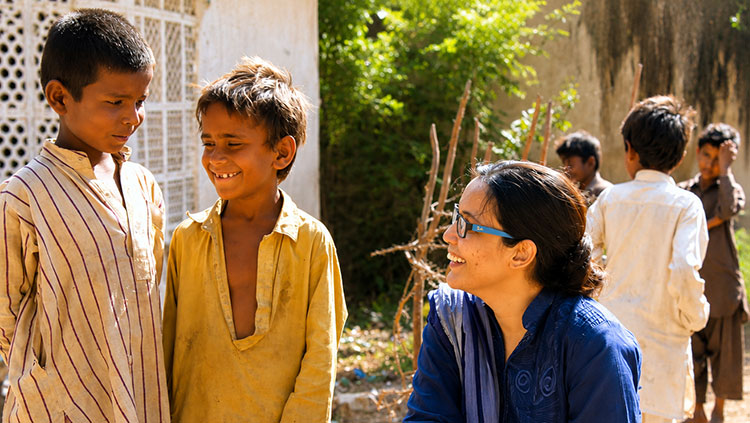
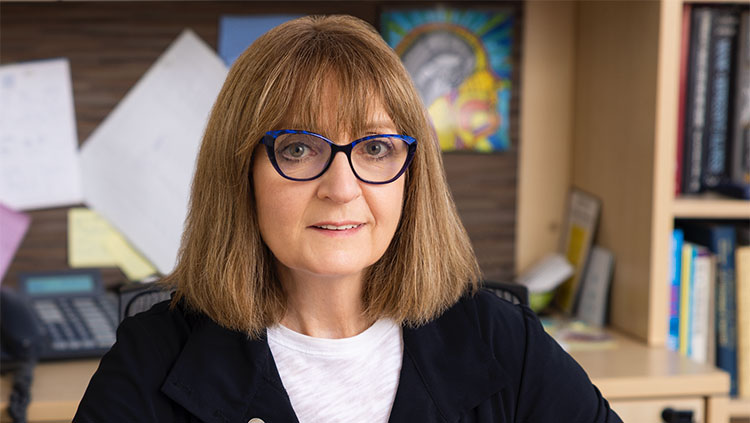
As a child, Sadaf Ahmed’s tendency to wade in difficult emotions earned her the description “sad soul.” The simple act of watching a Disney movie would become a journey into empathy, struggle, resilience, and meaning, exhausting her family and friends with her deep thoughts and probing questions.
She wasn’t wallowing — she was observing, and it would lay the groundwork for the research questions she would ask later in life.
Today, Ahmed has made history as the first woman president of the Pakistan Society of Basic and Applied Neuroscience (PASBAN) and founder of Pakistan’s first psychophysiology lab at the University of Karachi, where she studies how psychological distress shows up in the brain and body.
She shares this science and other brain health knowledge through the Advance Educational Institute and Research Center (AEIRC), a nonprofit organization she founded in 2010. Among many other initiatives, AEIRC educates healthcare professionals on how trauma or stress can contribute to their patients’ physical symptoms, equipping them to provide comprehensive care.
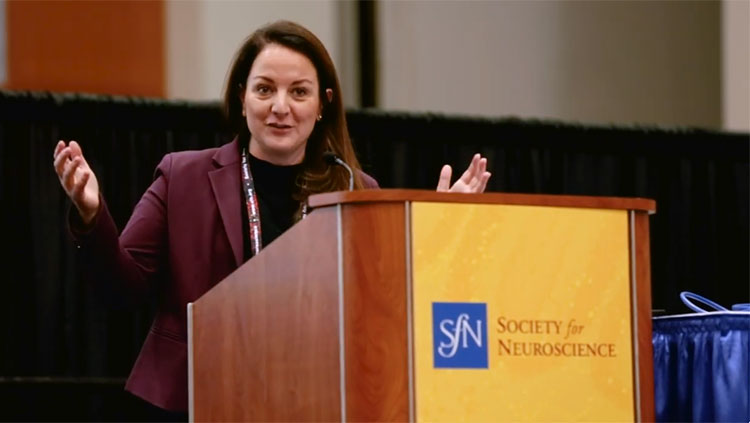
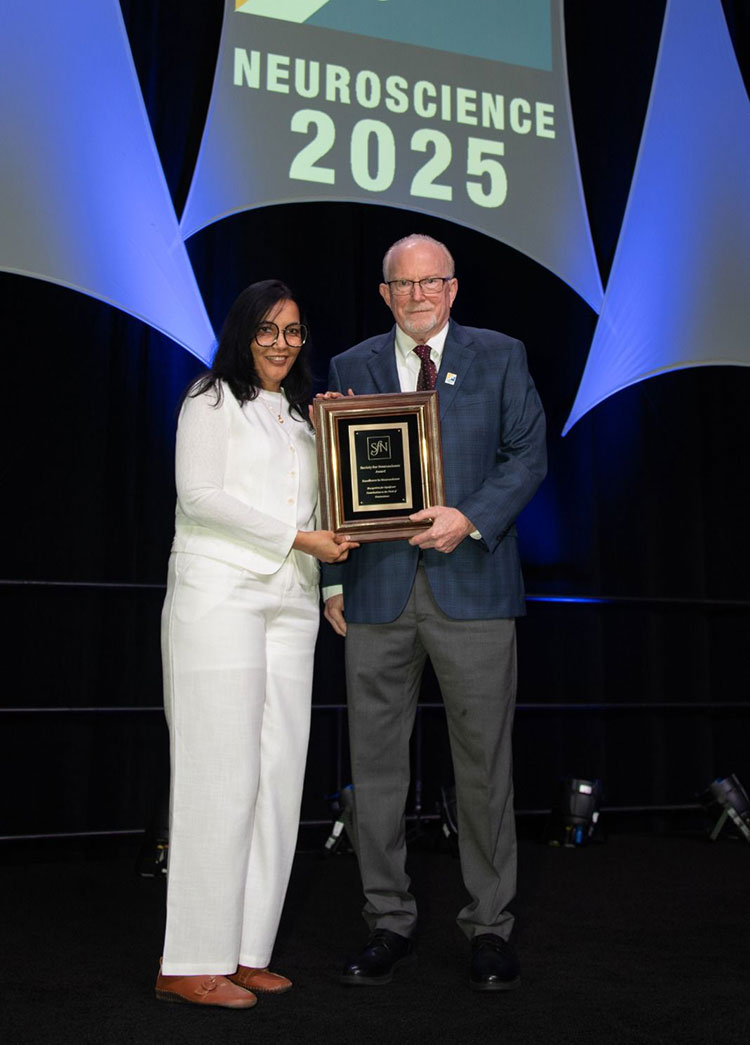
The organization also offers free mental health services and science education programs to underserved communities in Ahmed’s home country of Pakistan, which helped earn her the Society for Neuroscience’s Science Educator Award in 2025.
Ahmed spoke to BrainFacts about her work inside the lab and beyond.
What is psychophysiology, and why is it important to study?
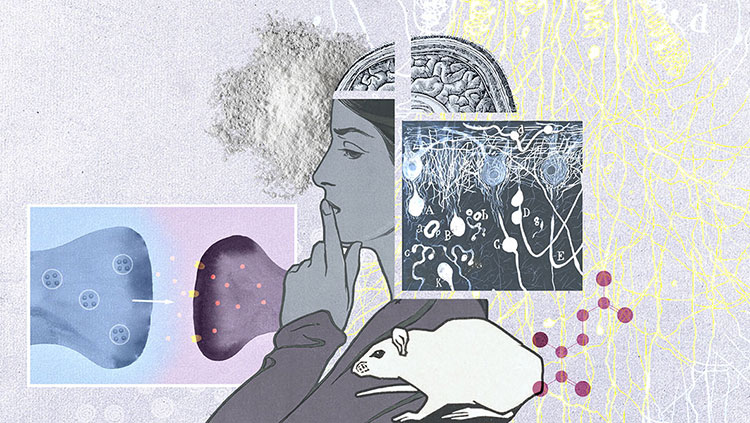
Psychophysiology is the study of how mental processes influence body systems and vice versa. Psychological experiences are not confined to the mind. The nervous system continuously interacts with cardiovascular, endocrine, immune, and metabolic systems, leaving measurable biological signatures throughout the body.
My work looks at biomarkers such as heart rate variability, blood pressure, inflammatory markers, cortisol, brain-derived neurotrophic factor (BDNF), and others to study how chronic stress impacts the body. These biomarkers reflect what’s happening in the brain, and findings in this field are used to develop new technologies, like blood tests for early detection of Alzheimer’s disease.
In Pakistan, 67% of the population is under the age of 30, and as this young population ages, the country will need to prepare for a growing burden of age-related neurological conditions. We must invest in prevention and healthy aging education now.
Psychophysiology research helps us identify simple interventions that can be implemented in low-resource settings to support mental and physical health. We’ve found that nature exposure and physical activity can facilitate post-traumatic growth, expressive writing can help individuals process difficult experiences, and biofeedback and neurofeedback can improve self-regulation by making physiological and neural processes trainable.
I founded AEIRC to give people direct access to these types of services for free and to educate our communities about the intersections of emotional and physical well-being.
What are some practical ways for people to relieve stress and keep their brains healthy throughout life?
As a neuroscientist, I could easily give the standard recommendations: sleep well, exercise regularly, meditate, spend time in nature, eat nutritious food, maintain social connections, and keep learning throughout life. All of these are incredibly important and strongly supported by research.
But if there is one thing I wish more people understood about brain health, it is this: Expression is healing.
Human beings are not designed to carry every thought, emotion, grief, fear, disappointment, dream, or hope silently within themselves. Some of the deepest healing occurs when we find safe ways to express our inner worlds — through conversations, storytelling, writing, art, music, movement, prayer, creativity, or simply being witnessed by another human being.
From a neuroscientific perspective, emotions that are acknowledged, processed, and expressed tend to be less physiologically burdensome than emotions that are chronically suppressed. When we put feelings into words, share our experiences, or create meaning from adversity, we engage interconnected brain networks — including the salience network, default mode network, and frontoparietal control network — that support emotional awareness, self-reflection, and cognitive regulation, processes that can contribute to psychological resilience.
Perhaps most importantly, I think healthy brains are not built only at the individual level; they are built collectively. Communities become healthier when people feel safe expressing themselves, when difficult conversations can happen without fear, when differences are respected, and when emotional well-being is valued as much as physical health.
In an editorial in the open-access journal eNeuro, you frame science education as a key component of public health. How does learning about the brain improve physical and mental well-being?
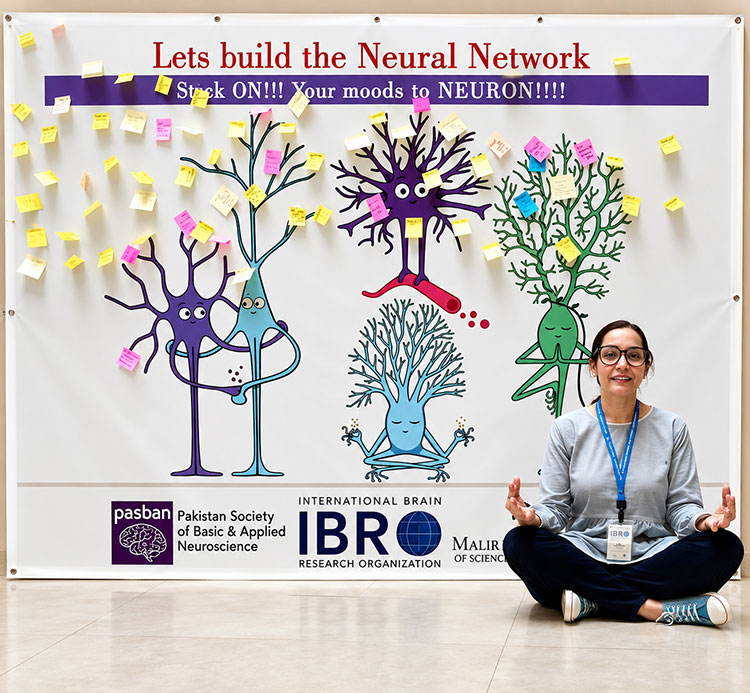
Ultimately, science education is about more than sharing facts. It’s about helping people better understand themselves and others. Self-awareness is one of the most underrated tools for lifelong brain health. The more we can identify our emotions, triggers, strengths, vulnerabilities, and values, the better equipped we are to navigate stress and adversity. The journey toward self-awareness and self-actualization is not only psychological; it is profoundly neurobiological.
The act of learning in and of itself is incredibly important for keeping the brain healthy. If you’re in a classroom focusing on a specific learning activity with your peers, you’re exercising your social skills, creativity, attention, and memory — it’s like getting a full workout for your brain. So, inspiring interest in getting that kind of workout over, say, sitting around and scrolling, can really make an impact.
Science outreach also empowers people to take ownership of their health. When individuals understand how stress affects the brain and body, why sleep matters, how physical activity influences mental health, or how social connection promotes resilience, they are more likely to make informed decisions that support their well-being.
This interview has been edited for length and clarity.
About the Author

Dina Radtke is the Media Associate & Science Writer for the Society for Neuroscience. Previously, she was a researcher for Media Matters for America where she analyzed media coverage and fact-checked misinformation. She holds a Bachelor of Arts in Spanish Language & Literature from the University of Colorado Boulder.
CONTENT PROVIDED BY
BrainFacts/SfN
References
Ahmed, S. (2026). Learning Environments and Brain Health: A Neuroeducational Perspective. eNeuro, Vol. 13, Issue 3. https://www.eneuro.org/content/13/3/ENEURO.0036-26.2026
Noushad, S., Ahmed, S., Ansari, B., Mustafa, U H., Saleem, Y., Hazrat, H. (2021) Physiological biomarkers of chronic stress: A systematic review. International Journal of Health Sciences (Qassim),15(5):46–59. https://pmc.ncbi.nlm.nih.gov/articles/PMC8434839/
Noushad, S., Ansari, B., Ahmed, S. (2022) Effect of nature-based physical activity on post-traumatic growth among healthcare providers with post-traumatic stress. Stress & Health, Volume 38, Issue 4. https://doi.org/10.1002/smi.3135
Noushad, S. & Ahmed, S. (2019) Stress: A Public Health Concern for Progression of Neurodegeneration and Cognitive Decline in Pakistani Population. International Journal of Medical Research & Health Sciences, 2019, 8(4): 167-174. https://www.ijmrhs.com/medical-research/stress-a-public-health-concern-for-progression-of-neurodegeneration-and-cognitive-decline-in-pakistani-population.pdf
Mintzer, J., Donovan, K.A., Kindy, A.Z., Lock, S.L., Chura, L.R., Barracca, N. Lifestyle Choices and Brain Health. Front Med (Lausanne), 6:204. doi: 10.3389/fmed.2019.00204.