ICYMI: Different Psychedelics Spur Comparable Changes in Brain Activity
- Published7 May 2026
- Author Bella Isaacs-Thomas
- Source BrainFacts/SfN
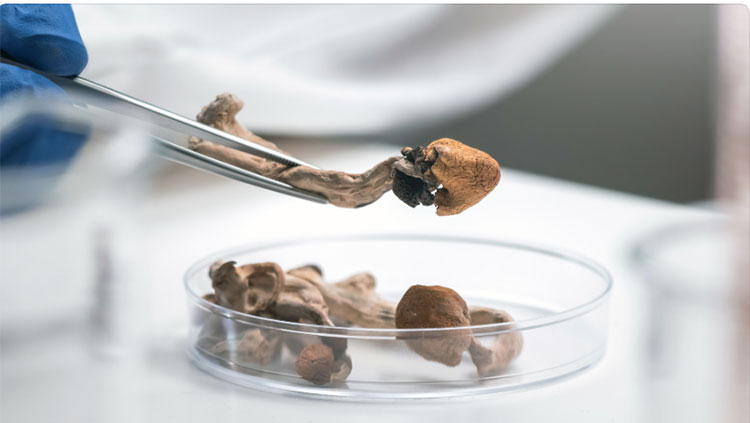
Taking psychedelic drugs can result in hallucinations and changes in thought patterns or mood. Scientists who study these drugs don’t yet fully understand how they affect the brain, but a new analysis of nearly a dozen studies offers a clue. The study, published in Nature Medicine, found five psychedelics ― LSD, psilocybin, DMT, mescaline, and ayahuasca ― temporarily alter brain activity in comparable ways.
Researchers analyzed hundreds of fMRI brain scans collected from people under the influence of one of these drugs and in a state of rest. The five psychedelics differ in terms of their molecular structures, but each one increased connectivity across brain networks. For example, the study revealed people who took them experienced more communication between regions linked to cognitive processing and those associated with processing sensory input or coordinating motor function.
Big Picture: Interest in psychedelics has resurged in recent years due to their potential as a class of therapeutics for conditions like depression and post-traumatic stress disorder. Last month, the Trump administration announced its intention to accelerate access to these drugs as treatment options for people with serious mental health conditions. But researchers are still parsing how psychedelics affect the brain, and which specific properties could make them viable therapeutics. Analyses like this one offer a more comprehensive look at what some players in the field have discovered thus far, and how future research could build on existing findings.
Read More: Scientists identify ‘neural fingerprint’ of psychedelic drugs in the brain. The Guardian
More Top Stories
- Astronauts’ sensorimotor skills don’t completely adjust to microgravity, even months after living in the International Space Station. Scientific American
- The experiences of both imagining an object and seeing it in real time can activate the same neurons. NPR
- A new synthetic opioid may pose a reduced risk of overdose and addiction while still relieving pain, according to research in rats. Live Science
- Sounds below the frequency range of human hearing, called infrasounds, may influence why people feel inexplicably unsettled in some settings. Popular Science
- The Food and Drug Administration approved a novel gene therapy developed to restore hearing among children born with a rare form of deafness. The New York Times
- Atypical, quick bursts of brain activity experienced by people with epilepsy happen at a predictable rate, a finding which could be useful for designing future therapeutics. Science
- A specific subset of neurons may be responsible for changes in blood flow associated with brain states, a finding that could have implications for how researchers assess MRI scans. The Transmitter
- A large, Wisconsin-based analysis of people’s IQ scores over the course of decades found no difference between people who drank water with fluoride and those who did not. Science News
About the Author
.jpg)
Bella is the Staff Writer and Editor for BrainFacts. She previously worked as a digital science reporter at PBS NewsHour, where she was named a fellow in the 2022-2023 class of the National Science-Health-Environment Reporting Fellowships (SHERF) and earned a 2021 D.C. Science Writers Association Newsbrief Award for writing. She graduated from the University of Michigan with a bachelor's degree in 2018.
CONTENT PROVIDED BY
BrainFacts/SfN