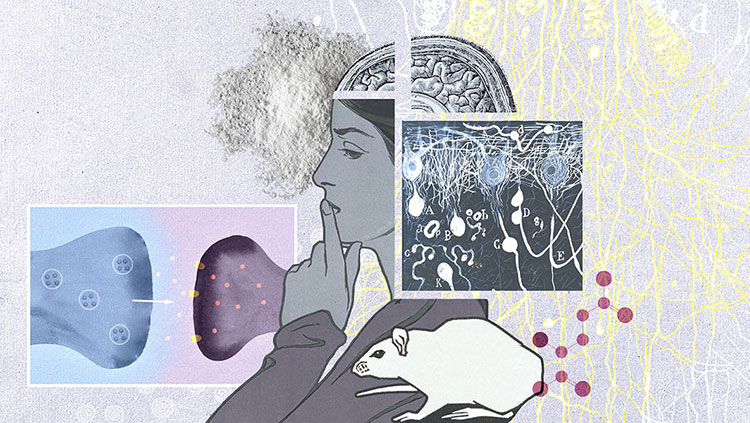
Have you ever felt stressed right before a big presentation or speech? Learn how our brains and bodies work together to produce a stress response during high-pressure situations.
This is a video from the 2025 Brain Awareness Video Contest.
Created by Nina Trujillo
CONTENT PROVIDED BY
BrainFacts/SfN
Transcript
This is your brain when you are relaxed, and this is your brain when you are under stress.
Hey, hey, hey — don't skip this video yet! We are here to walk you through the stress response in humans. You're gonna love it.
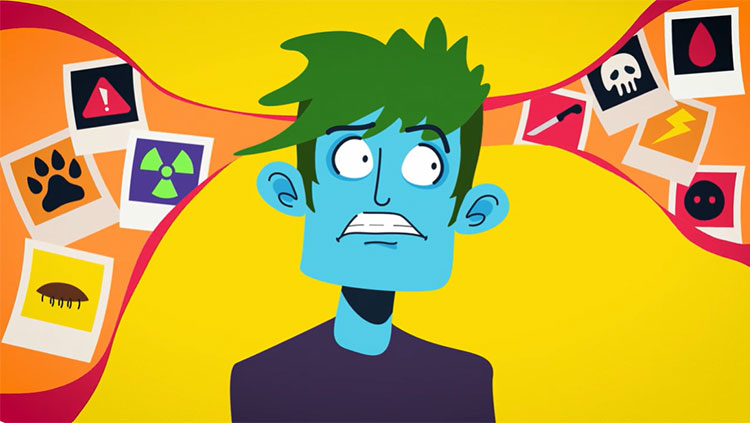
Stress doesn't necessarily have to be a negative reaction. It is a normal response to stimulus perceived as threatening, or that may trigger any physical or emotional reaction.
Let's think of a public speech as an example of a threatening perceived stimulus. The stimulus, in this case, the speech, triggers a neuroendocrine response that activates the SAM axis first followed by the HPA [hypothalamic-pituitary-adrenal] axis.
Let's explore the SAM axis first. It stands for sympathetic adrenal-medullar axis. The NTS [nucleus of the solitary tract] is a sensory nucleus that receives cardiovascular, visceral, and respiratory information. This nucleus signals to the Locus Coeruleus, the primary source of norepinephrine, all the physiological dysregulations in the organism, leading to the activation of the sympathetic branch at the spinal cord level.
Thus, we have a release of adrenaline and noradrenaline.
That's right!
This release of adrenaline and noradrenaline increases the function of the heart, the lungs, the bladder — elevating blood pressure and respiratory rate, decreasing your intestinal motility, and modulating glucocorticoid release.
We were talking about how not only the SAM axis activates in response to the stimulus; we mentioned the HPA axis, remember? When there's peripheral release of adrenaline and noradrenaline, the PVN [paraventricular nucleus of the hypothalamus], one of the most important autonomic control centers in the brain, activates through the stimulation of the vagus nerve. This way, the synthesis and release of corticotropin-releasing hormone starts.
Don't forget about the arginine vasopressin, also known as antidiuretic hormone. These two hormones travel through the pituitary portal blood in order to arrive at the anterior pituitary, a crucial element in the endocrine system. Finally, the anterior pituitary promotes the synthesis and release of adrenocorticotropic hormone, ACTH. Once it’s released into the bloodstream, it travels until it reaches the adrenal gland, where it promotes the synthesis and release of glucocorticoids.
As a fun fact, the main glucocorticoids are known as cortisol for humans, dogs, hamsters, and fishes. Meanwhile, they are known as corticosterone in mice, birds, reptiles, and octopus.
The release of glucocorticoids modulates a wide range of physiological functions like metabolism, immunity, and the inflammatory response — contributing [to] the fight-or-flight response.
Remember, this is just a brief description of a simple stress response. But stress is such an interesting topic. We could talk about chronic or acute stress.
We could also talk about post-traumatic stress disorder.
Or we could talk about eustress and distress.
Okay, okay, we get it — too much information to process. Maybe next time we could talk about it?