Sea Slug Study Hints at Optimal Timing Intervals for Forming Long-Term Memories
- Published16 Apr 2026
- Author Dina Radtke
- Source BrainFacts/SfN
It takes time and practice to learn something new, but some unlikely heroes are helping researchers identify the optimal way to master a new skill.
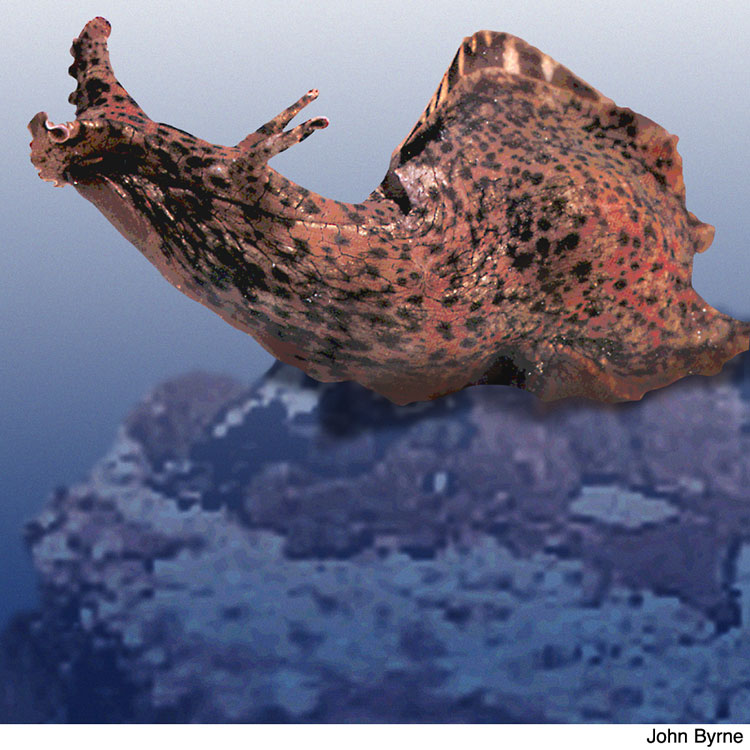
Aplysia californica, a species of sea slugs, have about 20,000 neurons — compared to the billions making up the human brain — and their neurons are significantly larger, some even visible with the naked eye. Their simple nervous system makes them a helpful subject for exploring learning and memory, said John Byrne, professor of neurobiology and anatomy at McGovern Medical School in Houston and senior author of a March 2026 study published in the Journal of Neuroscience.
Researchers have long known that learning usually happens in trials, not in one single learning period. And it’s best to space the learning experiences apart rather than cramming one right after another. That’s why studying for an exam over a couple weeks is better than leaving all your studying until the night before.
But how much time should we leave between one learning period and the next? That’s what Byrne and his team set out to find.
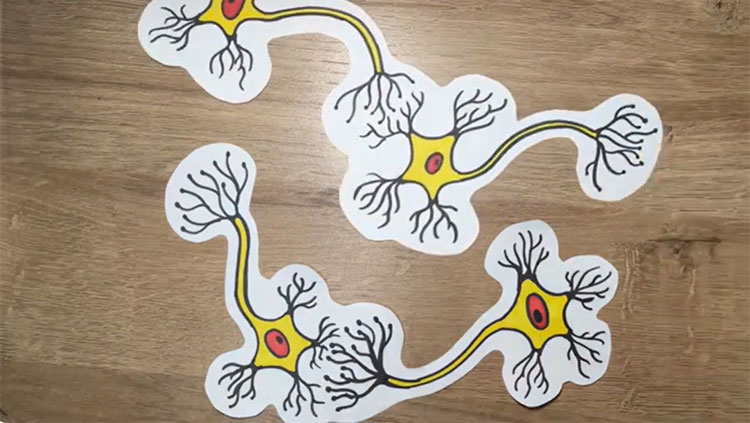
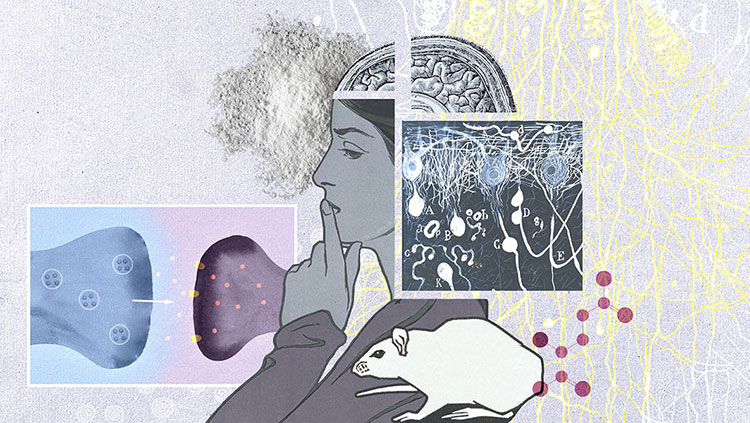
When we learn something for the first time, synapses — the connections between neurons — strengthen. But if the skill isn’t practiced, the connection starts to weaken. Synaptic strengthening relies on neurons releasing serotonin and other neurotransmitters, which initiate a number of cellular processes, including gene expression. “To get a long-term memory, you have to activate genes because genes lead to the production of proteins, which strengthen synapses,” said Byrne.
Byrne’s team isolated sea slug neurons in a dish and added serotonin to mimic the cellular process of learning something for the first time. They waited 18 hours, 24 hours, or 32 hours before adding serotonin again, which imitates the process of re-learning, to test which time interval is the best for solidifying a long-term memory.
They found there was no reinforcement from re-learning after 18 or 32 hours, but re-learning after 24 hours led to long-term memory formation.
Sea slug neurons may work differently than ours. But this study shows the cellular processes underlying long-term memory formation are not a simple, linear cascade of events. “It starts a process going that takes time,” said Byrne. “It has a cycle to it, and that cycle seems to work on a 24-hour period.”
About the Author

Dina Radtke is the Media Associate & Science Writer for the Society for Neuroscience. Previously, she was a researcher for Media Matters for America where she analyzed media coverage and fact-checked misinformation. She holds a Bachelor of Arts in Spanish Language & Literature from the University of Colorado Boulder.
CONTENT PROVIDED BY
BrainFacts/SfN
References
Liu, R., Zhang, Y., Calvo, R., Smolen, P., Byrne, J. (2026). The right time for a synapse to change: windows and mechanisms of multiday training trials. Journal of Neuroscience, e1981252026; https://doi.org/10.1523/JNEUROSCI.1981-25.2026