Investigating Dopamine's Role in Reward and Motivation
- Reviewed12 Oct 2026
- Source BrainFacts/SfN
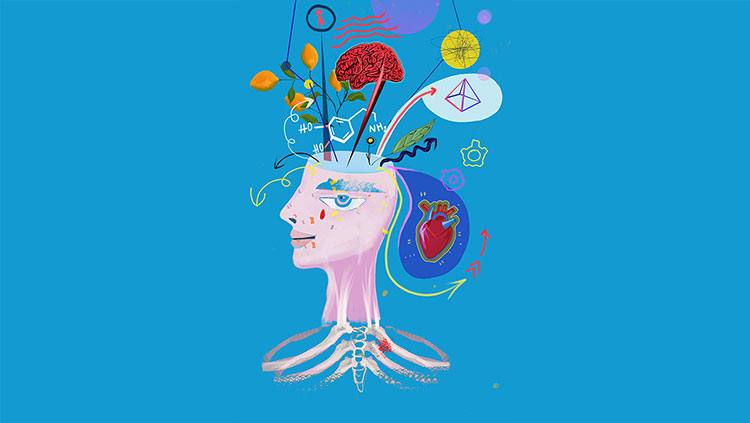
Dopamine is under investigation. Its alleged crime: causing addiction, doomscrolling, and other unhealthy behaviors in people.
In this mock interrogation, dopamine defends itself from against being the sole perpetrator of these actions, revealing some of what it really does and why motivation may be more complicated than people think.
CONTENT PROVIDED BY
BrainFacts/SfN
Transcript
Interviewer: Name: Dopamine. Formula: C₈H₁₁NO₂. Formation: Hydroxylated from L-tyrosine to L-DOPA and then decarboxylated to your current state.
Interviewer: You've been accused of multiple cases of criminal activity.
Dopamine: What? I don't—
Interviewer: Do you work in the mesolimbic pathway, also known as the reward and motivation center?
Dopamine: Yes, I work in communications department.
Interviewer: Elaborate.
Dopamine: Okay, so whenever something good happens to you, your brain treats it as a reward.
The VTA, ventral tegmental area, calculates the RPE, reward prediction error. It is not an error per se, but the difference between the actual reward and expected reward.
If the actual reward is much higher than expected, a positive RPE, they send me out. If it's a negative RPE, they inhibit my release.
My mission is to get to all those different parts of the brain structures and make sure the brain remembers and ties all the information related to the reward together.
The hippocampus remembers when and where we received the reward. The amygdala remembers how we felt. The nucleus accumbens remembers how strongly we were driven to pursue. And the prefrontal cortex remembers the act of pursuit.
Over time, the associations between information are reinforced. The association becomes a cue.
I get sent out on the cues that predict a reward. For example, a delicious smell predicts a food. That way, I can start actively pursuing the food before the food even arrives.
My attention is drawn to that food. The neural pathways associated with the pursuit are energized.
Interviewer: The whole mesolimbic system is currently under investigation for relations to drug addiction. Do you have anything to say about that?
Dopamine: I'm just a communicator.
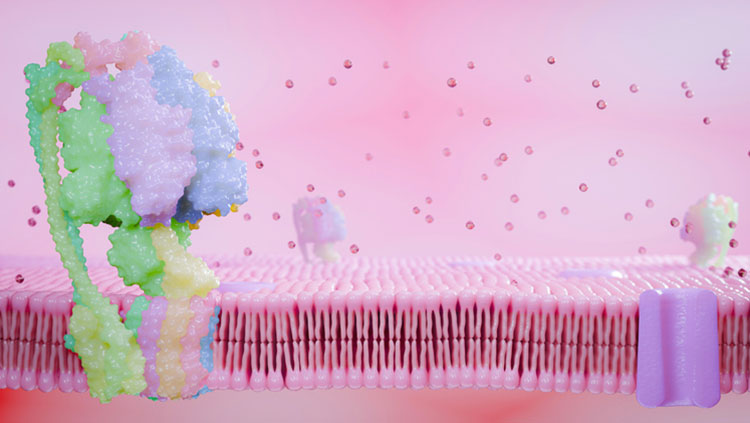
It's a drug that forces the VTA to release me at an incredibly high rate. It blocks my recycling. It keeps me in the system for longer.
As a result, the drug leaves stronger impressions on the brain structures that I visited.
Interviewer: Then how do you explain the calls we've been getting about the pleasure molecule getting people addicted to scrolling social media instead of going to the gym? That's— that's you, right?
Dopamine: I'm no pleasure molecule. I'm motivation before and during the pursuit of a reward.
Social media is designed to trigger my release. Scrolling gives rewards through likes, follows, and interesting posts, just like a slot machine. And it takes little to no effort to start scrolling.
So even the slightest cue, like seeing the phone, can motivate you to scroll.
In contrast, even though the good feeling after a workout is also a reward, starting to go to the gym just sounds like an impossible mission because your nucleus accumbens calculates all that effort you have to put into it, like pre- and post-workout exercises, getting dressed, taking a shower, not mentioning the exercise itself.
It decides that all those efforts are just not worth it.
It also takes longer to form the cues because you need more trips to the gym.
Your motivation will be low initially, but then over time, it'll get easier.
I, along with the entire reward center, only do what we were made to do. We could be used for better, or worse.
You can blame me all you want. But motivation isn't something you wait for. It is something you have to train. It is something that you, have to choose.
Interviewer: Mr. Dopamine, we apologize for the misunderstanding. We understand now. Thank you for your time.