ADHD Medication May Curb Cravings for Some with Alcohol Use Disorder
- Published17 Nov 2026
- Author Bella Isaacs-Thomas
- Source BrainFacts/SfN
Ritalin may reduce self-reported alcohol cravings in people diagnosed with both ADHD and alcohol use disorder (AUD). Amanda Elton, an assistant professor in the University of Florida Department of Psychiatry, presented those preliminary findings Nov. 16 in Washington, D.C., at Neuroscience 2026, the Society for Neuroscience’s annual meeting.
People with ADHD are often also diagnosed with one or several other mental or physical health conditions, including substance use disorders, anxiety, or depression. Many experts advocate for incorporating the full picture of a person’s life when considering treatment options because these conditions are interrelated. For young people with ADHD and AUD, this approach includes acknowledging the ample opportunities they may have to drink in the first place.
“Because there's so many different pathways to developing alcohol use disorder, and people drink for many different reasons, it makes sense that treatment strategies should consider more personalized approaches,” Elton said.
For their study, Elton and her colleagues recruited 33 young adults with AUD and ADHD. On two occasions, they scanned the participants’ brains using fMRI while they looked at images of alcoholic and non-alcoholic beverages after taking a single dose of Ritalin, the stimulant medicine generically known as methylphenidate, or a placebo, respectively.
Following placebo, participants said they craved alcohol more after looking at photos of the alcoholic drinks. But when they took Ritalin, they reported comparatively reduced cravings even after looking at those beverages.

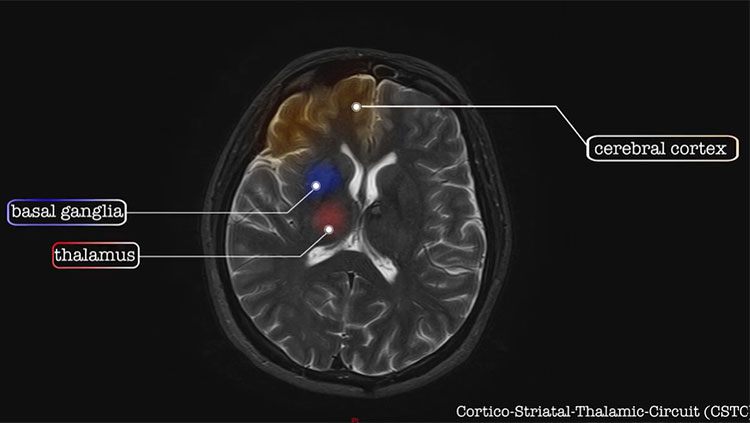
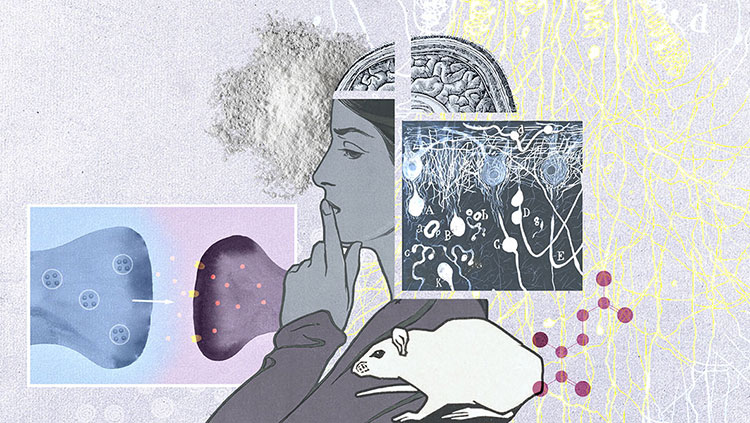
Further analysis of the fMRI results suggested Ritalin reduced activity in the participants’ ventral striatum, a region linked to reward processing, when they viewed the alcoholic beverages. This reduction in activity correlated with increased activity in the anterior cingulate cortex, a region that plays a role in executive function. Elton’s team believes the shifts, which decrease reward activity while increasing executive function, is the reason Ritalin reduces cravings.
People with AUD find it challenging to stop or slow drinking even when it negatively interferes with their daily lives. Only a small fraction of people with the disorder receive treatment, Elton said. In some cases, she explained, those who are also diagnosed with ADHD face barriers to accessing standard ADHD stimulant medications due to their history of addiction.
Young people commonly have access to alcohol and other substances in social settings. People with ADHD tend to be more impulsive. Both Ritalin and alcohol work on the brain’s reward center, a system which operates differently in people with ADHD. These factors can combine to put young people at greater risk.
“You have context that promotes, perhaps, using substances for recreational purposes, and then that's the gateway [to disordered substance use],” said Chandra Vaidya, a cognitive neuroscientist at Georgetown University.
Elton acknowledged her team’s study took place in a controlled lab environment very different from real-world scenarios where people may come across alcohol. In the future, she said they plan to assess whether these treatment options could be effective in people’s day-to-day lives.
About the Author

Bella is the Staff Writer and Editor for BrainFacts. She previously worked as a digital science reporter at PBS NewsHour, where she was named a fellow in the 2022-2023 class of the National Science-Health-Environment Reporting Fellowships (SHERF) and earned a 2021 D.C. Science Writers Association Newsbrief Award for writing. She graduated from the University of Michigan with a bachelor's degree in 2018.
CONTENT PROVIDED BY
BrainFacts/SfN
References
Aloumanis, J. N., Yu, C.C., Nixon, S., Elton, A. (2026). Effects of Methylphenidate Modulation of Attention on Neural Responses to Alcohol Cues: Frontostriatal Mechanisms. [Poster Abstract]. University of Florida, Gainesville, FL. Society for Neuroscience Annual Meeting, Washington, D.C., United States. Program No. PSTR326.22 https://www.abstractsonline.com/pp8/#!/21503/presentation/31399