ICYMI: Hippocampus May Remain Active Under Anesthesia
- Published4 Jun 2026
- Author Bella Isaacs-Thomas
- Source BrainFacts/SfN
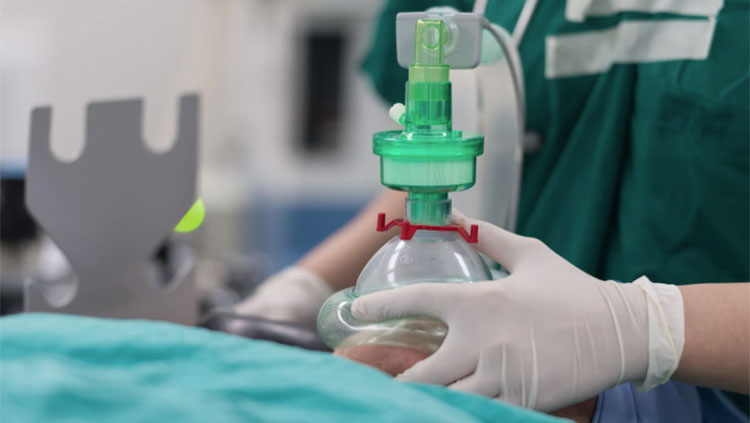
Doctors administer general anesthesia during surgery to ensure their patients don’t feel pain or remember the experience. But even in this unconscious state, a brain region vital to learning and memory may remain active and capable of making predictions based on patterns, as researchers from Houston’s Baylor College of Medicine and Rice University published in Nature.
Using tiny electrodes called Neuropixels, the team monitored the hippocampi of seven people anesthetized while undergoing brain surgery to treat severe epilepsy. Those recordings showed the participants’ unconscious brains responded to speech similarly to a conscious brain, and indicated they were increasingly adept at discerning a range of sounds.
The researchers played a podcast for one set of participants, finding different neurons fired in response to different types of speech, and they appeared to actively predict which words would come next. For the other group, researchers played a series of tones periodically interrupted by a new sound. The participants’ brains got better at differentiating sounds and recognizing unexpected ones over the course of the 10-minute experiment.
Big Picture: It’s not clear whether the findings will translate to other non-conscious states, like sleep — or to anesthetics other than propofol. But the work sheds light on how the unconscious brain may continue processing external stimuli. In their paper, the researchers note the results offer insight regarding the broader question of what differentiates conscious and nonconscious processing, as experts continue to debate what consciousness is, and how the brain constructs it.
Read More: The brain processes overheard words under anesthesia, but it may not remember them. Scientific American
More Top Stories
- Acute stress may disrupt the brain’s ability to generate novel insight, impairing how it combines memory with new information. Nature
- Lacunar strokes in deep brain regions may be caused by enlarged arteries rather than blocked ones, which could be why blood thinners are less effective at preventing them. The Guardian
- New research suggests the brains of kids with ADHD don’t mature later compared to those without the condition, contradicting previous conclusions. Live Science
- A small study found psilocybin may offer a viable treatment option for people addicted to cocaine. Science
- The Trump administration issued a surgeon general’s advisory regarding the potential negative health implications of too much screen time among kids and teens. STAT
- Iron-rich white blood cells within homing pigeon’s livers may help direct their brains as they navigate using the planet’s magnetic field. Science News
- A new approach to designing hearing aids could allow users to control which voices are amplified in crowded spaces. NPR
- A small dose of psilocybin appeared to calm fish belonging to a typically aggressive species. Popular Science
About the Author
.jpg)
Bella is the Staff Writer and Editor for BrainFacts. She previously worked as a digital science reporter at PBS NewsHour, where she was named a fellow in the 2022-2023 class of the National Science-Health-Environment Reporting Fellowships (SHERF) and earned a 2021 D.C. Science Writers Association Newsbrief Award for writing. She graduated from the University of Michigan with a bachelor's degree in 2018.
CONTENT PROVIDED BY
BrainFacts/SfN