African Ancestry Neuroscience Research Initiative Increases Representation in Genomic Research
- Published26 Feb 2026
- Author Melba Newsome
- Source BrainFacts/SfN
On most days, Thomas Hyde and his staff make two or three calls, just hours after someone has lost a family member. Over the phone, Hyde, the chief medical officer at the Lieber Institute for Brain Development (LIBD) in Baltimore, asks if they will donate their loved one’s brain to science.
On March 26, 2020, Priscilla Agnew-Hines forced her way into her son’s Muskegon, Michigan, apartment. There she found a heartbreaking, although not completely unexpected, sight: 41-year-old Larry lay dead of an overdose on the bathroom floor. Larry had struggled with addiction and depression for decades, which only seemed to be getting worse.
Twelve hours later, in a fog of grief and shock, Agnew-Hines answered Hyde’s phone call. Would she consider donating her son’s brain to advance scientific research?
Yes, she would.
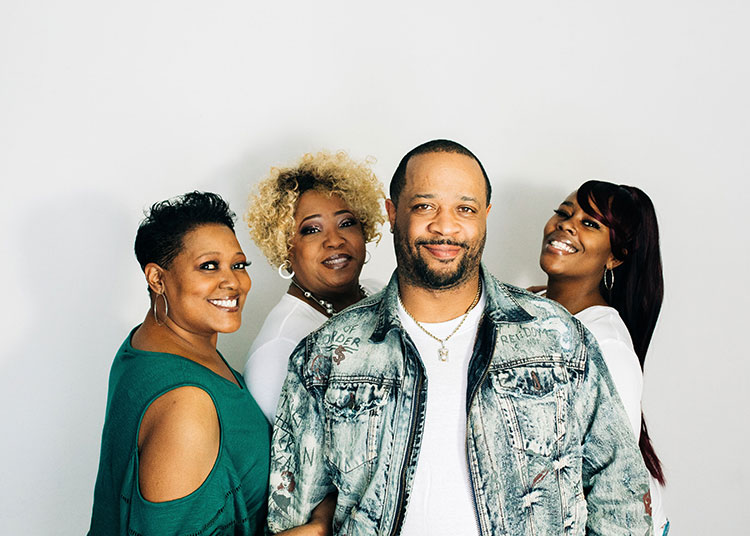
Having worked as a recovery coach and watched several family members struggle with substance use disorder, Agnew-Hines had long sought to better understand the science of addiction. “I’ve always been intrigued about what causes people to do drugs,” Agnew-Hines told BrainFacts. “My son was an organ donor, and I wanted to donate his eyes. And when [Hyde] mentioned studying his brain, I was like, ‘Absolutely!’ I thought about how my son could be a part of something bigger, something that has never happened before. That was very powerful for me.”
Hyde finds the rate of consent varies little among different racial and ethnic groups. “This is a great tragedy, and it’s a very personal decision based upon cultural, religious factors, and sometimes just emotional feelings about the situation but close to 70% agree to donate.”
Five years after his death, Larry Agnew’s brain is among the more than 500 donors of people who identify as African American in LIBD’s postmortem human brain repository — part of a special project called the African Ancestry Neuroscience Research Initiative (AANRI). This first-of-its-kind nonprofit was created to reduce mental health disparities by increasing the participation of African Americans in both genomic neuroscience research and the field of neuroscience.
A Unique Model
“Two things are responsible for all human illnesses — the genes that people inherit and the environments that they experience,” said LIBD CEO and Director Daniel Weinberger. “This place is about trying to understand how genes and the environment create brain disorders.”
While LIBD made promising but preliminary strides in unraveling the mysteries of brain development and disorders, the researchers couldn’t ignore the glaring shortcoming of the genomic dataset on which their findings are based: It did not accurately represent the diversity of the world’s population.
.jpg)
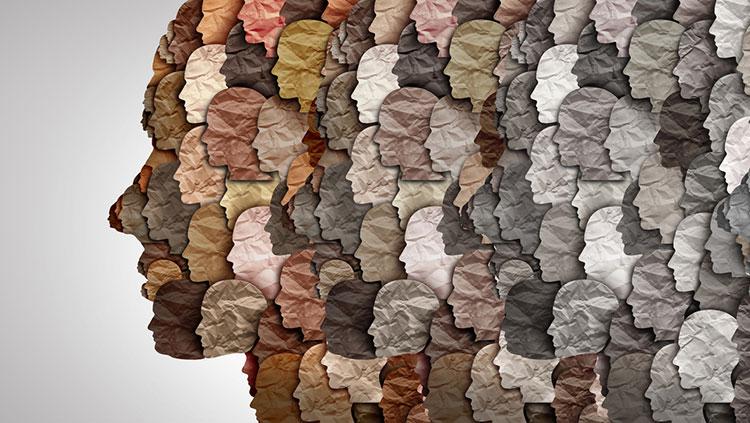
People of European descent make up less than 16% of the world’s population but constitute 81% of large-scale genomic databases. An analysis by Johns Hopkins researcher Steven Salzberg found that about 10% of the African genome — over 300 million base pairs — are omitted from universal genetic research.
In order to understand why African Americans are 20% more likely to experience serious mental health problems and twice as likely to develop Alzheimer’s disease than people of European descent, their participation in the research was essential.
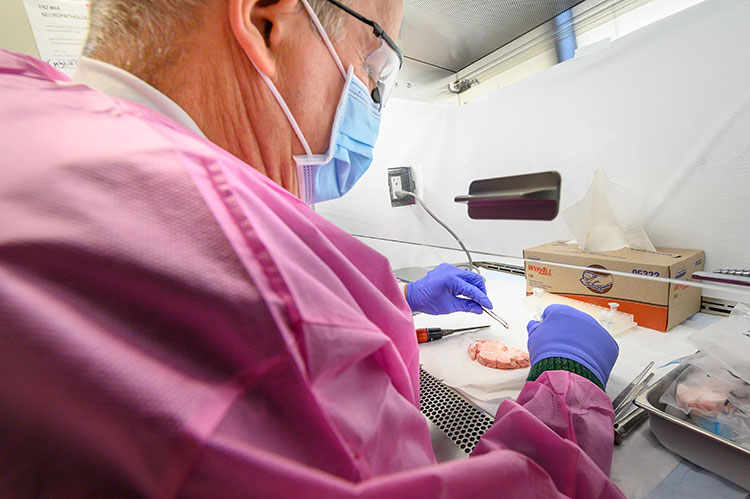
“We are not great pioneers in social justice, but we are scientists who believe that to understand human illness, you have to understand how this is represented in all humans,” said Weinberger.
In 2019, Weinberger recruited Alvin Hathaway, community organizer and senior pastor of West Baltimore’s historic Union Baptist Church, to ensure it achieves its mission.
“For me, this became a social justice issue,” Hathaway explains. “When I looked at the dearth of Black persons in terms of participants and also professionally, I said, ‘Wait a minute, we’ve got to change that.’” He saw an opportunity to create a template for participatory research that engages and respects the impacted community.
Hathaway has a long history of community organizing and an interest in health equity. This gave him the credibility he needed to foster trust and transparency. He wouldn’t be asking others to do what he hadn’t. More than 25 years ago, he and his wife enrolled in the Baltimore Longitudinal Study of Aging conducted by the National Institute on Aging. The experience encouraged him to be proactive about his health. “It also showed me how people of African American descent don't really have access to high-quality healthcare and opportunities to get those comprehensive studies and evaluations,” he recalls.
In addition to the well-founded distrust of the medical establishment, many Black people aren’t involved in medical research simply because they aren’t asked. A 2020 study found some clinical trial recruiters intentionally withheld clinical trial opportunities from African Americans because they assumed them to be less capable of complying with the required rules and protocols.
Accessing Genetic Diversity
Most people in the United States who self-identify as Black have between 20% and 60% European ancestry. However, greater representation of Black people in research gives scientists access to African ancestry — the greatest diversity of genetic variation in the human genome. AANRI’s intensive work on the most complex representatives of genetic diversity is already leading to greater clarity about how to best customize therapies and maximize the effectiveness of treatments across humanity.
In 2024, the first study using data derived from AANRI samples in the Lieber Institute for Brain Development’s repository was published in the scientific journal Nature Neuroscience. To fill the gap in diversity of neurological studies, lead author Kynon Jade Benjamin and his team investigated expressed genes related to ischemic stroke, neurodegenerative diseases, and psychiatric illnesses in the brains of people with African ancestry.
"African Americans have a complex genetic architecture, with varying amounts of admixed African and European ancestries. The greater the proportion of African ancestry, the greater the expression of genes associated with risk for stroke and Alzheimer’s disease," said Hyde via email about the study’s findings. "The greater the proportion of European ancestry in the same population, the greater the risk for Parkinson’s disease."
In contrast, he said, the study's results indicated no relationship between gene expression levels in genes associated with risk for psychiatric disorders or behavioral traits, based on the relative proportions of African versus European ancestry.
“The implication is that all of those things which may or may not be an issue in African American communities are not about ancestry,” says Weinberger. “They are about environments and you can do something about people's environment. My message is and has always been, there's no such thing as a superior or inferior brain.”
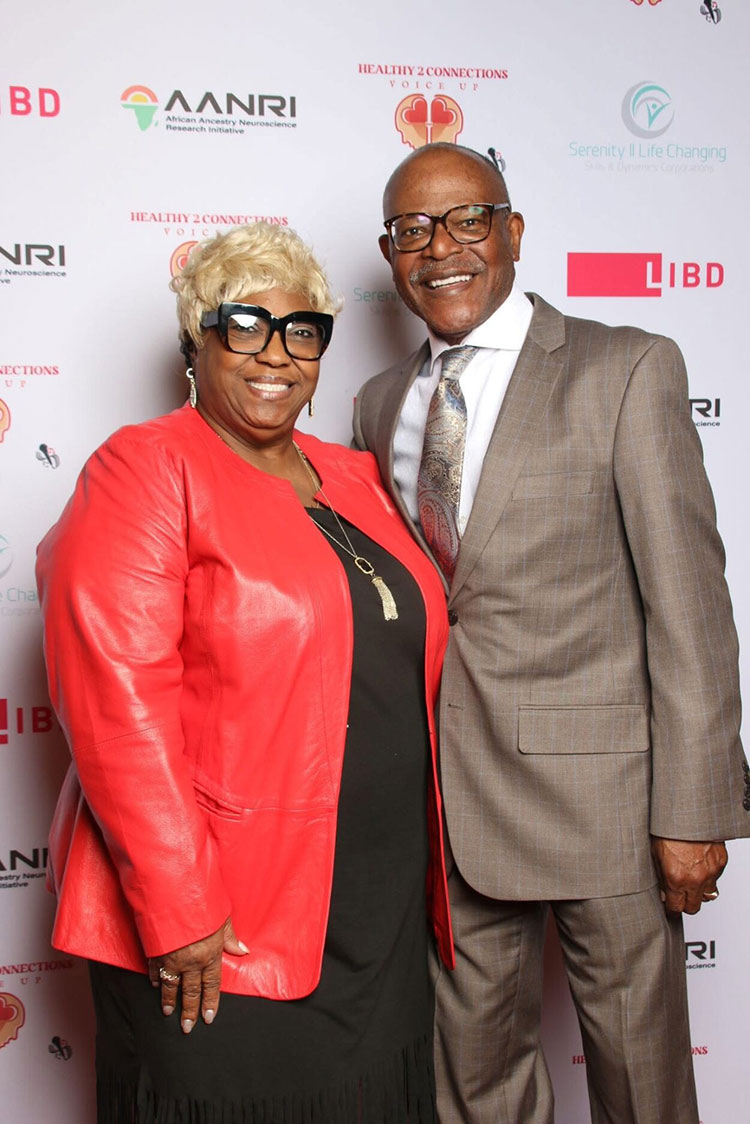
For Hathaway, these findings are both reassuring and motivating, particularly for those who are concerned that focusing specifically on Black brains might lead to a 21st century version of the widely discredited eugenics theory. Instead, he saw an opportunity to create a community-based approach to conducting participatory research in an inclusive way.
Hathaway was convinced genetic brain research of African Americans lagged behind because of a lack of funding. He thought, “What if the community led on raising the dollars to fund and actually help determine what the premise and the scope of the research would be?”
The premise paid dividends. Hathaway was instrumental in bringing in Morgan State University as a coalition member, securing $275,000 from the Abell Foundation, $1 million from the Chan Zuckerberg Initiative, and $1.25 billion from the State of Maryland. AANRI now has the world’s largest repository of brains from people who self-identify as African American.
Work akin to AANRI’s continues elsewhere. Roughly 400 miles south in Winston-Salem, North Carolina, Goldie Byrd, professor of social sciences and health policy at Wake Forest University School of Medicine, has been conducting extensive and in-depth research on Alzheimer’s disease and other dementias in African Americans for more than two decades. Byrd is currently a principal investigator of a $46 million NIH grant to recruit 13,000 participants of African and Hispanic ancestry and 100 brain donors with a family history of Alzheimer’s for a long-running study aimed at building a national resource for understanding the disease in these groups.
The work is part of an international initiative called the DAWN Alzheimer’s Research study, a consortium that includes the University of Miami, the University of Ibadan, Wake Forest School of Medicine, Case Western Reserve University, and Columbia University, to expand representation in Alzheimer’s genetic research.
“The percentages of African Americans who are participants in clinical trials is so low that it is troublesome to see the kinds of generalization [in disease states] that occurs,” said Byrd, mentioning that generalizing the total population based on one group isn’t practicing “good science.”
“In order for us to have therapies and interventions for disease where all of us can take full advantage, we have to know about the biology of all of us,” which is why Byrd is excited about the work of AANRI and the number of brain donations they’ve been able to collect. For her, it shows the significant role large collaborative initiatives have in creating and maintaining robust connections with the communities they intend to partner with in research.
“My hope is that we will get to a point where we can have some confidence again in the research world,” said Byrd, expressing she wants to continue to see more people of diverse communities participating in science. “I don’t want the community to lose confidence in what we do as we navigate the waters of change.”
For her part, Agnew-Hines became an officer in these waters. She started a nonprofit called Healthy 2 Connections in her son Larry’s honor. Based in Muskegon, Michigan, the nonprofit’s work is centered on building awareness in the Black community of mental illness and substance abuse. Agnew-Hines also works as an LIBD volunteer recruiter to advocate for others to donate their brains to science. She leans on her work and faith to cope with the loss. “My son was such a shining light to everybody who knew him,” she says. “He never met a stranger.”
Additional reporting by Juliet M. Beverly.
About the Author
Melba Newsome is an award-winning independent journalist based in Charlotte, North Carolina. She frequently writes about racial disparities in science, health, and education.
CONTENT PROVIDED BY
BrainFacts/SfN
References
Alzheimer's Association. (2010). Alzheimer's disease facts and figures. Alzheimers Dementia. doi: 10.1016/j.jalz.2010.01.009.
Benjamin, K. J. M., Chen, Q., Eagles, N. J. et al. (2024) Analysis of gene expression in the postmortem brain of neurotypical Black Americans reveals contributions of genetic ancestry. Nat Neurosci, 27, 1064–1074. https://doi.org/10.1038/s41593-024-01636-0
Denny A., Streitz M., Stock K., Balls-Berry J. E., Barnes L. L., Byrd G. S., Croff R., Gao S., Glover C. M., Hendrie H. C., Hu W. T., Manly J. J., Moulder K. L., Stark S., Thomas S. B., Whitmer R., Wong R., Morris J. C., Lingler J. H. (2020). Perspective on the "African American participation in Alzheimer disease research: Effective strategies" workshop. Alzheimers Dement. doi: 10.1002/alz.12160.
Popejoy A. B., Fullerton S. M. Genomics is failing on diversity. (2016). Nature. 538(7624):161–4.
Power M. C., Bennett E. E., Turner R.W., Dowling N. M., Ciarleglio A., Glymour M. M., Gianattasio K.Z. (2021). Trends in Relative Incidence and Prevalence of Dementia Across Non-Hispanic Black and White Individuals in the United States, 2000-2016. JAMA Neurol. https://doi: 10.1001/jamaneurol.
Sherman, R. M., Forman, J., Antonescu, V. et al. (2019). Assembly of a pan-genome from deep sequencing of 910 humans of African descent. Nat Genet https://doi.org/10.1038/s41588-018-0273-y
Sirugo G., Williams S.M., Tishkoff S.A. (2019). The Missing Diversity in Human Genetic Studies. Cell. https://DOI: 10.1016/j.cell.2019.02.048
Tishkoff S. A., Reed F. A., Friedlaender F. R., Ehret C., Ranciaro A., Froment A., Hirbo J. B., Awomoyi A. A., Bodo J. M., Doumbo O., Ibrahim M., Juma A. T., Kotze M. J., Lema G., Moore J. H., Mortensen H., Nyambo T. B., Omar S. A., Powell K., Pretorius G. S., Smith M. W., Thera M. A., Wambebe C., Weber J. L., Williams S. M. (2009). The genetic structure and history of Africans and African Americans. Science. https://doi: 10.1126/science.1172257