This Storefront Lab Turns Brain Research Into Public Science
- Published18 Mar 2026
- Source BrainFacts/SfN
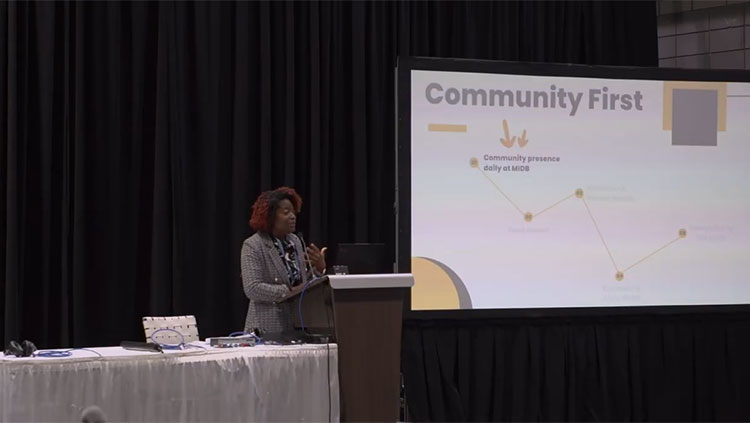
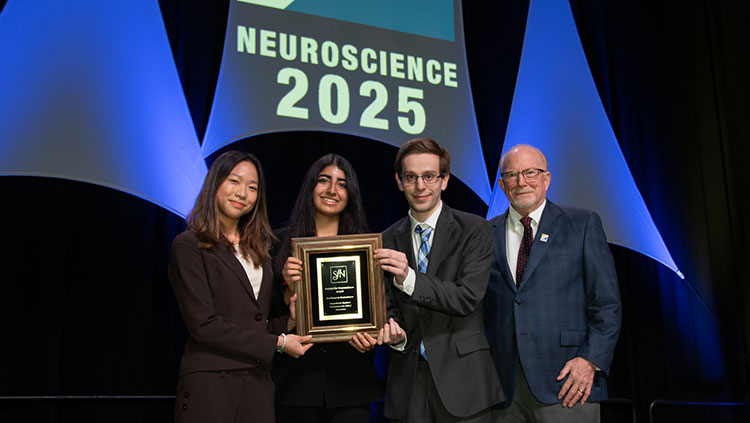
In November, Neuroscientists from around the world gathered for the annual Brain Awareness Campaign Event at Neuroscience 2025 to celebrate neuroscience outreach efforts and consider new ways science educators can engage the public.
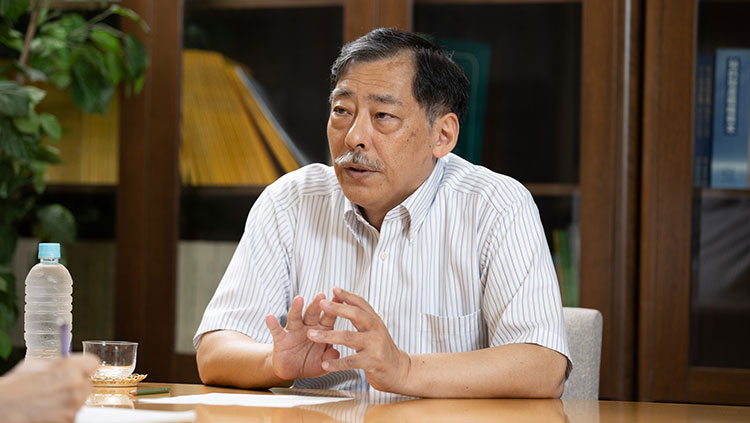
Keynote event speaker Jacopo Annese, assistant professor in residence in the Department of Radiology at UCSD’s School of Medicine and President and CEO of the Institute for Brain and Society, walked attendees through his inspiration and process in founding The Brain Observatory, a research lab and learning center based in a storefront in downtown San Diego.
By conducting his research in the heart of the city, Annese engages with people from every walk of life, bridging science, art, and education to make neuroscience accessible and meaningful for people. In his talk, “From Imaging Suite to Storefront: Transforming the Neuroscience Experience,” he challenges scientists to consider forging a new path when it comes to outreach.
CONTENT PROVIDED BY
BrainFacts/SfN
Transcript
RICHARD WINGATE:
Good afternoon, and welcome to the 2025 Brain Awareness Campaign event. My name is Richard Wingate, and I am editor-in-chief of BrainFacts.org. And I'm delighted to celebrate the outreach efforts this year from the Public Education and Communication Committee of the Society for Neuroscience, and all your outreach efforts as well.
It's my pleasure now to introduce today's speaker. This is Jacopo Annese, who graduated from the University of Rome in Italy with a bachelor's and a master's degree in biology and zoology. He earned a master's degree in neurological sciences at University College London and completed his PhD program in cognitive neuroscience at Dartmouth College, Hanover. He also trained in computational anatomy at the Montreal Neurological Institute in Canada and at the Laboratory of Neuroimaging at the University of California, Los Angeles.
In 2005, Jacopo joined the UCSD Department of Radiology where he served as a research faculty member until 2015. He founded the Brain Observatory as a research lab at the University of California, San Diego. The Brain Observatory now operates as an independent non-profit institute that bridges science, art, and education to make neuroscience accessible and meaningful. So, please join me in welcoming Jacopo to the stage.
JACOPO ANNESE:
Okay, can you hear me? All right, thank you very much. Hope, thank you for inviting me and Lisa, and I'm a big fan of BrainFacts.org, so now to be here is fun. It's an honor. I have 15 minutes. You'd like to hear that. And I have a timer. So, you'll be fine. I won't be long.
So, a lot of weird, a lot of complicated names in that curriculum. New computational neuroanatomy. Just the last bit is important, that the Brain Observatory now is a nonprofit. We moved out of UCSD. And yes, this talk is really about transformation, how we transform the lab into more of a community center in San Diego. And hopefully we will be able to move to other cities as well.
So, how did I get my gig at UCSD? I gave my talk, as most aspiring assistant professors do, and as you heard, this was the Department of Radiology. And for my PhD, I had sliced a lot of brains. And that's not because I'm Italian, but because I was very interested in histology and neuroanatomy. And so, I did my PhD on the visual cortex, creating essentially maps of the visual cortex from histology.
So when I gave my talk, I asked my soon-to-be colleagues like- the lesions, or what they call the hyperintensities, in the- in this MRI scan. And to me, as a histologist, the idea that you really couldn't see anything in this image was very awkward. So what I simply asked them, I said, “Do you know what's in this voxel?” — which would be a pixel for an MRI image. And they could name the lesion, but they really said, “No, we don't know what's happening.” And that's how I got my gig at UCSD, because I convinced them that they needed a neurohistology lab to validate MRI sequences that were developed by my colleagues in the department.
So, there you go. I created my lab, and it was specifically equipped to match anatomy and histology to MRI. So we were working like as you see with whole, with real human brains. And this is sort of the method that you know, you have to, you have to take a brain out of somebody's head. It doesn't come out by itself, as it does in an MRI scan. And then you fix the brain into a bucket of formalin, you freeze it, and then you slice it, just like balogna, really. And then you create your histological slides.
And this was our slicing machine that, I think I saw a student of mine, and they all have PTSD from slicing these whole brains frozen in this big microtome. Essentially it’s, you know… [Video plays] “Yeah, sometimes…” You're not allowed to hear what we're saying. Sometimes we swear, so. So you know, I call this cutting-edge science, and I think I'm allowed to, right, even though it's a very time-honored technique.
So this is it. This is what slicing brains looks like, and this is the actual speed. So if I were sadistic, I could actually sit here and do a whole brain and it would take about 50 hours. So, there you go. So now, you know, our job was to find out really what was happening in somebody's head. And of course, I needed to have — and this is actually what that voxel looked like. You know, it's very, very complicated inside the brain.
So we’re here — this image is only a few microns wide in reality, and you're looking at the intersection of the corona radiata with other association fibers. And to an Italian, it looks like a spaghetti ball. So to make sense out of all these intricacies, and you heard about the connectome. So, this is a little fragment, a little tiny, tiny cube in your brain, and this is what makes you — all of these connections make, supposedly, arguably, who we are. And that to me was fascinating.
So what did I need? I needed whole brains. And it became apparent that there would be no pathologist who would just give me a whole brain. So, we started our own brain donation program in San Diego. It became quite, you know, we didn't advertise it too much, but San Diego being a very large, small city, word of mouth, we were able to recruit a lot of people.
Now, there was a caveat. Our brain bank was very special because we got to know all our donors, and most of our donors did not want to be anonymized. So that we could leave their brain data, we could map their brain once it was donated, but also give a sense of who they were, truly.
So this is Charles. This is one of our recent cases, sadly, Bill McCall, he was a graduate of Hoover High School in San Diego. He played for the Bears. He was a medical doctor, missionary. It's on the top shelf of our fridge. It's like the wine. We have the, top shelf. No, there's no bottom shelf. These are Clinton and Maggie. They both had essential tremor. Although they had it, they didn’t know when they got married, only Maggie knew she had it, and they recently passed away, so we have their brains, too.
We have a Nobel Laureate in our brain bank, Renato Dulbecco, who passed away in La Jolla. So, and then we have Roger, who was a carnival barker, a hobo jumping trains back in the 30s, who was quite a character before he died. He had ALS. We met him in hospice care, so he knew he was about to die. And he said, “Before I die, I want a photo in front of your refrigerator because I want a photo with my new buddies, the friends I'm going to have when I'm dead.” And this is Beth, one of my favorite brains.
So, you can imagine it's a very awkward thing. You kind of meet people, you befriend them, sometimes they adopt you as their grandson or something, and then they pass away. Now, maybe the most notable brain we examined in our lab was the brain of Henry Molaison. I do work with case studies, so brains that have something happen to it, and they become famous or almost famous.
HM became famous, Henry, because he had a lesion. He was operated by William Scoville, who lived in Hartford, CT, as Henry did. And famously they removed, or they thought they removed, the hippocampus. And he became profoundly amnesic. This was the first known case to develop anterograde amnesia following the resection of the hippocampus.
Now, we did the autopsy in Boston, and we brought the brain back to San Diego for the analysis. And what ended up happening with our technology we created, which was NSF-sponsored, we made a three-dimensional map of the brain. And you could say, strange enough, we found out that half of the hippocampus had been left behind by the surgeon. So, this was published eventually in 2014. It created a lot of friction. Some of you know the story, some of you don’t. But it was very interesting that you know, we were there kind of revising 50 years of neuroscience. And, as I always said, don't shoot the anatomist. You know, we just say, it’s like the Old Western film.
So, now what happened? When we were slicing HM's brain, we had a webcam, and we broadcast this procedure. Some of you might know about it. Again, everybody here is very young, so maybe it was before your time at the end of 2009. And we really had a lot of viewers just watching a brain being sliced. It was very strange, the fact that hundreds of thousands of people would actually watch a brain being sliced. And that was kind of a very big insight.
Now, add that to the fact that we had this community of brain donors and their families who [had] children who brought their classrooms to visit the lab. At some point, I really felt that we ought to bring the lab outside and be more accessible, so we could actually show what we do.
Now, you see, we slice the — you know, the paper was 2014, this was 2018, we weren't able to move into what the space we have now until 2022. So, things don't happen very quickly. Especially when you leave the track that you know. I don’t mean for this to be career advice, the take home message comes later, and it’s very positive.
But this was my original pitch to try and find donors — the idea that we could have a lab that was more like a storefront; that people could just walk by, come and say, “Hi, what are you doing?” “Oh, I’m slicing a brain from an Alzheimer’s patient.” “Oh, Alzheimer’s? What is all that?” You know, and educate people, talk about science while we were doing science; not as an afterthought, not as a kind of an additional event.
So, with Hope, we were talking on the phone, and the idea that for us, Brain Awareness Week is really every week of the year. So, we have a Brain Awareness “Year.” Especially when the museum comes, or when the tourism authorities in San Diego has promotions and people visit the lab in port.
But this is, you know, very naïve. Me, I had my friend Matteo Farinella, who’s now at Columbia, make these drawings. And I stole images, this is an Apple store somewhere. And I thought, “Oh yeah, so the lab will be visible from the outside.” And then this is something I stole from the Brains. Sorry, I didn’t tell you, this is the first time, from the brain exhibition in London where I contributed. And then you know, again stock images, that I needed to give the idea of, “What would this open lab look like?” And this is all I had. And then, we haven’t realized this yet, but I was really was convinced that we ought to let people look inside their brains. So we wanted, and we still want, to have our own MRI scanner to do screening, to provide affordable screening for the brain for people. This is still something we’re working on.
Then finally in 2022, Richard here knows, we were able to get a physical location for the new lab. And it’s now on West Broadway, so it’s two blocks from here. And it’s in this beautiful building, it’s a historic building in downtown San Diego. It’s right in front of the Santa Fe train station. And we moved in just before Christmas, so the building was decorated. And I got my wish: I got a lab with windows onto the street. And we opened with an exhibition that Richard and a colleague of ours, Marius Kwint, helped curate. And it was an art and science exhibition.
And then I staged this lab a bit as a museum, to make it, you know — all the paraphernalia, all the junk, that I collected in 30 years of neuroscience, I just put it there. Books, and you’ll see because we have an open house on Monday, and I have the poster coming next.
So, we let people come in. It’s very strange, but we let the general public just be in our lab. And what I wanted was also that this would not be a recreation of neuroscience, but this would be our equipment that we share with the public, which has, you know, as you can imagine, some problems. You have to have people there to help people use scientific instrumentation.
And then this is a little anatomical theater that we created. It’s like the cooking classes where you see what the chef does. In this case, I dissect brains. But there is always a little crowd like you who can look at the brain as I explain what the olfactory bulb is. And, you see here sometimes we also have a little brain zoo for smaller kids. And this is me in the Fred Rogers version because on Sundays we have families with toddlers, so we can teach in a very basic way. And then they make a mess.
But, one thing that I didn’t expect, (and, I’m just looking at the watch), is that without really any effort, we got schools interested in the space and in the program. So, I created a curriculum for fourth to 12th grade, and what we do now — thank God, because that pays the rent— I had a business plan that was not very realistic at the beginning, but fortunately the school districts and schools came in and helped me out. And so, what we do every year — we have contracts with school districts for field trips and camps.
And so, this is not a curriculum yet that is really kind of designed with any theoretical framework in mind. It’s really my career, which is gamified. What I’ve experienced, what I know, and so far, this is what I do. Eventually I'd like to team up with an educator and really create a curriculum that could be exported to other schools. And maybe with BrainFacts.org, it’s something that could be done together as a partnership.
So, these are fifth graders working on what we call the brain puzzle. They learn about an MRI scan, so we usually talk about pathology, MRI, and cognitive science, which is what I know. I don’t teach what I don’t know.
And then in the lab, there are, like we said, art activities. So, for example, when we teach about anatomical planes, we teach them by giving them kiwis to slice in different orientations and draw them because it’s the idea of also learning about scientific illustrations before the era of cameras and digital cameras. So, we have hundreds and hundreds and hundreds of kiwi drawings. And I’m always at the supermarket buying big bags of kiwis for my classes. Because a kiwi doesn’t make a lot of mess, but it has a lot of detail. When I have a lot of money, when I feel rich, I buy dragon fruit, which is even more beautiful. But kiwis seem to work very well, at least you do coronal and sagittal, and at least you teach them that.
We work with all kinds of media. And another prerogative was that I didn’t want to preselect the students that came to the lab. So, however challenging: We get what we get. And I’m always assuming a majority of students that come on the field trip don’t care about what I do. I don’t imagine that anybody would want to be a neuroscientist. And so, we really start from the very basic. And if they don’t have — we try to give them love, lots of love. We give them breakfast, croissants. You know, it’s not to bribe them, but it’s just to make them feel — you’re here for four hours; we want you to be comfortable. And then, if you learn something, yeah good. Otherwise, it's fine. There are other jobs in the world that pay more. Sorry! I’m not doing a good job at inspiring young neuroscientists. No, no! Wait for the last slide.
And so, and then, you know, it’s like it’s never too early to start. Now I start being inspiring too, you see. So, we really work with very young kids. And one of the biggest things is when they get to hold the human brain, safely, and it gives them — I like them to have the idea that they become aware- awareness is the key word for all of us. They become aware of what there is in our head because we cannot feel- we cannot see our brain unless we get a scan, and so giving them the opportunity to do- wherever they come from, whatever if a title 1 school, it’s a little girl, or an elderly person whose husband maybe had a brain disease, they get to firsthand experience what a medical student would experience, or a doctor. And that’s important to me.
So, generally, that’s what they like. And so, what I wanted to demonstrate. And I don’t know, honestly, if I could say success, because we're still struggling with cash flow. We’re still, you know, the balance between research. I miss research. But the idea was: Science can be made also outside of the university walls. This is what I really would like to — the take-home message is that, you know, I like being near to a coffee shop, I like being near to a restaurant, to a hairdresser, because I feel the same way. I feel like I have something that I’m passionate about, and I was lucky enough to make that my job.
And so, being in the lab you know helps me kind of realize: Ok, science maybe can really be done in a more of a freelance way, and we’re proving that there is enough revenue to keep the doors open. As more research grants will come in, we can allocate space and expenses.
So, in a nutshell, the test was to see whether we could have an independent lab. We could have a lab just like any other business. And like I said, the test is still ongoing. If you want to see firsthand what it looks like, we are hosting an open house on Monday evening. And it’s in and out. But please do come and visit. It’s only three blocks from here. So, you can just come and see the space. I don’t know if I gave it justice with the slides.
And then so, we’re also on the satellite event list. SfN only allows from seven to nine for satellite events. But for friends and family, you can come as of five o’clock. So you can come earlier if you’d like.
Alright: That’s it. That’s my talk, and then I know that there’ll be questions, which I left time for. [Audience claps]
RICHARD WINGATE:
There we go. Thank you very much, Jacopo. Fascinating.
JACOPO ANNESE:
Do I stay here?
RICHARD WINGATE:
You stay there, I'll go around, and- and ask you a question.
RICHARD WINGATE:
I just want to say two things. One is the just illustrating importance of showing the public what we do in an age of misinformation. I think it’s really vital they see what scientists are actually up to. We’re not behind closed doors. And the second is, very kindly, you mentioned the Brains exhibition in London 10 years ago.
JACOPO ANNESE:
Of course. That was uh—
RICHARD WINGATE:
And uh- still you’re a part of it.
JACOPO ANNESE:
It’s still a milestone when it comes to brain awareness, I think.
RICHARD WINGATE:
And it remains the busiest day the Wellcome Collection, which is a museum in London, ever had, still, after 10 years. And when we did the same Brain-
JACOPO ANNESE:
In Manchester.
RICHARD WINGATE:
In Manchester, and it’s now in Madrid, it’s been on tour ever since. But the day we did hands-on brain, brain handlings, there were queues of around 2,000 people queuing to just see a brain for themselves. So, I just wanted to say that that fascination can be tapped into.
RICHARD WINGATE:
So, I won’t go on. Questions, please? If anyone has any questions.
AUDIENCE MEMBER:
My question is: How does this work with IRB protocols?
JACOPO ANNESE:
Ah well, with the brain bank in terms of the IRB, it's all about informed consent. So, the consent form is not just the anatomical gift, it’s the consent for research or education, and then given that we know the actual donor, we also talk about education, meaning, are you comfortable with — so in terms of the IRB, it’s about making sure that your patient, your subject can make informed consent or their next of kin if this is a person who is not able will make an informed decision based on what they know about their spouse, or their father, or whatever it is. So it’s really about how you recruit. That’s why I stopped getting brains from brain banks where the provenance — not because it was dubious, but because it was not really a relationship with either the family or the donor.
And you’d be surprised what people are comfortable with. You know, Beth used to say, “When I ‘graduate’,” she would call it graduating, dying, “You can take my brain. I don’t use it. You can do whatever you want.” You know. Yeah, of course you cannot write that on an IRB. But, that’s you know, look at Neuralink. There are 20,000 people waiting.
So, I think it’s a misconception that people are very guarded. They’re guarded with their privacy and with their data. But you see in terms of privacy sometimes they, they’re generous, and they just want to — they get a little bit of a celebrity status with us you know, we kind of make them well-known to students. They really become inspiring. Otherwise, they’d just be dead. You know, we give them an afterlife. And all our brains, I can claim, I can honestly- I think, that they’re happy brains that we have.
RICHARD WINGATE:
Any more questions?
JACOPO ANNESE:
I'm intimidating.
RICHARD WINGATE:
I wonder how it feels to be outside the university. You say you miss research.
JACOPO ANNESE:
I miss research —
RICHARD WINGATE:
Is there scope in this kind of, this world of, this sort of university kings land?
JACOPO ANNESE:
No I mean, I think, I don’t want to put anybody off, but there was a very huge opportunity cost doing this because leaving the — even though we both know university life as a professor is not, unless you’re tenured you know you have to get yearly you know you have to publish, grants. You’re kind of on soft money all the time. At least my generation was the first to be on soft money.
And so I think the feeling is still the same: You’ve got to earn your research. I think the most difficult part was- in that transition, I didn’t know who I was professionally. Because, you know, when they ask you, “What do you do?” “I’m a professor at UCSD.” Ah, easy. But “What do you do?” “Oh, I- I started a nonprofit with like $10,000 in the bank.” So there was a little bit of an identity crisis that happened, and then eventually you know, you just kind of — if your ego doesn’t get in the way, and if you’re reckless enough, you say, “Whatever.” You don’t have to justify to people who you are, what you are. And not to say now I have the success that I, that I want or anything, but you know, at least survive doing what I wanted to do so far.
RICHARD WINGATE:
Any more questions? If not, one more for you: Um, which is, you said there may be more observatories —
JACOPO ANNESE:
Oh yes, well.
RICHARD WINGATE:
Do you think this is your—
JACOPO ANNESE:
No, that is a very good question. I mean, the idea of this brain observatory as a unit was actually almost secondary to the research goal because you notice those brain donors. So, when you look at the anatomy of the brain, you realize the variability.
So, I realized that we needed to have not 300 brains, but we needed to have 20,000 or 50,000. So, we needed to match these large population studies that are done with MRI. And you know if you are familiar with the Enigma project: hundreds of thousands of scans that now can be created.
So, again, instead of doing collaborations, I thought we would open brain observatories in the different places in the world, and that would be the gateway for giving, you know, having a brain donation program, so adding to the database. And then giving back to the community with the STEM and community projects.
So, the idea was from the beginning to be replicable. And the idea, kind of a franchising idea, so if there is some young neuroscientist who wanted to open a brain observatory in Boston or in Hong Kong, that would be the opportunity. And we are still proving that there is a sustainability.
So we don’t depend on a constant flow of grants. But there can be this symbiosis with the community, schools, to keep that — however small — to keep it functional. And then the PI in a brain observatory somewhere else may be interested in something else that I am. But as long as they bring in the, you know, it is a brain donation program that grows and that is consistent. So our data, our slides, is consistent. That’s it, yeah so yeah. Research was still kind of very important in this idea.
RICHARD WINGATE:
Thank you very much. Can you give a round of applause to Jacopo, please? Thank you. [Audience claps]
JACOPO ANNESE:
Thank you.