Meet IYNA: A Student-Driven Global Neuroscience Community
- Published23 Apr 2026
- Author Hope Berns
- Source BrainFacts/SfN
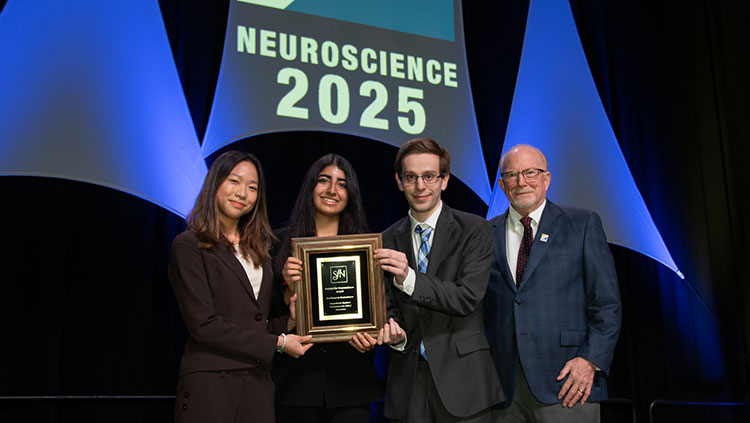
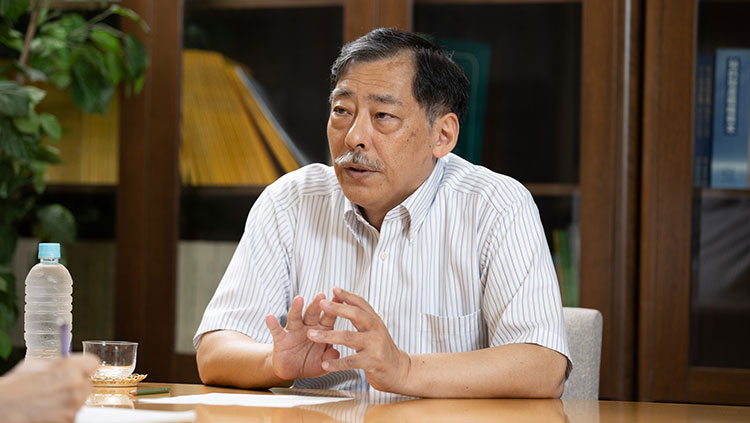
Jacob Umans knew he wanted to study neuroscience one day, but he didn’t want to wait until he was in college to get started. And he knew he wasn’t alone.
That’s why he helped co-found the International Youth Neuroscience Association (IYNA), a global organization that supports high school students as they connect with the field and prepare for future study.
That was a decade ago. Today, IYNA has more than 4,000 members across 126 countries, offering programs and opportunities that help future neuroscientists begin their journey early. As IYNA marks its 10th anniversary, Umans reflects on how the organization functions and the ways students interested in neuroscience can get involved.
How did you first get interested in neuroscience and involved with the IYNA?
I became interested in neuroscience just out of my own curiosity from reading, and in middle school, I thought I had discovered the cure for aging.
I didn't actually find the key to immortality. But, I did discover that I could use my understanding of the brain to try to improve human health. And that was such an exciting idea.
As a high school student, I started studying for the Brain Bee — an international neuroscience competition for high school students. My studying process was solitary: I was studying on my own, just reading books in my room.
But when I made it to the National Brain Bee, getting to meet so many students like me who were excited about neuroscience was such a wonderful experience. So, at the encouragement of Norbert Myslinski, founder of the International Brain Bee and director of the USA competition at the time, we founded what is now the IYNA.
What programs does IYNA currently offer?
One of our annual flagship programs is a four-to-six-week long summer course where students can participate in one of two tracks: The capstone track, in which students complete homework assignments, meet with teaching assistants, and do a research-focused project, or the participation track, which is a more flexible option to audit the course without required homework or project components. Other programs we offer are a student written and edited journal, a preparatory bootcamp for the International Brain Bee competition, and online career webinars through our Neuro& program that introduce students to different ways they can use their neuroscience knowledge to build a career.
We try to offer a wide range of activities so that students can figure out which aspects of neuroscience interest them. Maybe they aren’t interested in learning about molecular mechanisms, but they might go to a career webinar looking at neuroethics or neurotechnology and find something that aligns with the way they like to think.
Students can also start a chapter in their school or community where they can engage in a wide range of neuroscience-related activities. Chapters host meetings to talk about topics they’re interested in, invite a local professor to give a lecture, host a fundraiser for a neurological disease organization, write articles for the IYNA journal, or find other creative ways to support their members' excitement about neuroscience. Neuroscience is such a broad field. Even if our members decide it isn’t the field for them, my hope is that they’ll take their understanding of neuroscience and use that to inform whatever it is they do.
What skills do students develop through IYNA’s programs?
One obvious skill is just giving students more knowledge about neuroscience: how the brain works and how it controls how we see, feel, and experience the world.
We want students to develop an understanding of how research works, how to communicate ideas effectively, and how they can take their knowledge, passion, and enthusiasm into the future to build a career.
In the capstone track of our summer course, there are homework assignments designed to reinforce understanding, opportunities to discuss with peers, and exercises that apply lessons to real world problems. We try to offer some of those skills that aren’t in the textbook, like talking through experimental design.
How can people get involved and carry on the mission of IYNA’s work?
One of our founding principles has been to make sure that students can freely participate in any activity the IYNA hosts. All of the activities I’ve described are entirely free to all members. We want to make sure that any student, wherever they are, has the opportunity to explore neuroscience. Students are welcome to join the IYNA through our website and can follow us on Instagram and LinkedIn to learn more about our current and upcoming events.
I’m grateful for all the volunteers, members, and mentors who have helped shape IYNA. It would not be what it is today without the volunteers who put hours into organizing activities, writing the curriculum that became our summer course, and creating a community that’s welcoming for students all around the world. Most of our leadership and volunteers are high school students themselves or early undergraduates, close to the high school experience, understanding what students would need, what students would enjoy, and what they would benefit from.
I think IYNA being led by students is really at the heart of our mission. We want to connect, educate, and inspire the next generation of neuroscientists.
This interview has been edited for length and clarity.
About the Author
Hope Berns is the Outreach Associate for BrainFacts. She graduated from George Mason University in 2023 with a degree in Conflict Resolution.
CONTENT PROVIDED BY
BrainFacts/SfN
References
International Youth Neuroscience Association. https://youthneuro.org/
Windsor, M. (2025). Society for Neuroscience 2025 Education and Outreach Awards. EurekAlert! https://www.eurekalert.org/news-releases/1103675