Our Map of Speech Production in the Brain May Need a Revamp
- Published19 Nov 2026
- Author Bella Isaacs-Thomas
- Source BrainFacts/SfN
Speech happens fast. Before we share a thought, multiple parts of the brain first compose the words we’re about to say and coordinate the physiological processes needed to produce them.
New research indicates a subzone of a brain region previously thought to be uninvolved in speech production may be key to our ability to communicate. The revelation is poised to upend more than a century of precedent in neuroscience. Researchers from the University of California, San Franscisco, (UCSF) presented these findings, now published in the journal Science, Nov. 15 at the Society for Neuroscience’s annual meeting in Washington, D.C.
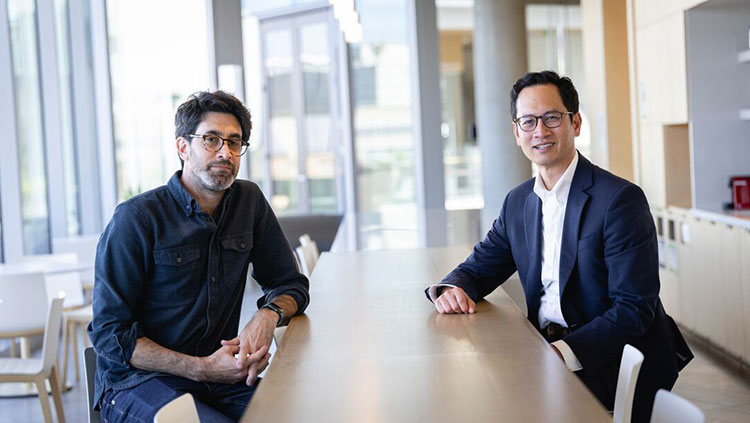
"This area is not only active right before we speak, but also when we're listening, so it truly has both functions," said Matt Leonard, an associate professor of neurological surgery at UCSF.
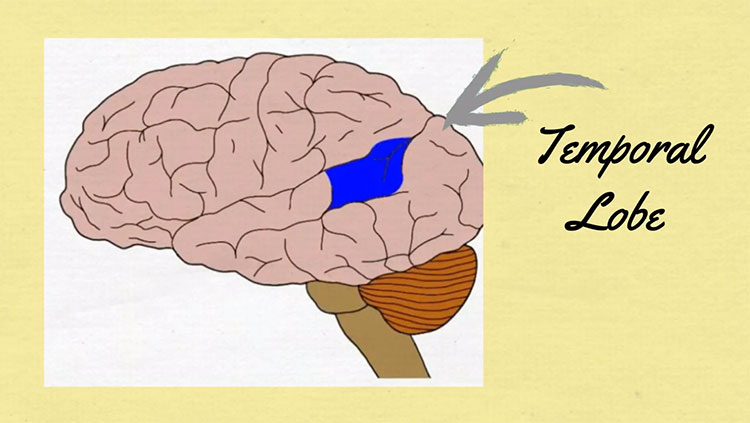
For 150 years, neuroscientists have held that Wernicke’s area, a region of the brain in the left temporal lobe, allows us to process speech. The researchers discovered that a subzone, called the left posterior superior temporal gyrus (lpSTG) found in a region behind your left ear, is implicated in composing the words we’ll say before we speak. The discovery could be a new target for neuroprosthetics designed for people with conditions affecting communication, such as paralysis.
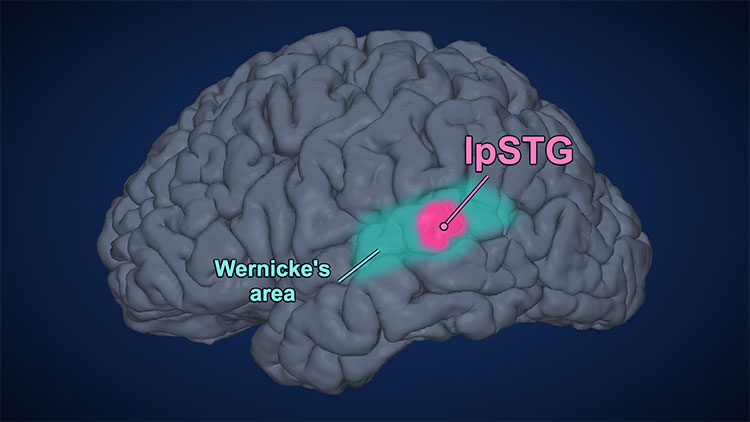
Located in the auditory cortex, Wernicke's area is crucial to our ability to process the speech we hear. Beyond this role, researchers previously defined the region by its ability to also act as a kind of self-editor, monitoring our spoken words and flagging corrections in real time, said UCSF neurosurgeon Edward Chang. But to the enduring confusion of neuroscientists, people with damage to this region also face challenges when attempting to speak.
"Their speech was fluent, but the words came out wrong," Chang explained. "The basic question has been, why would damage to a hearing area of the brain break the ability to speak?"
This research was made possible by 28 people who agreed to participate in the study while undergoing unrelated brain surgery. Their involvement was crucial because the team used ultra-sensitive high density electrode grids placed directly on the brain to capture the fast-paced nature of brain activity involved in generating speech. This tool allowed them to record activity on the millisecond scale as participants spoke aloud.
"The key was really to be able to open this extremely short window of time just a few tenths of a second before we start speaking," Leonard said. The researchers determined the lpSTG subregion activates right before we speak. It contains important information about words before we say them, including how long they are and how often we use them. When this information reaches the motor cortex, speech happens. Stimulating the lpSTG with electricity also temporarily disrupted participants' ability to speak, he added.
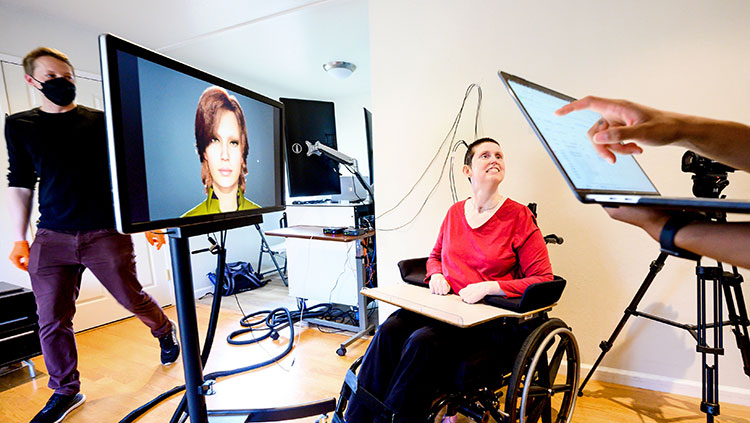
The team separately recorded lpSTG activity from two people with vocal-tract paralysis as they tried to speak specific words without saying them aloud, explained Alexander Silva, an MD-PhD student at UCSF. Using deep-learning model analysis, they deciphered the words encoded by this activity. They’re optimistic that the lpSTG could one day be key to powering brain-computer interfaces aiming to restore users' ability to communicate.
"What if you could target a single brain region and gain access to the full spectrum of speech, from listening all the way to speech production?" Silva said.
About the Author

Bella is the Staff Writer and Editor for BrainFacts. She previously worked as a digital science reporter at PBS NewsHour, where she was named a fellow in the 2022-2023 class of the National Science-Health-Environment Reporting Fellowships (SHERF) and earned a 2021 D.C. Science Writers Association Newsbrief Award for writing. She graduated from the University of Michigan with a bachelor's degree in 2018.
CONTENT PROVIDED BY
BrainFacts/SfN
References
Silva, A., Leonard, M. K., P. Hullett, P., Levy, D. F., Wang, C., XU, D., Bhaya-Grossman, I., Chang, E. F. (2026) A neural code for generative speech production in human Wernicke’s area. [Poster Abstract]. University of California at San Francisco, San Francisco, CA. Society for Neuroscience Annual Meeting, Washington, D.C., United States. https://www.abstractsonline.com/pp8/#!/21503/presentation/25790