To Continue, or Not to Continue
- Published2 Nov 2026
- Source BrainFacts/SfN
Why do we keep trying after repeated failure?
Using bouldering as an example, this short video explores how dopamine-based reward prediction errors help the brain learn which actions are worth repeating.
This is a video from the 2026 Brain Awareness Video Contest.
Created by Zihan Xu
CONTENT PROVIDED BY
BrainFacts/SfN
Transcript
Fail. Fail. Fail.
Success!
"You feel good? Your effort was worth it? You wanna try again?"
Bouldering is a high-risk and high-challenge sport.
It's full of fear, pain, and repeated failures. But still many people keep trying instead of giving up.
Why?
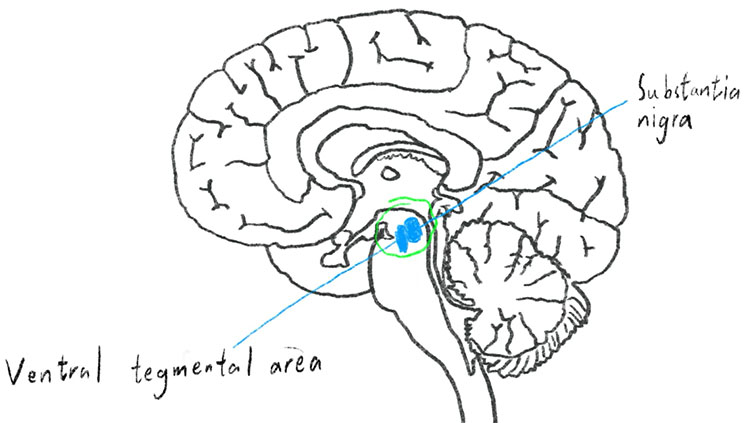
Before you are even aware of it, your brain is already evaluating whether an action is worth continuing.
And dopamine is one of the key signals in this process.
When we think about dopamine, pleasure often comes to mind first. Yes, dopamine does bring pleasure. But it's also about reward.
A reward is an outcome that the brain treats as valuable and uses to influence future behavior.
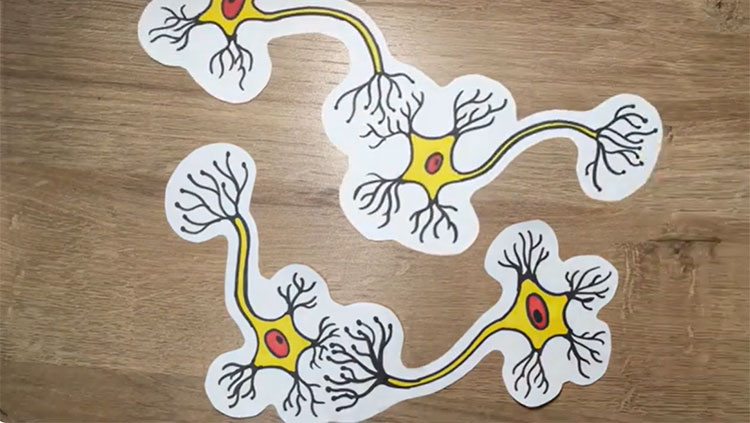
One way it's signaled in the brain is through the activity of a specific group of neurons — dopaminergic neurons, which release dopamine.
Put simply, when a reward occurs, these neurons can briefly become more active and release more dopamine.
Dopamine doesn't carry a message itself — it binds to neurons involved in action selection circuits, and changes how likely they are to be active when a certain action takes place again in the future.
In this way, a reward is turned into a neural signal that the brain can use to guide behavior.
Importantly, this signal comes in brief bursts of activity, known as phasic dopaminergic activity.
But when do these bursts of dopamine activity happen?
They don't occur every time you get a reward.
Instead, they reflect a comparison between what the brain expected to happen and what actually happened.
The difference between the two is what neuroscientists call a reward prediction error.
This idea was first proposed in the 1990s and has since been strongly supported by decades of research on dopamine.
The findings demonstrate that dopaminergic neurons encode reward prediction errors rather than simply reflect reward itself, with activity increasing when outcomes are better than expected, and decreasing when outcomes are worse.
In this way, reward prediction error helps the brain evaluate whether an action is worth continuing or not.
Sounds abstract?
Think about bouldering.
You try a move. You fail again and again. At this point, failure is expected.
Then, suddenly, one attempt works. You reach the next hold. It feels surprisingly good.
At this time, the reality is much better than your expectation.
In response to this mismatch, dopaminergic neuron activity quickly increases, making the brain more likely to repeat the action.
On the other hand, when you expect a better outcome because you have succeeded before, but the move doesn't work, phasic dopamine activity briefly decreases.
This reduces the likelihood of repeating the same action, encouraging the brain to adjust and try something different.
But what happens when reality matches your expectation exactly?
You might keep doing the same action, but the brain tends to favor behaviors that are associated with stronger dopamine responses.
So, you may try achieving moves you couldn't complete, or attempting a more difficult route, to create the possibility of a new positive reward prediction error.
And this is one of the ways the brain decides whether to keep trying or not.
Every unexpected success gives the brain a reason to chalk up and take one more move.
Nice. Nice. Nice.