How Pressure Can Shape Problem Solving in High-Stakes Roles
- Published20 May 2026
- Author Caleb Neal
- Source BrainFacts/SfN

In high-stakes environments like operating rooms, cockpits, or combat zones, quick creative thinking isn’t optional. It’s required.
As we perceive a threat, our bodies kick into fight-or-flight mode. The hypothalamic-pituitary-adrenal (HPA) axis floods the bloodstream with the stress hormone cortisol, redirecting brain activity away from flexible, higher-order thinking and toward survival instincts.
Stress fundamentally changes how the brain works. Sometimes it blocks creative thinking. And other times, it unlocks it. It’s a phenomenon Sarah Rollins, a trauma surgeon and surgical critical care physician in Florida, knows all too well.
“I’ve had patients who were hemorrhaging, and I’m standing there holding pressure on the area while trying to think through a plan to repair it,” Rollins said. “I’ve also had situations where the solution felt more instinctual. Sometimes it’s a combination of both.”
Neuroscientists are investigating why and when pressure can prompt problem solving, and how we might train ourselves to be more innovative when it counts.
Under Pressure
Seemingly unproductive activities like daydreaming and spontaneous thought appear to fuel creativity. The brain’s default mode network supports these activities, and our ability to engage in divergent thinking or generate novel solutions to a problem relies on it.
It turns out stress depresses activity in this network, shifting cognition as measured by electrical recordings of brain activity from people while they attempted to solve difficult arithmetic problems — a means of simulating acute stress. What’s more, the participants’ ability to engage in divergent thinking — as a measured by their ability to come up with as many uses as possible for a single object — decreased after experiencing acute stress.
Those results, published in 2019 in the journal Stress, complement other research finding acute stress not only reduces divergent thinking, but also leaves logical problem solving (sometimes called convergent thinking) largely intact.
A 2019 study published in the journal Thinking & Reasoning deployed the alternative uses task and a complex word association task, both standard laboratory tests, to assess creative thinking among men, as early research indicated females are less affected by stress in this way. The researchers used a proven laboratory method to induce moderate stress where participants present a speech to an unresponsive audience and then perform mental arithmetic. Their findings suggest high-pressure situations may limit creativity.
"Positive mood and a low sense of threat support creative insight. But under anxiety or fear, you rely more on analytical, step-by-step thinking." — John Kounios
"Positive mood and a low sense of threat support creative insight. But under anxiety or fear, you rely more on analytical, step-by-step thinking," said co-author John Kounios, a cognitive neuroscientist and professor of psychology at Drexel University.
It’s a complex mix to untangle. People with higher characteristics of anxiety — such as feeling overwhelmed easily, fear of losing control, excessive worrying, racing thoughts, and difficulty concentrating — may be more vulnerable to stress-induced rigidity, while those with greater cognitive flexibility could adapt better under distress.
Research published in Frontiers in Psychology, also in 2019, bears this out. Utilizing the same measures of flexible thinking and means of stress induction as described in Kounios’ paper, the team examined how acute stress impacts creative cognition, highlighting how personal differences in emotional reactivity can shape the brain’s creative response to pressure. Participants with low anxiety showed improved fluency in creative idea generation after stress, whereas high anxiety participants performed worse on measures of fluency, flexibility, and originality, suggesting emotional reactivity can modulate how stress influences creative thinking.
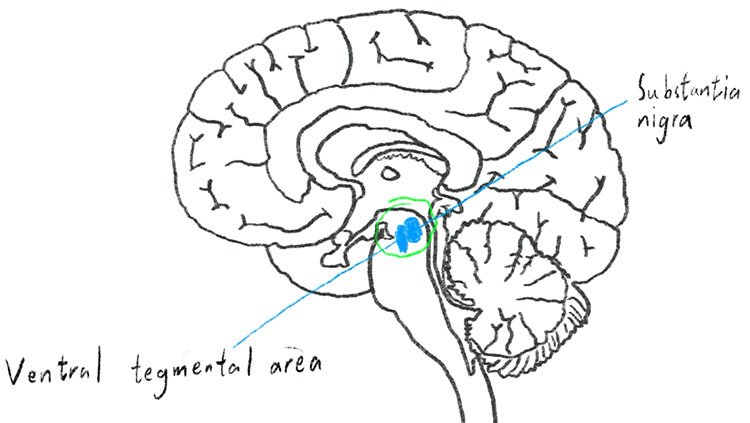
Stress can be positive. Under moderate, controlled conditions, it can sharpen focus and trigger dopamine release in the brain’s reward system, particularly in the striatum and medial prefrontal cortex. This state, known as eustress, may enhance creativity. It’s the kind of pressure that energizes a pilot during a dangerous mission or sparks a writer’s creativity just before a deadline. For some people, these moments don’t overwhelm but instead activate and invigorate.
When the pressure mounts, success hinges on rapid mental shifting, memory recall, and insight, which are core components of creativity. “People usually think of medicine and surgery as science, but it is also an art,” said Rollins. “For me, an urgent need brings out my creativity.” But not everyone thrives under pressure.
Stress to Solutions
"There are people who get better under stress. They maintain complex thinking and generate options when others freeze.” — Peter Suedfeld
Peter Suedfeld has spent decades studying how people adapt in extreme settings, from Antarctic stations to space simulations. A professor emeritus in the Department of Psychology at the University of British Columbia, Suedfeld has found experience and personality shape how we think under distress.
"There are people who get better under stress. They maintain complex thinking and generate options when others freeze,” said Suedfeld. “These tend to be people who reflect on past challenges and stay cognitively open."
In high-stakes situations, recognizing when you’re locking into rigid thought patterns versus staying open to new possibilities is a metacognitive skill. Those who can monitor their mindset and remain flexible are more likely to find creative solutions where others might shut down.
While high stress generally impairs creativity, a 2023 meta-analysis published in the journal Neuroscience and Biobehavioral Reviews considered 99 studies on stress and cognition, finding moderate stress levels can boost idea generation in motivated individuals. The tipping point seems to lie in the balance between arousal and control, when the task feels urgent but manageable.
For Stephen Keisler, a U.S. Air Force pilot, high-altitude stress scenarios are standard. “In training, you memorize protocols.” But in combat, conditions change fast. “You have to improvise,” he said. “Sometimes, that’s when your brain gets really creative.”
Ben Keisler, Stephen’s brother who is also a military-trained pilot, recalled flying over enemy territory while relaying visual intel to helicopters after a communication failure: “All I was thinking was that a problem presented itself that could be solved with some input from our aircraft. We defaulted to known techniques and just adapted.”
Extreme environments can impair creative performance unless individuals have prior experience or specialized training, as noted in a 2020 study in Frontiers in Psychology, highlighting the importance of preparedness in maintaining flexible problem solving under pressure.
Simulation drills in medicine, military, and aviation are designed to build “creative resilience.” Techniques like cognitive reappraisal — reframing a stressful situation — mindfulness, meditation, and visualization may also improve performance. Consistent use of these tools and utilizing mixed methods can support problem solving under pressure.
“[But] there’s no magic switch. We don’t yet fully understand how to reverse stress’s effects on creativity,” Kounios cautioned. “Some people may always shut down in a crisis. Others, through personality or training, can power through.”
About the Author

Caleb Neal is a medical student based in Brooklyn, NY. He played semi-professional hockey in Sweden as a graduate student at Augusta University.
CONTENT PROVIDED BY
BrainFacts/SfN
References
Duan, H., Wang, X., Hu, W., & Kounios, J. (2020). Effects of acute stress on divergent and convergent problem-solving. Thinking & Reasoning, 26(1), 68–86. https://doi.org/10.1080/13546783.2019.1572539
Duan, H., Wang, X., Wang, Z., Xue, W., Kan, Y., Hu, W., & Zhang, F. (2019). Acute Stress Shapes Creative Cognition in Trait Anxiety. Frontiers in Psychology, 10, 1517. https://doi.org/10.3389/fpsyg.2019.01517
Guo, X., Wang, Y., Kan, Y., Wu, M., Ball, L. J., & Duan, H. (2024). The HPA and SAM axis mediate the impairment of creativity under stress. Psychophysiology, 61(3), e14472. https://doi.org/10.1111/psyp.14472
Huang, Y., & Yu, R. (2025). The double-edged sword of stress: A systematic meta-analysis on how stress impacts creativity. Neuroscience & Biobehavioral Reviews, 172, 106113. https://doi.org/10.1016/j.neubiorev.2025.106113
Shields, G. S., Trainor, B. C., Lam, J. C., & Yonelinas, A. P. (2016). Acute stress impairs cognitive flexibility in men, not women. Stress, 19(5), 542–546. https://doi.org/10.1080/10253890.2016.1192603
Vartanian, O., Saint, S. A., Herz, N., & Suedfeld, P. (2020). The Creative Brain Under Stress: Considerations for Performance in Extreme Environments. Frontiers in Psychology, 11, 585969. https://doi.org/10.3389/fpsyg.2020.585969
Wang, X., Duan, H., Kan, Y., Wang, B., Qi, S., & Hu, W. (2019). The creative thinking cognitive process influenced by acute stress in humans: an electroencephalography study. Stress, 22(4), 472–481. https://doi.org/10.1080/10253890.2019.1604665