Tasting Tuesdays: A Bite-Sized Trip into Synesthesia
- Published5 Jan 2026
- Source BrainFacts/SfN
For some people, seeing music and tasting colors are all part of the norm.
Learn more about the fascinating world of synesthesia, in which multiple, unrelated senses activate at the same time.
This is a video from the 2025 Brain Awareness Video Contest.
Created by Sukalyan Deb
CONTENT PROVIDED BY
BrainFacts/SfN
Transcript
Does your Tuesday taste like chocolate?
What color is the number one for you? The number six? 53?
And what colors do you see when you listen to your favorite song?
These questions might sound really bizarre to you, but if you answered any of these questions, then congratulations, my friend. You might be part of the mere 4% of our world population. Maybe you have synesthesia.
What do you mean? Anesthesia?
No, my friend. Synesthesia comes from two Greek words: one, sin, which means union or together, and aesthesia, meaning sensation, which means the union of different sensations.
Synesthesia refers to a neurological condition in which stimulation of one sense, like your sight, can lead to an involuntary experience in another sense, like sound.
We have different types of synesthesia. Some people experience saying that they can see colors when they listen to music, while others say when they hear or read a word, they can smell or taste it.
Yeah, even I think I have synesthesia because whenever it rains outside, uh, I can smell the hot soup my mom used to make when we were kids.
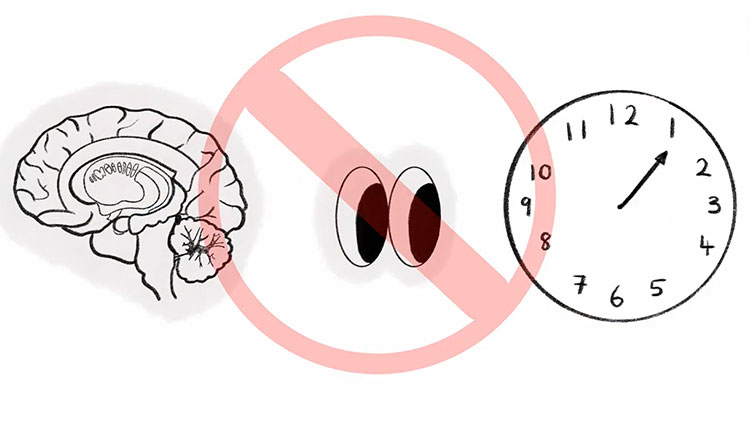
No, my friend, please don't confuse it with this concept of association. So, for an experience to be qualified to be called synthetic, it should check these three boxes.
The first being, it should be completely involuntary. You should not have any control over these experience.
The second being it should be consistent. So, for example, if number 13 is maroon in color for you, if you're asked this question three months later, it should still be maroon for you.
And the third point being the experience should be perceptual in nature and not cognitive.
Now the question is why does this happen?
So research says that it has something to do with the cross firing of the regions of the brain that process sensory information. Now in the brain, regions which are responsible to process smell, sight, taste, touch, etc., are all nearby and are part of the sensory cortex.
Now as kids or babies, we start out by having a really hyperconnected brain. But as we mature and grow up, regions of the brain which talk to one another more often, more frequently, those connections tend to get stronger, and the ones that don't, tend to get trimmed by a process known as pruning. In those individuals in whom the pruning process does not happen that efficiently, they develop synesthesia.
Your senses dance in hues and tunes untold.
A vibrant gift, not a disorder. Make your mind's own rainbow bold.