Tiny Cellular Structures Help Predict Who May Respond to Psychiatric Therapies
- Published17 Nov 2026
- Author Tristan Rivera
- Source BrainFacts/SfN
Diagnosing and treating psychiatric conditions like depression is mostly a judgement-based proposition, relying on a clinician’s observations and patient accounts rather than biological data.
“There is no brain scan, blood test, [or] genetic test that assists today in the diagnosis of depression,” says Eric Nestler, Anne and Joel Ehrenkranz Dean of the Icahn School of Medicine at Mount Sinai. The lack of biological markers means people with these disorders struggle to find appropriate therapies.
However, a new biomarker screening platform which analyzes the contents of tiny cellular particles called extracellular vesicles (EVs) collected from people’s blood may forecast if a treatment will work. The research was presented by Tracy L. Bale on Nov. 15 in Washington, D.C., at Neuroscience 2026, the annual meeting for the Society for Neuroscience. The platform may one day allow clinicians to pre-screen people to predict if they will be responsive to a psychiatric therapy before even starting treatment.
“Imagine if you had cancer, and you went into your oncologists’ office, and instead of a blood test being available, or imaging, your oncologist asked you how your tumor felt,” said Bale, a neuroscientist and professor from the University of Colorado and the Anschutz Foundation Endowed Chair in Women's Integrated Mental and Physical Health Research.
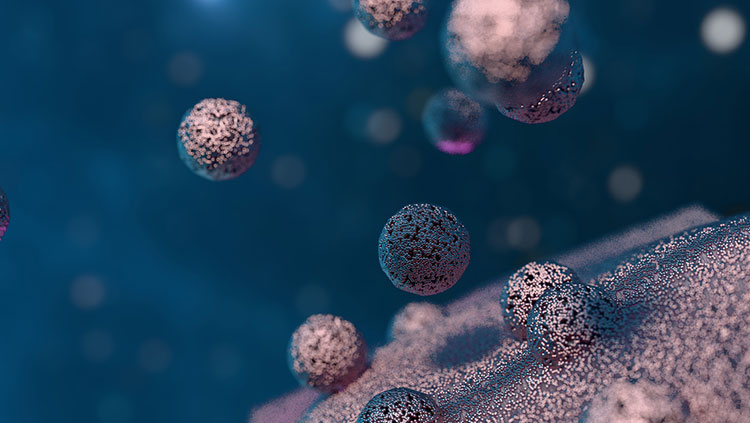
EVs are tiny cargo-packaging biological particles secreted from nearly all our cells. They cycle at high volumes throughout our bloodstream, bundling bits of genes, proteins, lipids, and other small molecules into biological containers. They can also carry and communicate information throughout the body and across the blood-brain barrier.
Bale’s team isolated proteins in EVs from blood plasma samples and, with the help of machine learning and AI, used them as biomarkers to create a personal biological signature — predicting if a therapy is likely to work for an individual. They’ve successfully tested the platform across psychiatric conditions and treatments.
In one notable example, Bale’s team examined data from a clinical trial testing clinical ketamine treatment in patients with treatment-resistant depression. The trial, conducted by the National Network of Depression Centers, indicated only 40-55% of the participants experienced benefit from ketamine therapy.
After the trial, the researchers tested blood samples from trial participants on their EV screening platform. The platform predicted who had benefited from the ketamine therapy with around 90% accuracy, regardless of the severity of their depression. The findings suggest the test could one day predict who may better respond to a given therapy before treatment starts, just by looking at their EVs.
Today, Bale and her team are working on a company, NeuroVescia, aiming to use this EV-analysis platform to better inform clinical trials, diagnostics, and drug discovery across psychiatric conditions. Bale hopes the EV screening platform will push psychiatry to be “more aligned with other fields of medicine where we have blood-based tests or objective markers,” accelerating new diagnostics and treatments.
About the Author
Tristan is the Editorial Production Associate for BrainFacts. He graduated from the Pennsylvania State University in 2018 with a degree in Biobehavioral Health and previously worked on advocacy and scientific training projects at the Society for Neuroscience.
CONTENT PROVIDED BY
BrainFacts/SfN
References
Oraki Kohshour, M., Papiol, S., Delalle, I., Rossner, M. J., & Schulze, T. G. (2023). Extracellular vesicle approach to major psychiatric disorders. European Archives of Psychiatry and Clinical Neuroscience, 273(6), 1279–1293. https://doi.org/10.1007/s00406-022-01497-3
Orso, R., Feltrin, A. S., Novick, A. M., Epperson, C. N., Bale, T. L. (2026). Dynamic changes in plasma extracellular vesicle characteristics predict rapid-acting antidepressant response in clinical trials of depression. [Poster Abstract]. University of Colorado Anschutz Medical Campus, Aurora, CO. Society for Neuroscience Annual Meeting, Washington, DC, United States. Program No. PSTR241.09. https://www.abstractsonline.com/pp8/#!/21503/presentation/24463
Wang, L., Liu, R., & Wang, Y. (2025). The roles of extracellular vesicles in mental disorders: information carriers, biomarkers, therapeutic agents. Frontiers in Pharmacology, 16, 1591469. https://doi.org/10.3389/fphar.2025.1591469