ICYMI: Human Brain Organoids Grow in Mice Missing Much of Their Cortex
- Published8 Oct 2026
- Author Bella Isaacs-Thomas
- Source BrainFacts/SfN

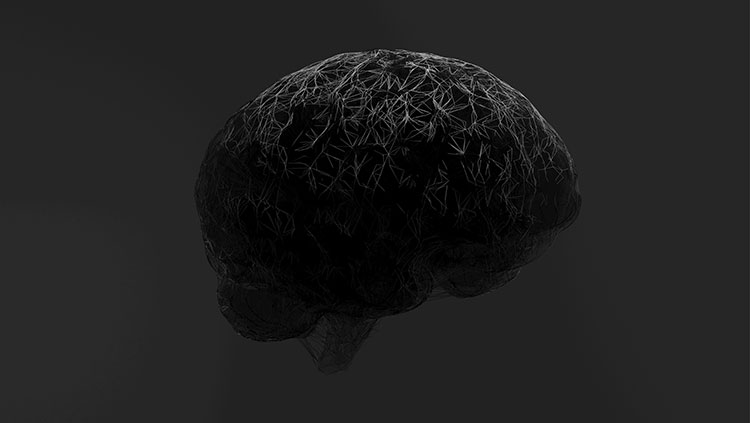
In a Frankensteinian feat, researchers at Stanford University transplanted human brain organoids into mice missing much of their cortex. The organoids grew into networks of active neural tissue and formed viable connections with the animals’ nervous systems. The work offers a model for studying neurodevelopment and injury processes. The team published the results of their experiment September 16 in the journal Nature.

Scientists genetically engineered mice to lack much of their neocortex and hippocampus, reducing their brain volume by nearly half. They then grafted human cortical organoids, or structures derived from stem cells resembling features of the cortex, into cavities left by the missing tissue in the living newborn mice. The grafts filled the missing cortical tissue volume in the mice’s brains. This achievement, along with other feats using brain organoids, provides a novel model for studying neurodevelopment and injury.
Big Picture: Scientists use brain organoids to study human brain development, function, and disease. Previously, members of the same research team transplanted cortical organoids into smaller sections of developing rat brains to form connections with their nervous systems. But the recent study showed organoids can be grafted onto larger volumes of an organism’s brain, providing more opportunities for human tissues to connect across mice’s nervous systems. The researchers involved acknowledge the unique ethical considerations posed by the approach. In November 2025, Sergiu Pașca, senior author on the 2026 Nature paper, co-organized an event for scientists, ethicists, patient advocates, journalists, and policymakers to discuss developing oversight systems around neural organoids and assembloids.
Read More: These Mice Have Partly Human Brains. The New York Times
More Top Stories
- In a new study, babies born to mothers with anemia during pregnancies had slightly smaller brain volumes compared to babies born under non-anemic conditions. The Guardian
- Cortical gray matter volume in the brain decreases during puberty and pregnancy, but it doesn’t appear to do so around menopause. Scientific American
- Researchers discovered the earliest to-date evidence that humans actively prepared and consumed the psychoactive betel nut 25,000 years ago in modern-day Indonesia. Popular Science
- In mice engineered to show signs of Alzheimer’s, suppressing a subset of immune cells in lymph nodes reduced neurodegeneration. Science News
- An LSD-based therapy by drug company Definium Therapeutics successfully reduced anxiety among participants in a second large trial. STAT
- Researchers published today’s largest map of gene activity in the prefrontal cortex based on millions of cells collected from nearly 1,500 people. Nature
- A brain-computer interface (BCI) implanted above the cortices of two people with paralysis successfully translated brain activity into speech and gestures on a digital avatar. Science
- Engaging in regular, low-lift exercise breaks throughout the day may benefit attention and memory. New Scientist
About the Author
.jpg)
Bella is the Staff Writer and Editor for BrainFacts. She previously worked as a digital science reporter at PBS NewsHour, where she was named a fellow in the 2022-2023 class of the National Science-Health-Environment Reporting Fellowships (SHERF) and earned a 2021 D.C. Science Writers Association Newsbrief Award for writing. She graduated from the University of Michigan with a bachelor's degree in 2018.
CONTENT PROVIDED BY
BrainFacts/SfN
References
Kaganovsky, K., Kelley, K. W., Gschwind, T., Harary, P. M., Kochalka, J., White, A. D., Lerma-Usabiaga, G., Chen, X., Revah, O., Gore, F., Aoyama, A., Shadrach, J. L., Yoon, S. J., Valencia, A., Ogawa, S., Reis, N., Vogel, H., Wandell, B., Kaltschmidt, J. A., Soltesz, I., … Pașca, S. P. (2026). Developmental xenocortication using human-derived organoids in mice. Nature, 658, 430–441. https://doi.org/10.1038/s41586-026-11032-2